
Best LLM Visibility Tools 2026: 15 AI Visibility Trackers Tested

On this page
Search Console won’t show you AI search traffic.
Neither will Google Analytics, Semrush, or any traditional SEO tool. The surface that decides whether ChatGPT names your brand isn’t the SERP. It’s the answer the LLM generates before the user clicks anything. To see it, you need an AI visibility tool built for AI search visibility.
We tested 15 AI visibility tools on real brand-tracking workflows. Here’s what works in 2026, what’s marketing fluff, and how to choose the best AI visibility tool for your team. (These are also called LLM visibility tracking tools or AI search visibility trackers — the same category under different names, and we use them interchangeably below.)
LLM monitoring means two things
Search for LLM monitoring and you land on two product categories that barely overlap.
The first is LLM observability — tracking the tokens, latency, traces, cost, and error rates of the models your own application calls. This is engineering telemetry: Datadog LLM Observability, LangSmith, and Helicone live here, instrumenting your prompts and completions the way an APM tool instruments a web service. If that’s what you’re after, this post won’t help — you want an observability platform, not a visibility tracker.
The second is LLM visibility monitoring — tracking what LLMs say about your brand: whether ChatGPT names you, which sources it cites, and how your share of voice moves against competitors. That’s the surface this guide covers, and the 15 LLM visibility tracking tools below all measure it. If you need model telemetry instead, stop here and reach for one of the observability tools above.
Key terms: LLM visibility, citation rate, and AI rank tracking
AI visibility (also called LLM visibility or AI search visibility) measures how prominently a brand appears in AI-generated answers across platforms like ChatGPT, Perplexity, Gemini, Google AI Overviews, and Copilot. It is expressed as a mention rate — the share of tracked queries in which your brand is named in the AI response. An LLM visibility tracking tool is what measures it at scale.
Citation rate is the share of AI-generated answers that include a specific URL as a cited source. It is the primary KPI for AI SEO work, replacing traditional click-through rate. A page can rank #1 in organic search and still have a near-zero citation rate in AI answers — the two metrics are largely independent.
AI rank tracking measures a brand’s inclusion in AI-generated answers using prompts as the core unit of measurement, rather than traditional keyword-to-URL position. Instead of asking “what position does my URL rank at?”, it asks “does my brand appear in the AI answer for this query, and is my URL cited as a source?”
Tracker, checker, or analysis software: what the labels mean
Vendors sell the same category under four names, and the labels do carry a real difference in what you get.
| Label | What it does | Cadence | Use it when |
|---|---|---|---|
| LLM visibility checker | One-off read: run a prompt set now, see whether you are named | On demand | You want a snapshot before committing budget |
| LLM visibility tracker | Scheduled runs with history, so mention rate becomes a trend | Weekly or daily | You are managing visibility as an ongoing programme |
| LLM visibility analysis tool | Adds the “why”: competitor gaps, prompt patterns, which sources the model pulled | Per run | You need to act on the number, not just report it |
| LLM visibility tracking software | The enterprise packaging: multi-brand, multi-seat, permissions, white-label reporting | Continuous | Agencies and teams reporting to stakeholders |
The practical split is checker versus tracker. A free LLM visibility checker answers “am I in there right now” and costs nothing. It cannot tell you whether last month’s content push moved anything, because it keeps no history. Every paid tool below is a tracker or better.
Analysis and enterprise software are usually tiers of the same product rather than separate purchases. Of the 15 tools here, most ship the checker and tracker layers on every plan and gate the competitor-gap and prompt-pattern analysis to mid-tier and up.
The 15 best AI visibility tools at a glance
A roundup like this is a snapshot of our judgement. The AI visibility platforms leaderboard is the standing measurement beside it — which of these tools the engines name and cite, re-scored weekly and free to cite.
| Tool | Starting price | Best for | Key features |
|---|---|---|---|
| Gauge | $599/mo | B2B SaaS teams focused on GEO | Brand rankings, prompt intelligence, Action Center with content recommendations |
| Profound | $5,000/mo | Enterprise brands needing compliance-grade AI intelligence | 10+ engines, sentiment analysis, ISO-certified, dedicated support |
| Peec AI | $2,000/mo | Teams wanting deep competitor analysis + clickstream correlation | Real-time citation tracking, competitor gap analysis, clickstream integration |
| Brandlight | $2,000/mo | Brands needing automated accuracy alerts | Brand accuracy monitoring, configurable alerts, health scoring |
| DemandSphere | Custom | Enterprise SEO teams layering AI onto existing search programmes | AI citation tracking integrated with traditional SERP and share-of-voice data |
| Nightwatch | Contact for pricing | SEO agencies combining rank tracking + AI visibility | Citation Intelligence, unlimited seats, white-label on all plans |
| SE Ranking | $119/mo | SMBs wanting AI visibility in an all-in-one SEO suite | AIO Tracker, AI Mode Tracker, competitor citation gap feature |
| Semrush AI Toolkit | $99/mo add-on | Existing Semrush users wanting basic AI visibility | AI Visibility Score, 25 prompts included, up to 9 competitors tracked |
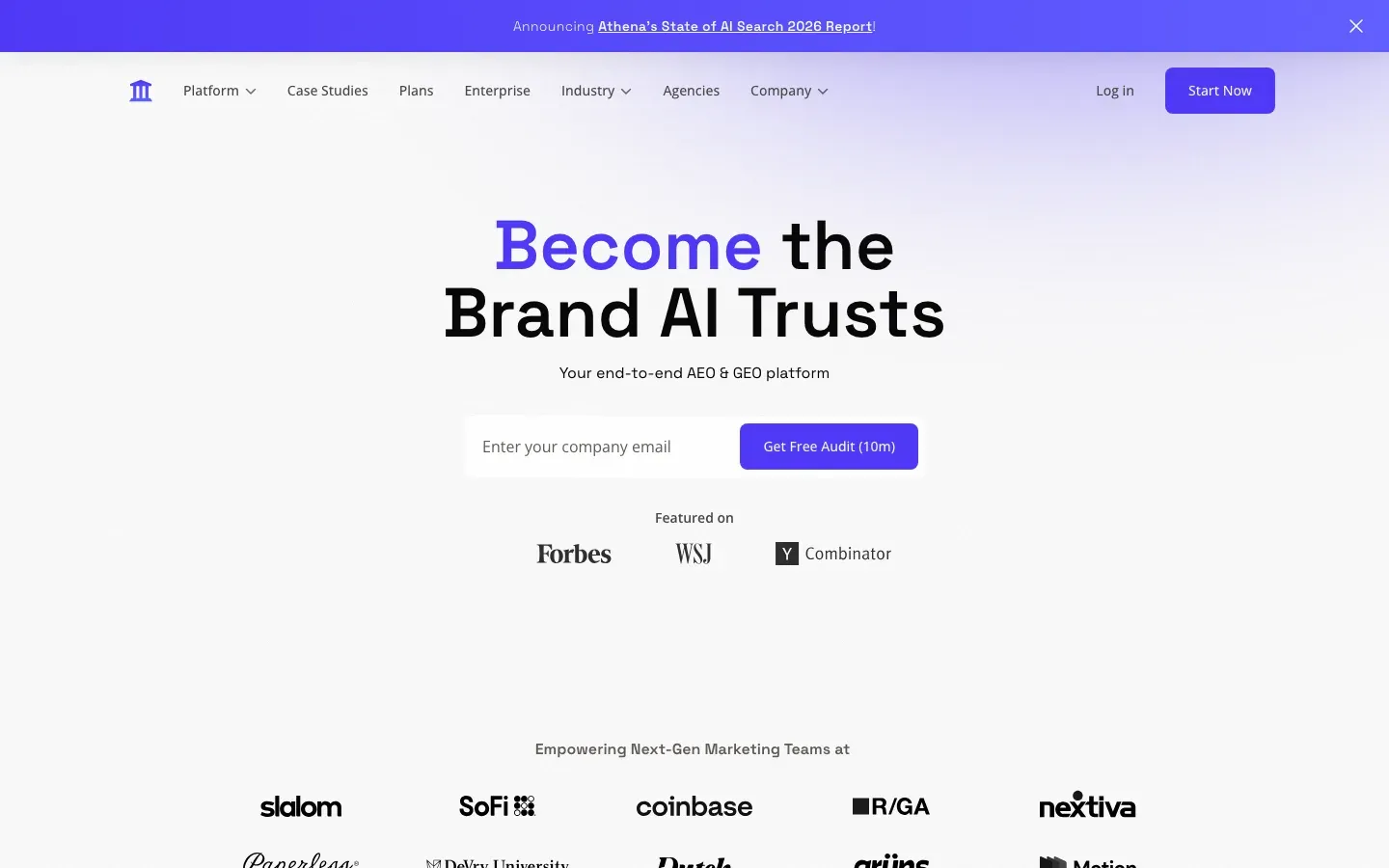
| AthenaHQ | $199/mo | Growing SaaS companies and digital agencies | Clean dashboard, share of voice, weekly trend reporting |
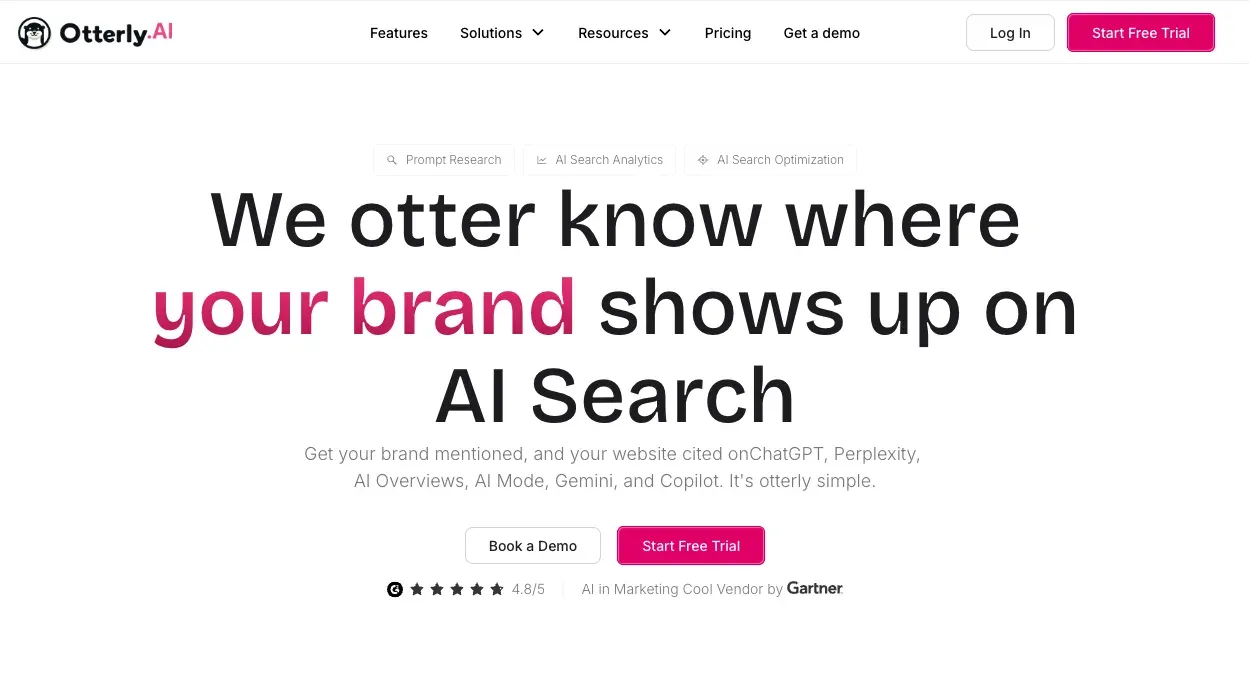
| OtterlyAI | $249/mo | Teams wanting broad AI platform coverage | Sentiment analysis, technical content issue detection, export capabilities |
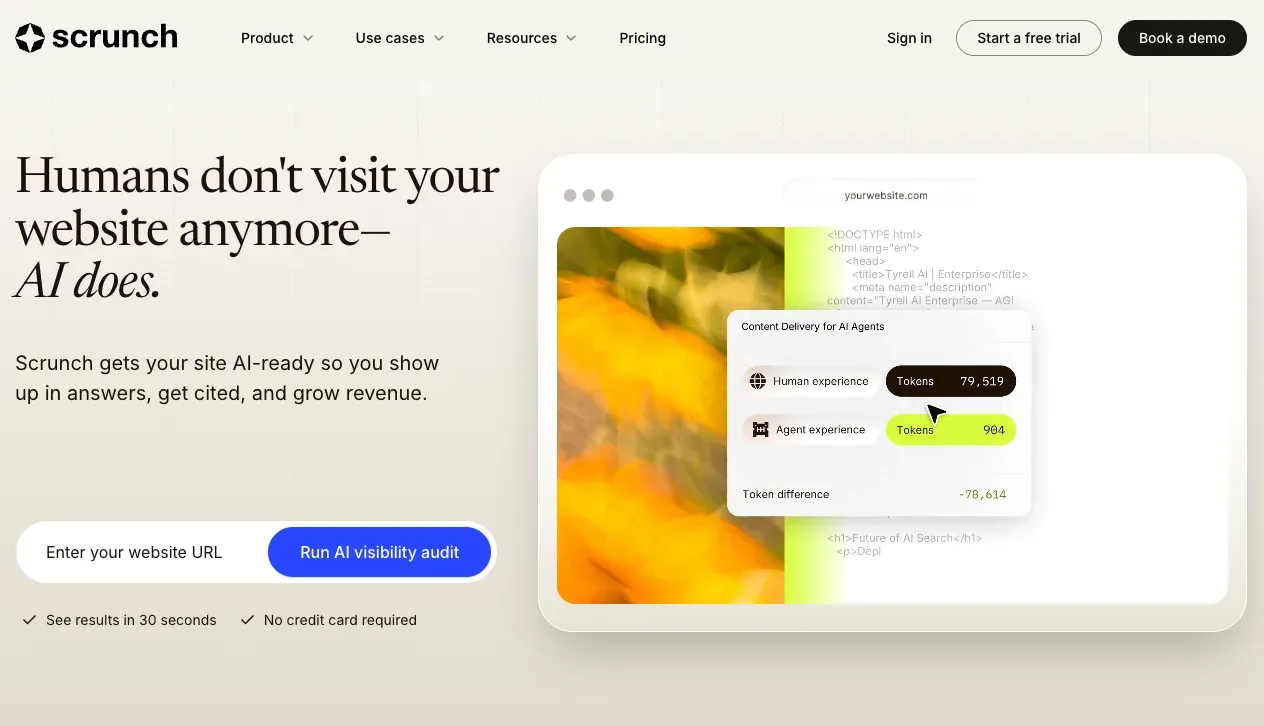
| Scrunch | Custom | Brands wanting a focused AI-native tracker | AI-answer-first reporting, competitor benchmarking |
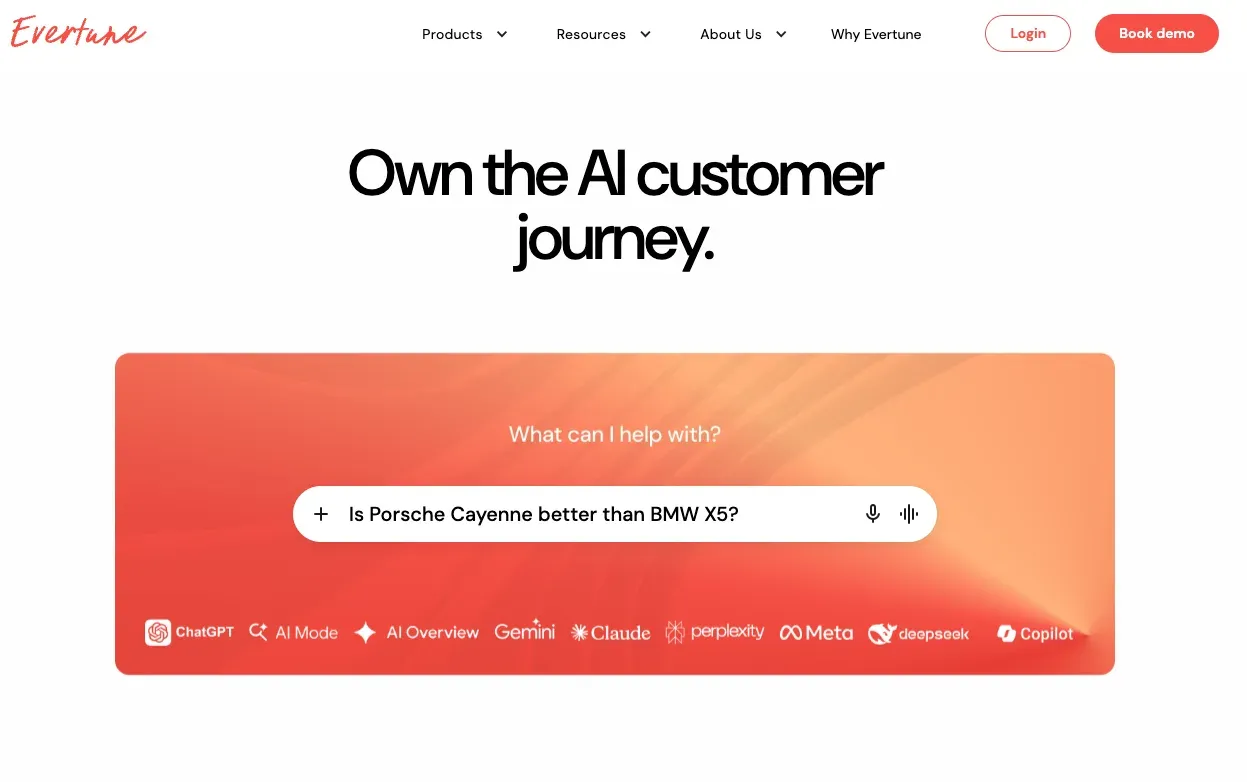
| Evertune | Custom | Teams wanting prompt-level share-of-voice analytics | Prompt-level brand breakdown, share-of-voice reporting |
| aiclicks.io | $39/mo (promo) | Teams wanting tracking + content creation in one workflow | Built-in AI writer, GSC integration, prompt database |
| Authoritas Visibility Explorer | $99/mo | Agencies managing multiple clients | Multi-client dashboard, daily difference reports, 30+ markets |
| Ahrefs Brand Radar | $129/mo (Ahrefs sub) | Existing Ahrefs users | 243M+ monthly prompts, integrated with Ahrefs SEO data |
The infrastructure layer underneath. These 15 LLM visibility tracking tools sit at the dashboard layer — they run scheduled queries against AI engines, parse the responses, and surface citation data to users in a UI. Underneath, several of them pull their raw SERP and LLM data from API providers like cloro, which sits one layer down as the LLM visibility API that returns parsed responses for ChatGPT, Perplexity, Gemini, Copilot, Google AI Overview, and AI Mode. Dashboards are the right product for SEO leads, analysts, and stakeholders who want a polished interface; the API layer is the right product for engineers building custom dashboards, multi-tenant tools, or in-house BI feeds. This guide compares the dashboards. If you’re evaluating the underlying API layer instead, start with cloro’s AI visibility API; for ChatGPT brand mentions specifically, the ChatGPT brand mentions API guide covers the integration end-to-end.
The rest of this guide explains how each LLM visibility tracking tool actually works in practice — engine coverage caveats, citation fidelity, and where the “supports X engine” marketing claim falls short of reality. If you only need a quick one-off read rather than ongoing tracking, several vendors offer a free AI visibility checker (Semrush’s free AI Search Visibility Checker is the most complete) — useful for a snapshot, but not a substitute for the trend history a full LLM visibility tracking tool builds.
How we tested
For this comparison, we picked one B2B SaaS brand and one consumer-product brand the team is familiar with, defined 25 commercial-investigation queries each (e.g., “best project management software for remote teams”, “best running shoes for flat feet”), and ran them through every tool below over a four-week window. Queries were chosen to span the four intent classes that drive most LLM-citation behavior — comparison (“X vs Y”), definitional (“what is X”), recommendation (“best X for Y”), and how-to (“how to do X”).
For each query, we captured ground-truth answers manually across six surfaces — ChatGPT (with web search), Perplexity, Gemini app, Microsoft Copilot, Google AI Overviews, and Google AI Mode — then compared that ground truth against what each tool below reported for the same queries on the same days.
Each LLM visibility tracking tool was scored on six axes:
- Engine coverage. Which AI engines it actually queries (ChatGPT, Perplexity, Gemini, Copilot, Google AI Overview, AI Mode).
- Citation fidelity. Does it return real source URLs with parsed labels, or does it rely on screenshots and approximations?
- Update frequency. Weekly, daily, or on-demand.
- Reporting depth. Mention rate, share of voice, citation rate, sentiment, prompt-pattern analysis.
- Pricing fairness. Does the entry tier cover the queries most teams need to track?
- Methodology transparency. Does the vendor disclose how queries are submitted, where the data comes from, and what the sampling cadence actually is?
Where pricing has changed since we tested, we noted it. Where a tool’s marketing claims didn’t match what we observed, we said so directly.
Why AI visibility tracking matters
AI search has moved past the experimental phase. A few public signals that frame the scale of the shift:
- ChatGPT crossed 900 million weekly active users by February 2026, up from 800M in October 2025 and 400M in February 2025, per OpenAI’s announcement. The platform now serves 2.5 billion prompts per day.
- AI Overview trigger rates swing hard by intent. In cloro’s own multi-engine monitoring, AI Overviews fired on ~98% of commercial and voice-style prompts and ~88% of brand prompts, but as little as ~52% of travel and ~3% of local restaurant queries — so “how often does AIO trigger” is really a question about your query mix. BrightEdge’s weekly tracking puts the all-query average at roughly 48%, and seoClarity measured 475% YoY growth on U.S. mobile between September 2024 and September 2025.
- ChatGPT drives 87.4% of all AI referral traffic to websites per Conductor’s 2026 AEO/GEO Benchmarks Report — but mentions brands far more often than it provides clickable links, which is why monitoring ChatGPT mentions of your brand matters as much as tracking citation clicks.
- Click economics have shifted. Position-1 organic CTR fell roughly 58% on queries that trigger an AI Overview per Ahrefs, and AIO citations from organic top-10 pages dropped from 76% to 38% per Ahrefs’ 4M-URL study. Tracking rank without tracking citation now captures roughly half the modern SERP.
The implication for brand visibility: a meaningful share of buyer-research queries now resolves inside an LLM answer instead of a click-through to your website. If your brand isn’t named in those answers, you’re invisible — even if you rank #1 in classic search.
LLM visibility tracking tools exist because measuring this surface manually doesn’t scale past a handful of queries. At 25+ queries per brand, you need automated data collection, citation parsing, and trend history. That’s what these LLM visibility tracking tools provide.
Adoption is still early. Per a Globe Newswire industry report, only 14% of marketers currently track AI-search citations even though 89% of brands already appear in AI-generated answers. The teams that build the tracking layer first see a measurable head start in optimization.
How AI visibility tools work
Most AI visibility tools follow the same general pipeline, though they differ significantly in how well they execute each step.
Query generation. You define a set of commercial-investigation queries (“best [category] for [use case]” style prompts) that represent how buyers research your market. Better tools let you import these from your keyword data or Search Console; weaker ones give you a generic starter list and leave configuration to you.
Automated query execution. The tool runs those queries against each AI engine on a defined schedule. This is harder than it sounds. AI engines don’t have public mention-tracking APIs, so tools use a mix of official APIs (where available) and browser automation. Engine coverage varies widely: some tools cover ChatGPT and Perplexity well but skip Google AI Overview entirely, which is a significant gap given AI Overview’s reach on commercial queries.
Citation and mention extraction. The response is parsed to identify brand mentions, URLs cited as sources, and competitor names in the same answer. Citation fidelity is where many tools fall short, returning screenshots rather than structured, queryable URL data. For programmatic use, you want parsed source URLs, not image captures. The underlying ranking signals AI engines weight also vary: per Otterly’s analysis of more than a million citations, 73% of sites carry technical barriers (robots.txt blocks, CDN security rules, JavaScript-only content) that prevent AI crawlers from accessing the page at all — meaning some “citation gap” findings are really crawler-access findings in disguise. A good tracking tool surfaces both.
Trend reporting. Historical data builds up over time, showing mention rate changes, share of voice shifts, and the effect of content changes on your citation rate. The tools that do this well make it easy to correlate a content update with a visibility change two weeks later; the ones that don’t give you a disconnected snapshot each week. The structural patterns that drive higher citation rates are well-documented: per Frase’s measured study, FAQPage-marked pages are 3.2× more likely to appear in Google AI Overviews — the single highest-leverage technical lift currently measurable.
AI visibility metrics: what the best platforms actually report
Reporting depth was one of the six axes we scored, and it is where the distance between the demo and the product is widest. Four metrics are foundational. A fifth is what separates a platform you can report from one you can only browse.
Mention rate. The share of sampled answers that name your brand at all, whether or not they link you. Everything else is a cut of this number. A platform that surfaces only a composite “visibility score” without exposing the mention count underneath is asking you to trust a black box, and the score is rarely comparable to anyone else’s.
Share of voice. Your mention rate measured against the competitors named on the same prompt set. The figure only means something if you control the competitor list, so check whether the platform lets you define it or infers it from your category.
Citation rate, and citation position. Whether the answer links your domain, and where you sit in the source list when it does. Mention and citation move independently, and a page can be named in an answer that cites someone else entirely. A platform that collapses the two into one number hides the more actionable half.
Sentiment and accuracy. Whether the answer describes your product correctly, not just whether it appears. This is the newest of the four and the least standardized across vendors, which is why claims here deserve the most scrutiny in a demo.
Cross-engine coverage. The fifth metric, and the one most often pooled away. It is the four above computed per engine rather than averaged across them. In cloro’s own cross-engine monitoring, citation overlap between engines on the same prompt runs under 30%, so a single pooled average across six engines can hide being invisible on the one engine that matters to your category.
On the platforms we tested, metric sets cluster by product focus rather than by price. Evertune and AthenaHQ are built around share of voice specifically. Peec AI and Nightwatch lead on citation-level detail.
Profound and OtterlyAI are the two that treat sentiment as a first-class metric rather than an add-on. DemandSphere is the one that lands AI citation data on the same foundation as traditional share-of-voice reporting, which matters if you already report a search-visibility number to the business.
If you need the metrics without the dashboard, computing them yourself from raw responses is the other route. The API infrastructure layer section below covers what that takes.
Enterprise-grade LLM visibility tracking platforms
These LLM visibility tracking tools are built for larger teams with dedicated budgets and more complex multi-brand or multi-market tracking needs.
Gauge
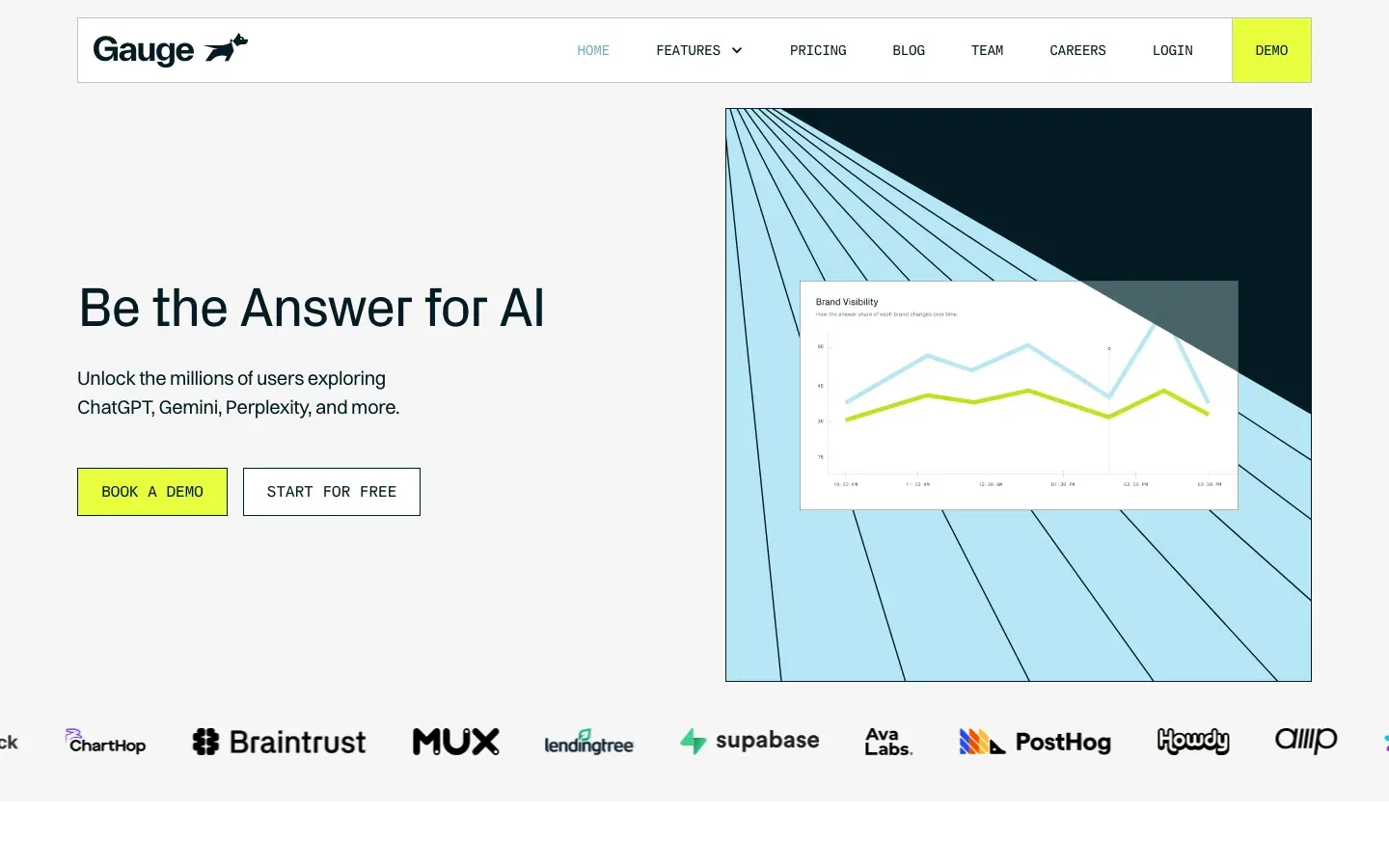
Best for: B2B software and SaaS companies focused on Generative Engine Optimization (GEO)
Gauge tracks brand presence across ChatGPT, Perplexity, Gemini, and Google AI Overviews, with a focus on surfacing optimization opportunities rather than just monitoring numbers.
Key features:
- Brand rankings and position tracking across AI platforms.
- Prompt intelligence showing which queries trigger brand mentions.
- Competitive analysis and competitor mention tracking.
- Citation opportunity identification
- Action Center with specific optimization recommendations.
- Daily monitoring of AI responses and mention trends.
Pricing: Growth at $599/month (600 prompts, daily runs, email + chat support); Enterprise custom. Free tier available.
What we found: Gauge’s Action Center is one of the better implementations of the “what do I do with this data” layer. It translates mention-rate gaps into content recommendations rather than leaving that interpretation to the user. Pricing sits between the mid-market dashboards and the enterprise tier — meaningfully cheaper than Profound but above AthenaHQ or OtterlyAI.
Profound
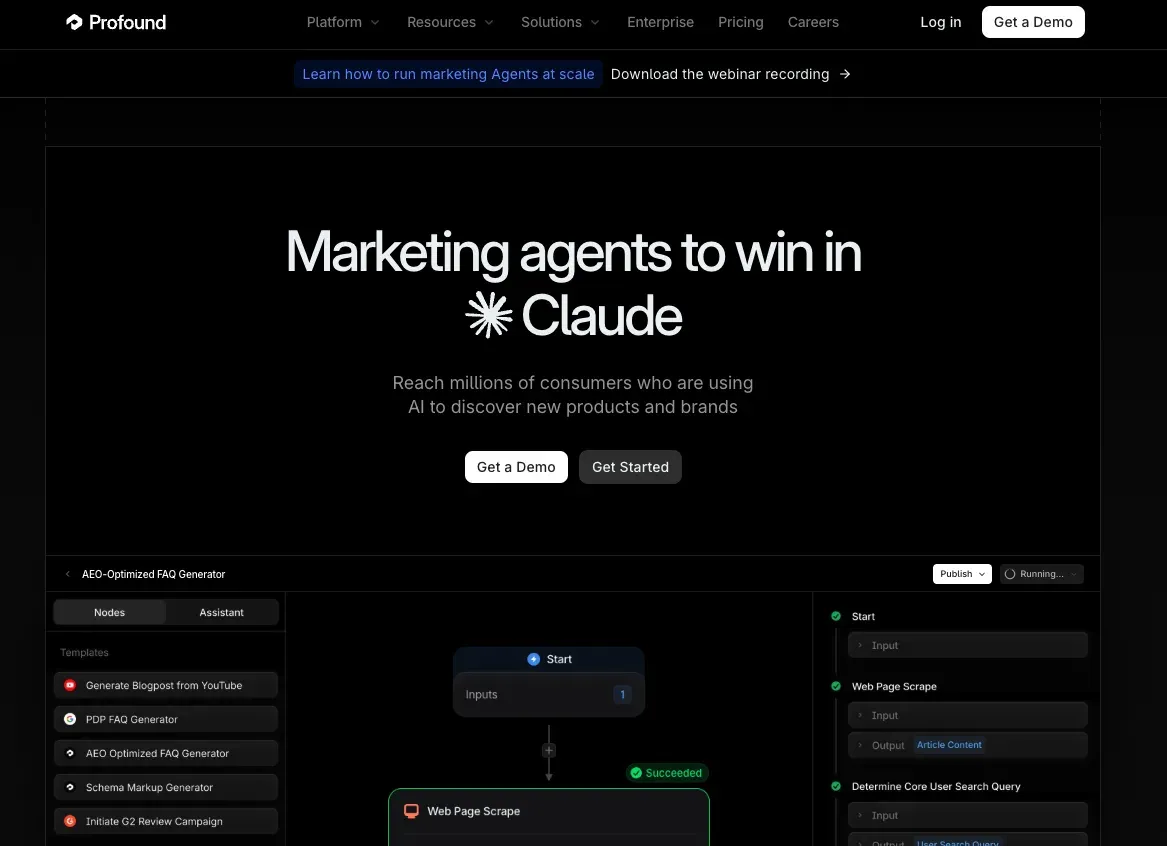
Best for: Enterprise brands requiring compliance-grade AI intelligence
Key features:
- Multi-LLM monitoring across 10+ platforms.
- Advanced sentiment analysis and context mapping.
- Enterprise-grade security and compliance (ISO certified)
- Custom API access and integration capabilities.
- Dedicated support and strategic consulting.
Pricing: Starter at $99/month, Growth at $399/month, Enterprise typically $1,500–$2,000+/month depending on platform coverage and seat count per Digital Elevator’s 2026 AEO pricing guide. Backed by a $96M Series C at a $1B valuation per Fortune, Profound is the G2 Winter 2026 AEO Leader.
What we found: Best fit for teams with a dedicated AI search function and the budget for the category leader’s full feature set. The enterprise tier reflects platform breadth (10+ engines including DeepSeek, Meta AI, Grok) plus compliance and dedicated support — the per-call rate is competitive within that scope. If the budget or polish is more than you need, our roundup of Profound alternatives compares six cheaper dashboards plus the build-your-own API route.
Peec AI
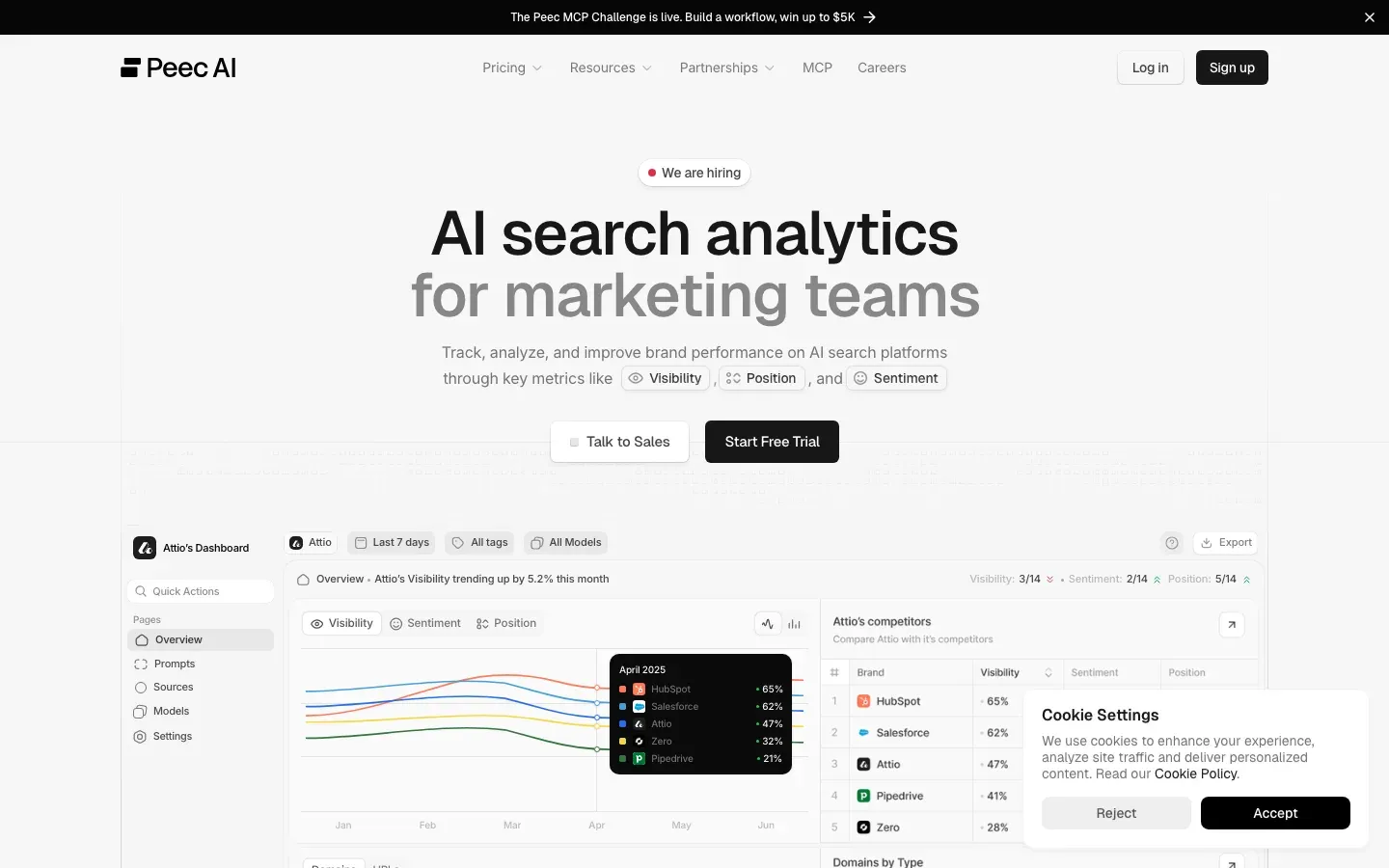
Best for: Companies wanting deep technical insights and competitor analysis
Key features:
- Real-time citation tracking across ChatGPT, Perplexity, Claude.
- Advanced competitor intelligence and gap analysis.
- Clickstream data integration for traffic correlation.
- Custom prompt building and testing capabilities.
- Historical trend analysis with detailed reporting.
Pricing: $2,000–$5,000/month
What we found: The clickstream integration is genuinely useful. It lets you correlate AI mention rate with actual traffic changes, which most tools can’t do. The price puts it in enterprise territory for most teams.
Brandlight
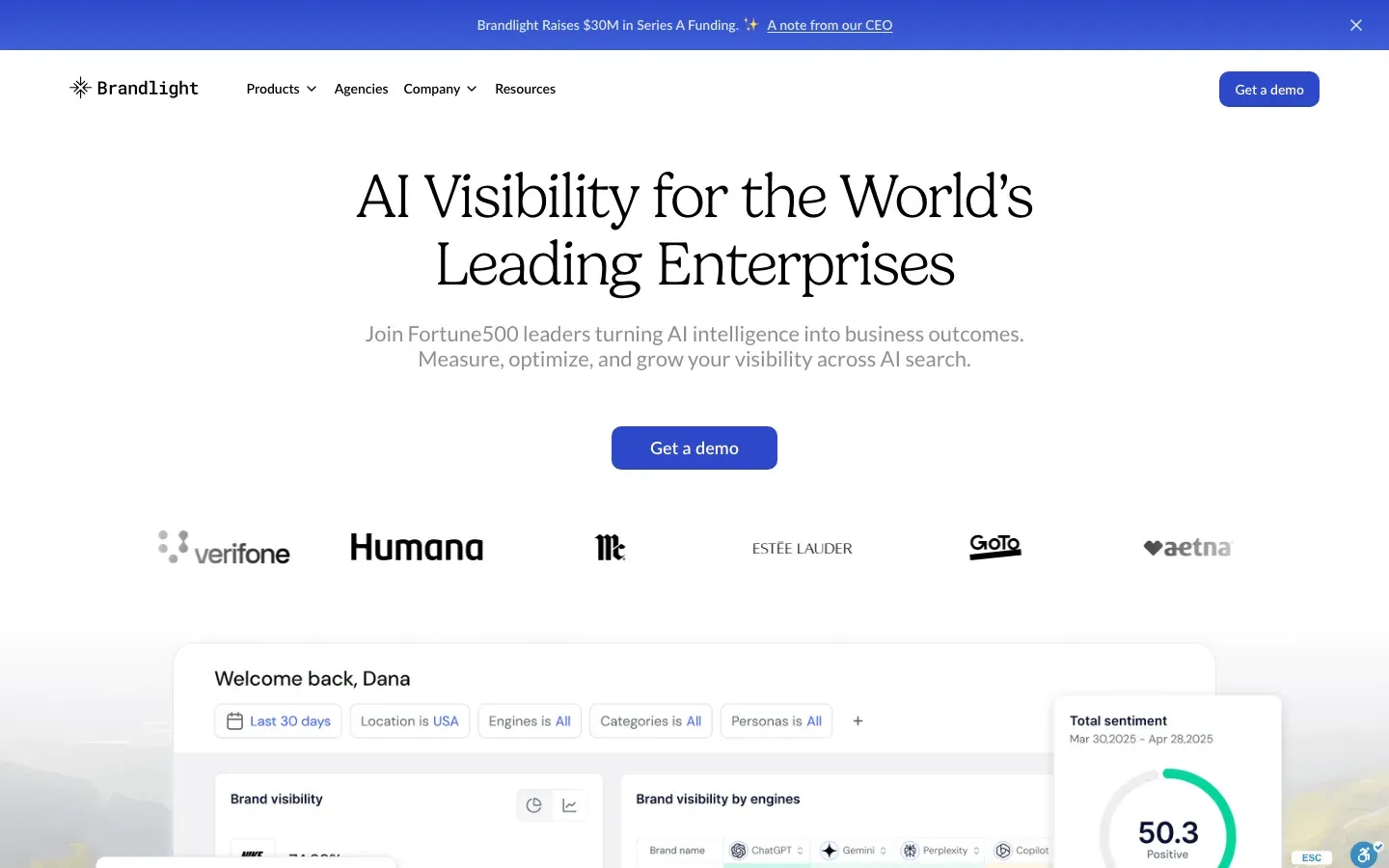
Best for: Companies needing automated issue detection and alerts
Key features:
- Monitors across major AI platforms for brand inaccuracies and negative mentions.
- Automated alerts with configurable thresholds.
- Tailored suggestions for improving AI visibility.
- Comprehensive brand health scoring
Pricing: $2,000–$4,000/month
What we found: Brandlight’s alert logic is more sophisticated than most. It flags inaccurate brand descriptions in AI responses, not just absence of mentions. Useful for brands with complex product lines where LLMs frequently confuse or misstate details — the kind of error pattern documented in Columbia’s Tow Center study, which found citation-accuracy rates varying widely across AI search engines (Grok-3 at 6%, others much higher but still imperfect).
DemandSphere
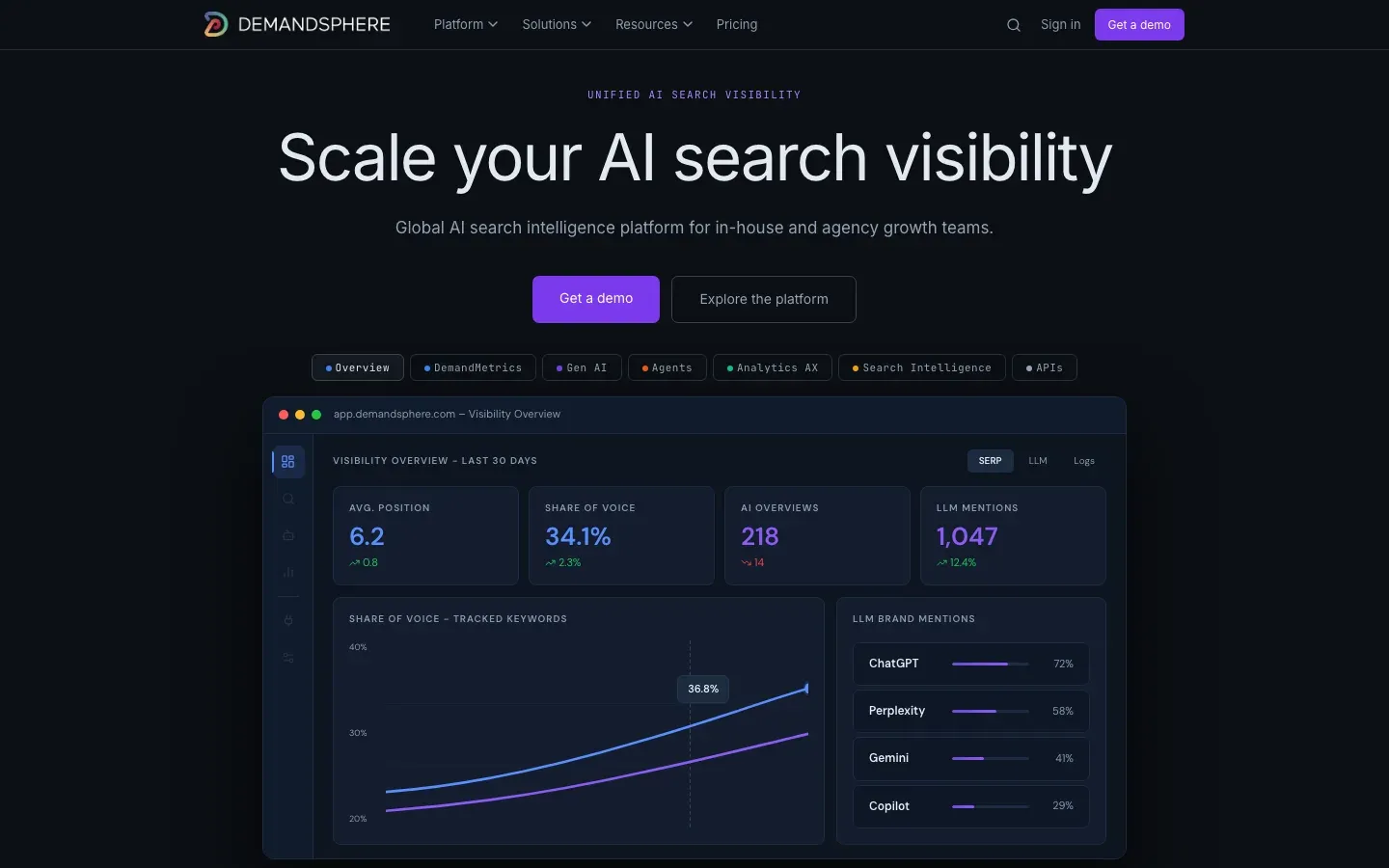
Best for: Enterprise SEO teams that already run a search-visibility programme and want AI-citation tracking layered on top of the same data foundation.
Key features:
- AI-citation tracking across ChatGPT, Perplexity, Gemini, and Google AI Overview.
- Integrated with traditional SERP and share-of-voice tracking.
- Enterprise reporting, multi-brand and multi-market support.
Pricing: Custom (contact required).
What we found: DemandSphere comes from the established enterprise-SEO side and the AI-visibility surface is built on top of the same infrastructure rather than as a standalone product. That makes it a fit for enterprises that want classic search and AI search reported through one pane of glass; standalone AI-citation teams may prefer a tool that was AI-native from day one.
Mid-market AI monitoring solutions
These LLM visibility tracking tools offer solid tracking depth at a price point that works for growing teams and agencies without dedicated AI search budgets.
Nightwatch
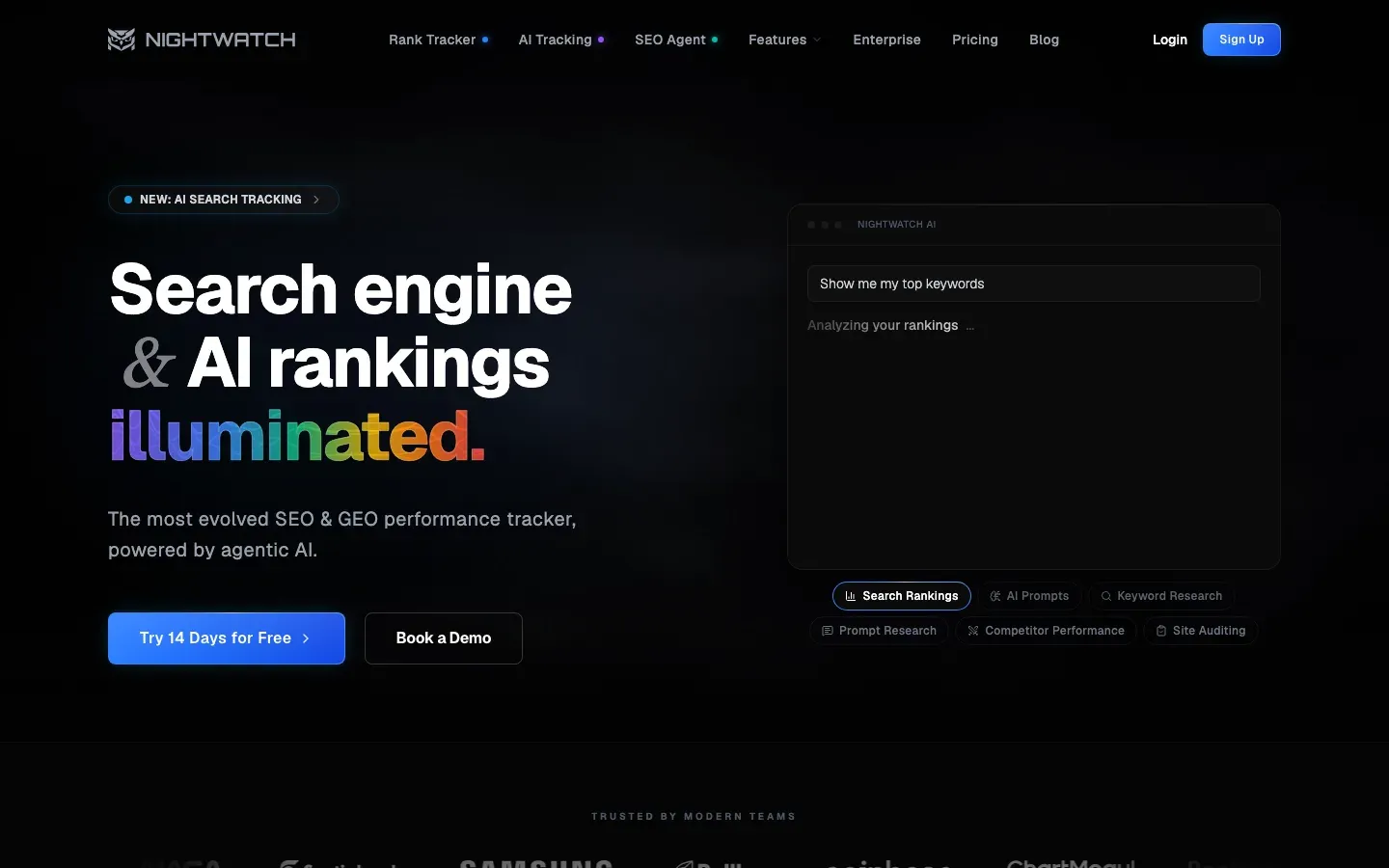
Best for: SEO agencies that want traditional rank tracking and LLM visibility in a single platform
Nightwatch positions itself as a “Search × AI” platform — 13 years of rank tracking data combined with LLM citation monitoring. The core thesis: AI platforms retrieve from search indexes, so Google rankings directly drive AI citations, and tracking both in one place surfaces the causal link.
Key features:
- Citation Intelligence — links Google SERP ranking changes directly to AI citation shifts, tracing an AI mention back to resulting search traffic for full attribution.
- Brand visibility monitoring across ChatGPT, Claude, Gemini, Perplexity, and Google AI Overviews.
- AI Visibility Score, Share of Voice, Sentiment Analysis, and Generative Rankings per model.
- 107,000+ tracking locations, zip-code level precision, 190+ countries.
- Unlimited user seats on every plan; white-label reporting standard on every plan.
- Developer API for extracting ranking data and AI insights into external dashboards.
Pricing: Not publicly listed. 14-day free trial, no credit card required.
What we found: The unlimited-seats model makes Nightwatch unusually cost-predictable for agencies managing multiple clients. Citation Intelligence is the most differentiated feature here — no other tool in this list explicitly connects SERP rank changes to AI citation shifts in a single view.
SE Ranking AI Search Toolkit
Best for: SMBs and agencies that want LLM visibility tracking bundled into an all-in-one SEO suite
SE Ranking’s AI Search Toolkit is three components in one: an AIO Tracker for Google AI Overviews, an AI Mode Tracker for Google’s conversational surface, and a Unified AI Visibility Tracker extending to ChatGPT, Perplexity, and Gemini. All three are integrated into SE Ranking’s broader SEO platform — not a separate product.
Key features:
- AIO Tracker with cached SERP copies, source/domain citation analysis, and geographic coverage across all Google AIO markets.
- AI Mode Tracker with unlinked brand mention detection, content performance by cited page, and link prominence analysis.
- “No cited” competitor gap feature — surfaces queries where competitors appear in AI answers but your brand does not.
- Daily position refreshes with historical trendlines.
- Local SEO tracking by ZIP code and city.
- Data exports, cached answers, and shareable links.
Pricing: Pro at $119/month (50 prompts); Business at $259/month (100 prompts); AI Search Add-on from $89/month. 14-day free trial. 20% discount on annual billing.
What we found: The competitor citation gap feature is the standout — it maps directly to a content brief by showing which queries send competitors into AI answers while your brand is absent. The gaps worth knowing: no sentiment analysis and no prompt discovery (you must manually define every prompt you want to track).
Semrush AI Visibility Toolkit
Best for: Marketing teams already on Semrush who want basic AI visibility without switching platforms
Launched in late 2025 as an add-on to Semrush’s existing platform, the AI Visibility Toolkit tracks brand performance in AI-generated results. For teams already paying for Semrush, it’s the lowest-friction way to get AI citation data without adding a second tool.
Key features:
- AI Visibility Score based on 130M+ prompts across 8 regions.
- 25 prompts included by default, expandable at $60/month per 50 additional.
- Track up to 9 competitors simultaneously.
- AI SEO Audit identifying optimization gaps.
- Business Landscape reports and sentiment analysis.
- Free AI Search Visibility Checker with limited functionality.
Pricing: $99/month as a standalone add-on; included in Semrush One plans at $199–$549/month. Additional domains and users at $99 each.
What we found: Platform coverage is the main limitation — only ChatGPT, Google AI Overviews, and Google AI Mode are tracked. Perplexity, Claude, and Copilot are absent. For teams that primarily care about Google’s AI surfaces, that’s workable. For anyone needing cross-platform AI visibility, it’s a meaningful gap. Pricing also escalates quickly: adding one teammate and 50 extra prompts brings the total to $258/month.
AthenaHQ
Best for: Growing SaaS companies and digital agencies
Key features:
- Comprehensive AI search monitoring across major platforms.
- Share of voice tracking and competitive analysis.
- User-friendly dashboard with clear metrics.
- Weekly reporting with trend analysis.
Pricing: $199–$499/month
What we found: AthenaHQ has the best-designed dashboard of the mid-market tools. Reporting is clear enough that non-technical stakeholders can read it without explanation, which is relevant if you’re producing weekly visibility reports for clients or internal teams. Coverage is strong across ChatGPT, Perplexity, and Gemini, with AI Overview tracking supported at the standard reporting cadence. AthenaHQ emerged from stealth in 2025 with a founding team out of Google Search and DeepMind, Y Combinator backing, and 90+ Fortune 500 customers per its own published comparison.
OtterlyAI
Best for: Companies wanting broad AI platform coverage
Key features:
- Monitors citations across ChatGPT, Claude, Perplexity, and more.
- Sentiment analysis and context tracking.
- Technical content issue detection
- Multi-platform comparison tools
- Export capabilities for reporting
Pricing: $249–$599/month
What we found: OtterlyAI evolved from general brand monitoring into AI-specific tracking, which shows up positively in broad platform coverage and in the unified product surface for AI plus traditional brand monitoring. Citation parsing depth varies by surface; teams with a primary need for unified brand monitoring (AI plus mentions across the open web) get more value out of the bundled platform than from running two specialist tools.
Scrunch
Best for: Brands that want a focused, AI-native visibility tracker without the surface-area sprawl of a full-suite SEO platform.
Key features:
- Brand-mention and citation tracking across ChatGPT, Perplexity, Gemini, and Google AI Overview.
- Competitor benchmarking inside AI answers.
- Reporting tuned to AI-search KPIs rather than classic SERP metrics.
Pricing: Custom (contact required).
What we found: Scrunch is purpose-built for the AI-visibility category — newer than the established enterprise tools, but the product is shaped around AI-answer behaviour rather than retrofitted onto a classic-SEO chassis. The narrower scope is the trade-off: teams that want AI plus traditional rank tracking under one tool will look elsewhere.
Evertune
Best for: Teams measuring brand presence inside AI search and wanting prompt-level analytics on how their category gets answered.
Key features:
- AI brand-search tracking across ChatGPT, Perplexity, and Gemini.
- Prompt-level breakdown of how often a brand surfaces vs. competitors for category queries.
- Reporting designed around share-of-voice in AI answers.
Pricing: Custom (contact required).
What we found: Evertune leans toward the analytics-and-reporting side rather than the monitoring-and-alerting side. Strong fit for marketing teams who want to understand the structure of brand presence inside AI answers — which prompts surface which brands, where the share-of-voice gaps are — rather than just being told a citation count changed.
aiclicks.io
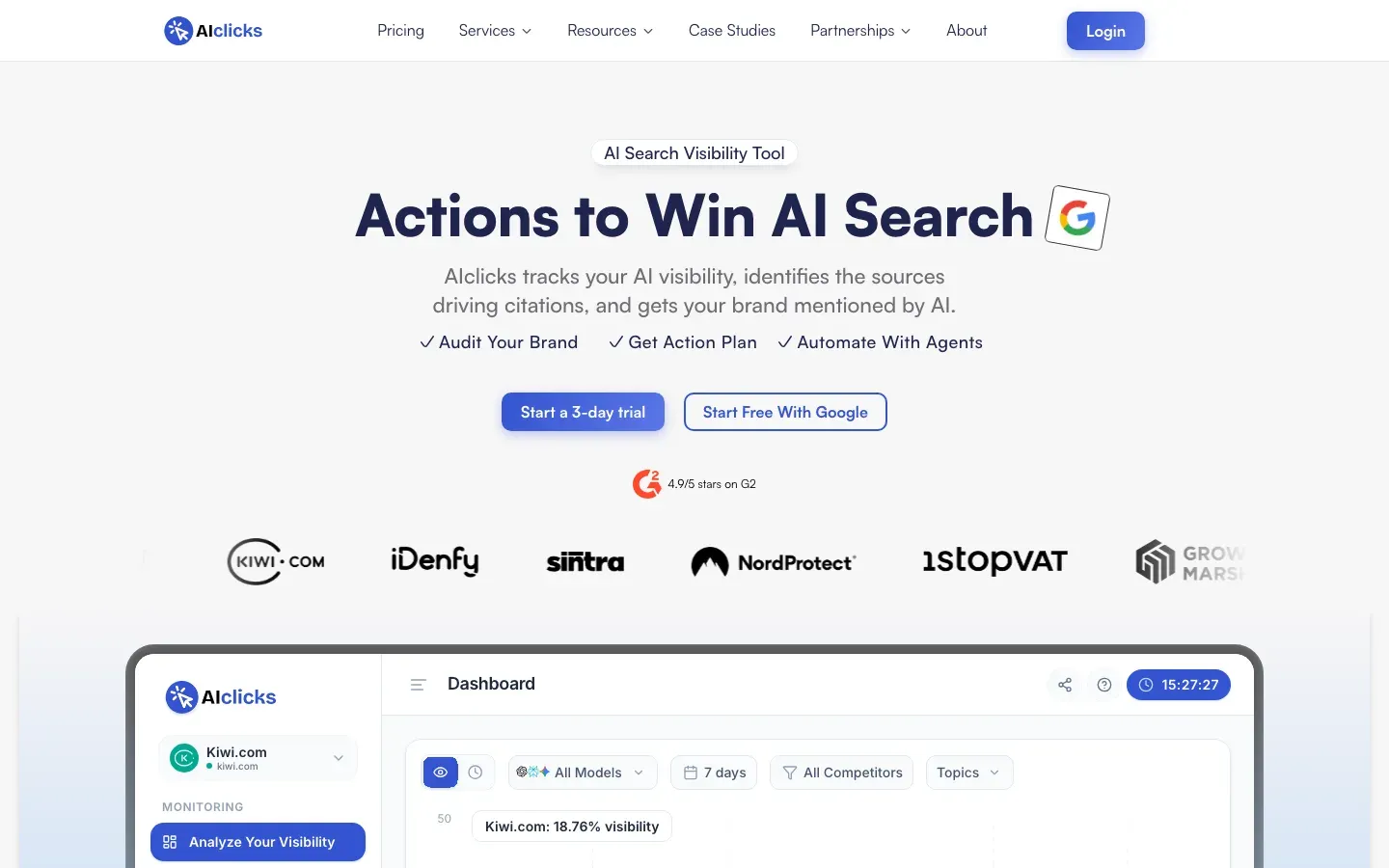
Best for: Teams wanting to track and optimize AI search visibility in one workflow
aiclicks.io covers ChatGPT, Perplexity, Gemini, Copilot, and AI Overviews, with a built-in content creation workflow alongside the tracking features.
Key features:
- Prompt-level visibility and performance analysis.
- Brand mentions, citations, and sentiment tracking.
- Competitor benchmarking and gap analysis.
- AI-optimized content creation workflows with built-in writer.
- Google Search Console integration for technical health.
- Large prompt database covering multiple AI platforms.
Pricing: Starting at $39/month (promotional, regular $79) for Starter; up to $499/month for Business
What we found: Combining tracking and content creation in one tool is useful for a solo operator or small team since it reduces the number of tabs you need. The Search Console integration is a practical touch, giving you a side-by-side view of classic search and AI visibility in the same dashboard.
Budget-friendly options for getting started
Authoritas Visibility Explorer
Best for: Agencies managing multiple clients
Key features:
- AI citation tracking across 30+ markets.
- Daily difference reports for quick insights.
- Multi-client dashboard capabilities
- Keyword-level tracking and analysis
- Export and reporting features
Pricing: $99–$299/month
What we found: Authoritas is the strongest pick at this price for agencies. The multi-client structure is genuinely designed for the agency workflow rather than bolted on — each client gets its own query set, reporting view, and alert thresholds. The daily difference reports make it easy to spot changes without manually reviewing all data each morning.
Ahrefs Brand Radar
Best for: Existing Ahrefs users who want AI visibility without a second subscription
Key features:
- ChatGPT tracking capabilities added to existing Ahrefs subscription.
- Two months of historical data.
- Integration with Ahrefs’ extensive SEO data.
- Brand mention monitoring across web and AI.
Pricing: Included in Ahrefs subscriptions ($129+/month)
What we found: Brand Radar fits naturally into the workflow of teams already running Ahrefs for traditional SEO. The AI tracking is built on top of Ahrefs’ substantial prompt corpus — Brand Radar monitors brand visibility across 243M+ monthly prompts derived from real “People Also Ask” data — and the integration with the rest of the Ahrefs suite is the strongest in the legacy-SEO-plus-AI category. The authority-to-citation thesis behind the product is supported by Ahrefs’ own 75,000-brand correlation study, which found that branded web mentions and YouTube mentions outperform raw backlink metrics as AI visibility predictors. Best fit if you’re already invested in the Ahrefs workflow rather than evaluating AI tracking standalone.
DIY approaches for technical teams
Teams with engineering resources sometimes want to build custom LLM visibility pipelines rather than buy a dashboard product. The two most common approaches are scraping-based and API-based.
Scraping-based pipelines
A typical stack uses a proxy service (BrightData, Oxylabs, or similar) for IP rotation, a browser automation framework (Playwright or Selenium), a database for storing response history, and custom scripts for citation extraction and analysis.
Estimated cost: $500–$2,000/month in infrastructure plus 2–3 months of initial development time.
The main challenge isn’t the scraping itself. It’s maintaining the parsing layer as AI engines update their response formats. A scraper that extracts citations cleanly in January may miss 30% of them by April after a UI change.
cloro offers a developer-focused alternative: it handles the scraping and citation parsing layer, returning structured data via API, so engineering teams can focus on the analysis and reporting they actually want to build rather than infrastructure maintenance.
API-based pipelines
Where official APIs exist (OpenAI, Anthropic, Google), you can build query automation directly — submitting prompts via API, parsing responses, and storing mention data. The advantages are reliability and cleaner compliance posture. The practical limitations: official APIs don’t expose citation data the way a live search engine does, and coverage is limited to the models themselves rather than the AI search surfaces (AI Overview, Perplexity’s web-search mode) where most citation behavior happens.
Hybrid approach
Most engineering teams that go DIY end up with a hybrid: an off-the-shelf tool or API for data collection, with custom analysis and reporting built on top. This gets you to production faster and keeps the maintenance surface small. Feeding structured citation data into a data warehouse and building views from there tends to produce more useful dashboards than any off-the-shelf tool’s built-in reporting.
Which LLM visibility tools offer an API?
Short answer: most of the 15 dashboards above are not API-first, and the ones that expose an API gate it to their higher tiers. If programmatic access is a hard requirement, treat it as a filter to apply before you shortlist, not a box to tick afterwards.
Three access patterns exist, and vendors use the word “API” for all three:
- Scheduled export. CSV or Google Sheets drops, sometimes a Looker Studio connector. Fine for reporting, useless for a live product feature. This is the most common thing sold as integration.
- Read API on the dashboard’s own data. You query the vendor’s stored results for your tracked prompts. Useful for pulling their numbers into your BI stack. You are still limited to the prompts, engines, and cadence their plan allows.
- Raw data API. You submit any prompt to any surface and get the parsed response back. This is the infrastructure layer, and it is a different product category rather than a dashboard feature.
Two caveats worth more than a comparison table here. API availability moves between pricing tiers often enough that any list published today is stale within a quarter, so confirm against the vendor’s current docs before you commit. And an API on a dashboard product is usually rate-limited against the prompt allowance you already bought, so “has an API” does not mean “can back a product feature.”
If you need the third pattern, the API infrastructure layer section below covers it, and cloro’s AI visibility API returns parsed citations across ChatGPT, Perplexity, Gemini, Copilot, AI Overview, and AI Mode from one endpoint.
If you’re building this yourself
If you’re an engineer reading this, the dashboard reviews above probably weren’t what you came for. The build-vs-buy decision shakes out across four questions.
1. Do you actually need a dashboard? The 15 LLM visibility tracking tools above all spend a meaningful share of their pricing on UI, reporting, and stakeholder-friendly features. If your output is a CSV that lands in a data warehouse, an internal Looker board, or a custom client report — you’re paying for the UI layer and throwing it away. The API layer underneath is cheaper, and in 2026 the underlying APIs are mature enough that the build is small.
2. What’s your engineering volume? Up to ~5,000 queries per month, a managed dashboard is faster to stand up than building anything yourself. Past 50,000 queries per month or 10+ tracked clients, the per-seat dashboard pricing crosses over the per-call API pricing and an in-house build pays for itself in 2-4 months. The middle band (5-50k queries) is where the build-vs-buy calculus depends on whether you already have the BI and ops infrastructure to host the output.
3. Which engines matter? Most dashboards above cover ChatGPT, Perplexity, Gemini, and AI Overview. Copilot and AI Mode are spottier — only some dashboards cover them, and coverage depth varies. An API like cloro’s AI visibility API (the LLM visibility API underneath several of the dashboards reviewed above) covers all six surfaces under one endpoint and one credit pool, which simplifies the integration when you need cross-engine comparison.
4. What does the build actually look like? Three patterns dominate: (a) in-house dashboard — nightly scheduler → API → Postgres → Metabase/Looker → Slack alerts; (b) agency multi-tenant — per-client query lists → API with per-tenant keys → per-client Postgres schemas → white-label reports; (c) BI warehouse integration — daily batch → BigQuery/Snowflake → joined with GA4, Search Console, CRM. All three are 1-2 weeks of engineering time using a managed API as the data layer.
For ChatGPT-specific brand-mention tracking (the ChatGPT brand mentions API path), the how to monitor ChatGPT mentions guide covers the integration end-to-end on top of cloro’s ChatGPT scraper API.
The API infrastructure layer
The 15 LLM visibility tracking tools above are all dashboard products. If you need the raw data layer — structured citation responses you can query, join with other datasets, and pipe into your own reporting — that’s a different product category.
cloro
Best for: Developers and engineering teams building custom AI visibility dashboards, multi-tenant agency tools, or BI data feeds
cloro is not a dashboard. It’s the API infrastructure layer that several of the tools above use to pull raw LLM data. One endpoint covers ChatGPT, Perplexity, Gemini, Copilot, Google AI Overview, Google AI Mode, Google Search, and Google News — and returns structured JSON with parsed source URLs, query fan-out terms, and shopping card data, not screenshots.
Key features:
- Single unified API endpoint across all major AI search surfaces.
- Structured JSON responses: cited source URLs with position, label, and description per citation.
- Query fan-out terms showing which sub-queries the AI explored internally.
- Async + webhook support for high-volume batch workloads.
- Credits only deducted on successful extraction — failed requests don’t cost you.
- 99.99% uptime SLA; 1,000,000,000 monthly API calls.
Pricing:
| Plan | Monthly | Credits | Cost per 1,000 credits | Concurrent jobs |
|---|---|---|---|---|
| Hobby | $100 | 250,000 | $0.40 | 20 |
| Starter | $250 | 650,000 | $0.39 | 50 |
| Growth | $500 | 1,350,000 | $0.37 | 75 |
| Business | $1,000 | 2,800,000 | $0.36 | 100 |
| Enterprise | $2,000+ | 5,800,000+ | $0.34 | 135+ |
Free trial: 500 credits. No UI required — start with the API docs.
What we found: The build-vs-buy math shifts at around 50,000 queries/month or 10+ tracked clients — at that scale, per-call API pricing undercuts per-seat dashboard pricing by a meaningful margin. Below that threshold, a managed dashboard is faster to stand up. The async endpoint is the right choice for nightly batch jobs; sync adds +2 credits per request but returns results inline.
What to look for in an AI visibility tool
Before selecting an AI visibility tool, it helps to be clear on what you actually need versus what sounds appealing in a demo. A few criteria worth pressure-testing:
Engine coverage, specifically. Ask which engines are tracked and whether coverage is via official API or browser automation. Tools that use official APIs only miss AI Overview and Perplexity’s web-search surface, which are the citation-heavy surfaces most relevant for SEO purposes. If a vendor is vague about methodology, that’s worth following up on.
Citation data format. The difference between a tool that returns screenshot-based citations and one that returns structured, queryable URLs is significant if you want to do anything programmatic with the data, like tracking whether a specific piece of content is being cited, or building a citation share-of-voice calculation.
Query customization. The queries you track determine what you learn. Tools that let you import queries from Search Console or define custom prompt templates give you more signal than tools that auto-generate queries from your domain. For AI SEO work, you want to track the same commercial-investigation queries your target buyers actually use.
Reporting vs. data access. If you want a dashboard and weekly email summary, almost every one of these LLM visibility tracking tools will work. If you want to pipe data into a spreadsheet, BI tool, or custom application, you need a tool with a real API or clean data export. These are different requirements and different tools serve them best.
Update frequency at your query volume. Pricing usually scales with query volume and update frequency. A tool that seems affordable at 50 queries per week may be expensive at 500. Before committing, run the math on your actual query scope at the cadence you’d want — most teams discover they need weekly, not daily, which changes the cost calculus significantly.
How to choose: a working decision tree
Putting it all together:
- You want a polished dashboard with ready-made workflows for SEO leads (not engineers): AthenaHQ or Profound. AthenaHQ is the more affordable of the two with most of the depth.
- You’re an agency combining traditional rank tracking with AI visibility: Nightwatch — unlimited seats, white-label on every plan, and Citation Intelligence links SERP changes to AI citation shifts.
- You want AI visibility inside an all-in-one SEO suite without a second subscription: SE Ranking — the competitor citation gap feature alone is worth the entry price for content teams.
- You’re already paying for Semrush: the Semrush AI Toolkit add-on is the lowest-friction starting point, with the caveat that Perplexity and Copilot coverage is absent.
- You’re already paying for Ahrefs: Ahrefs Brand Radar is good enough for visibility checks before committing to a second tool.
- You’re an agency managing visibility for many brands: Authoritas Visibility Explorer or Search Atlas. Both have multi-client dashboards designed for agency workflows.
- You’re a solo operator with one brand and a small budget: aiclicks.io or OtterlyAI to start.
- You need automated alerting for brand-description accuracy or sentiment: Brandlight has the most sophisticated alert logic for this use case.
- You’re a B2B SaaS focused on Generative Engine Optimization: Gauge surfaces optimization actions, not just monitoring numbers.
- You’re an enterprise SEO team already running a search-visibility programme: DemandSphere brings AI-citation tracking onto the same data foundation rather than asking you to run a second tool.
- You want prompt-level share-of-voice analytics across your category: Evertune is shaped around that question specifically; Scrunch is the AI-native option if you want a focused tracker without traditional-SEO scope.
- You’re an engineer building a custom dashboard, multi-tenant tool, or BI data feed: cloro — one API endpoint, structured JSON, all six major AI surfaces, credits only on successful extraction.
If you frame the same buying decision around answer engine optimization rather than raw LLM tracking, our best AEO tools comparison ranks these platforms by engine coverage, citation intelligence, API access, and price.

About the author
Ricardo Batista
Founder, cloro
Ricardo is one of the founders and engineers behind its SERP and AI-search scraping infrastructure. Before cloro he scaled a financial comparison site to $7M ARR and ran the full-country operations of a unicorn to $65M ARR, then went back to building. He writes about search engine scraping, generative-engine optimization, and turning live search and AI-answer data into something teams can act on.
Frequently asked questions
What's the difference between LLM observability and LLM visibility monitoring?+
LLM observability tracks the technical performance of the models your own application calls — tokens, latency, cost, traces, and error rates — using tools like Datadog LLM Observability, LangSmith, and Helicone. LLM visibility monitoring tracks what LLMs say about your brand in their answers: mention rate, citations, and share of voice across ChatGPT, Perplexity, Gemini, and Google AI Overviews. Observability is engineering telemetry for your AI features; visibility monitoring is a marketing and SEO surface. This guide covers visibility monitoring.
What is an LLM visibility tracking tool?+
An LLM visibility tracking tool monitors whether and how your brand appears in answers generated by large language models — ChatGPT, Perplexity, Gemini, Google AI Overview, Copilot, AI Mode. The tool runs target queries on a schedule, extracts the AI response and citation list, and reports your brand's mention rate, share of voice versus competitors, and citation count over time.
What's the best LLM visibility tool in 2026?+
It depends on your needs. For a polished dashboard with ready-made workflows, AthenaHQ and Profound lead. For agencies combining rank tracking and AI visibility, Nightwatch is the strongest unified option. For SMBs wanting AI tracking inside an all-in-one SEO suite, SE Ranking is the most cost-effective. For teams that want to build their own tracking on top of raw citation data across all major engines, cloro is the underlying API layer. Most teams use a programmatic data source plus a dashboard tool, not one all-in-one.
What is the difference between an LLM visibility checker and an LLM visibility tracker?+
A checker is a one-off read: you run a prompt set now and see whether your brand is named. A tracker runs the same prompts on a schedule and keeps the history, so mention rate becomes a trend you can act on. The practical consequence is that a checker cannot tell you whether last month's content work moved anything, because it stores nothing between runs. Free tools are almost always checkers; every paid tool in this guide is a tracker or better.
Which LLM visibility tools offer an API?+
Most of the 15 dashboards in this guide are not API-first, and those that do expose one gate it to higher tiers and rate-limit it against the prompt allowance you already bought. Vendors also use "API" for three different things: scheduled CSV exports, a read API over their own stored results, and a raw data API you can send any prompt to. Only the third can back a product feature. Confirm against current vendor docs, since API access moves between tiers frequently, and see cloro's AI visibility API for the raw-data layer.
Is there a free AI visibility checker?+
Yes — several vendors offer a free AI visibility checker for a quick one-off read on how your brand appears in AI answers. Semrush's free AI Search Visibility Checker and the limited tiers of tools like Ahrefs Brand Radar let you spot-check a handful of prompts without a paid plan. Free checkers are fine for a single snapshot, but they don't build the citation history, share-of-voice trend, and change detection that a paid AI visibility tool provides — for ongoing monitoring you need scheduled tracking, not a one-time check.
What is AI rank tracking?+
AI rank tracking measures a brand's inclusion in AI-generated answers using prompts as the core unit of measurement, rather than traditional keyword-to-URL position. Instead of asking 'what position does my URL rank at?', it asks 'does my brand appear in the AI answer for this query, and is my URL cited as a source?'
What is citation rate in AI search?+
Citation rate is the share of AI-generated answers that include a specific URL as a cited source. It is the primary KPI for AI SEO work, replacing traditional click-through rate. A page can rank #1 in organic search and still have a near-zero citation rate in AI answers — the two metrics are largely independent.
How often should LLM visibility tracking run?+
Monthly is the floor for trend monitoring. Weekly is appropriate for active brand-management programs. Daily is overkill — AI engines don't update citation patterns that fast, and you'll burn API credits without learning anything new. Crisis situations (PR events, product launches) justify daily checks for the duration of the event.
Can I track LLM visibility without a paid tool?+
For under ~20 queries, yes — you can run them manually and track results in a spreadsheet. Above that, the data structures you'll build (citation history, share-of-voice tracking, change detection) are essentially what these tools provide off the shelf, and at small scale a $40–100/month tool will pay for itself in saved hours within the first week.
What metrics do LLM visibility tools actually track?+
The four foundational metrics are: (1) mention rate — % of target queries that include your brand; (2) share of voice — your mentions divided by total competitor mentions; (3) citation rate — % of mentions that include your URL as a source; (4) sentiment — whether the mention is positive, neutral, or negative. Some tools layer additional features like prompt-pattern analysis and competitor gap reporting on top.
Which AI visibility platform reports the most complete metric set?+
No platform in this roundup reports all five well, so the honest answer is to pick by the metric you report to the business. Evertune and AthenaHQ are built around share of voice, Peec AI and Nightwatch lead on citation-level detail, Profound and OtterlyAI treat sentiment as a first-class metric, and DemandSphere lands AI citation data on the same foundation as traditional share-of-voice reporting. The metric most often missing is cross-engine coverage: many platforms pool six engines into one average, which hides being invisible on a single engine. If you need the full set on your own definitions, computing it from a raw AI visibility API is the alternative to buying a dashboard.
How do LLM visibility tools differ from traditional SEO tools?+
Traditional SEO tools (Ahrefs, Semrush, etc.) track classic Google rankings — what URL appears at what position. LLM visibility tools track whether your brand is named or cited in an AI-generated answer, which is a different surface with different ranking factors. The two complement each other; neither replaces the other in 2026.
Related reading
Best AI SEO Tools 2026: 11 Dashboards Compared
We tested 11 AI SEO tools across citation tracking, content optimization, and full suites. Compare pricing, engine coverage, and the real trade-offs.
ChatGPT Visibility Tracker: Track Your Brand Mentions
Learn how a ChatGPT visibility tracker works, run a free manual baseline, and compare the best tools to monitor your brand mentions in AI search.
How to Make ChatGPT Recommend Website Pages Like Yours
Learn how to get ChatGPT to recommend your website: content structure, authority signals, and technical fixes that lift your link inclusion rate.