12 Best Competitive Intelligence Tools (2026 Review)

On this page
If you only need one answer: Semrush is the best all-round competitive intelligence tool for SEO and PPC teams, Klue wins for sales enablement, Similarweb for high-level market sizing, and cloro if you need raw SERP and AI-search data piped into your own warehouse — the SERP data primitive other CI tools build on.
Below is the long version: our ranking of the best competitive intelligence tools, 12 we’ve used or tested in 2025 and 2026, ordered by the job each does best, with pricing, one differentiator, and one weakness for each.
How we evaluated these tools
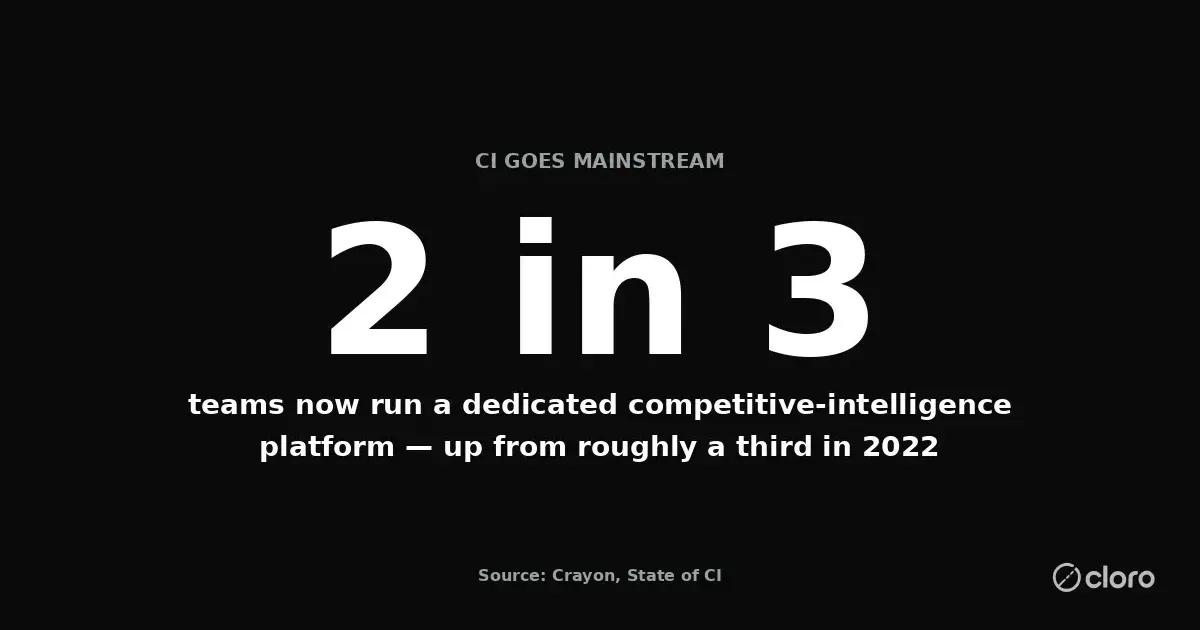
Competitive intelligence has moved from a nice-to-have to standard practice. According to Crayon’s State of Competitive Intelligence report, two-thirds of teams now run a dedicated CI platform, up from roughly a third in 2022. The question for most buyers is no longer whether to invest, but which of the best competitive intelligence tools fits the workflow they already have.
What we tested
Our analysis covered 12 competitive intelligence tools that we either pay for at cloro or have run side-by-side with customers in the last 12 months. We signed up for the lowest paid tier or trial wherever one was available. We then ran a tracked competitor through each tool and pushed its export and API limits to find where the usable data actually stopped.
How we scored
For each tool we ran the same four checks: coverage depth, refresh cadence, export and API freedom, and whether the workflow survives contact with a real team. Pricing reflects publicly listed plans as of March 2026, and quote-based vendors are flagged as such. We deliberately avoided ranking by “feature count.” Feature lists do not predict whether a tool earns its seat, and the best competitive intelligence tools tend to win on the single job they do better than anything else.
What competitive intelligence software does
Competitive intelligence software collects, structures, and monitors public signals about your rivals so a team can act on them without manual digging. The category splits into four jobs: search and traffic analysis, sales battlecards, brand and social listening, and raw data access for teams that build their own view. Most competitive intelligence tools do one of those jobs well and treat the rest as checkboxes.
The practical implication is that “best” depends entirely on the job. A tool that dominates backlink analysis can be useless for win-loss tracking, and a platform built for sales battlecards will not tell you what your rivals look like inside AI search. The ranking below is organized around that reality, placing each tool by the one job it does better than the alternatives.
1. Semrush — best all-round CI tool for SEO and PPC
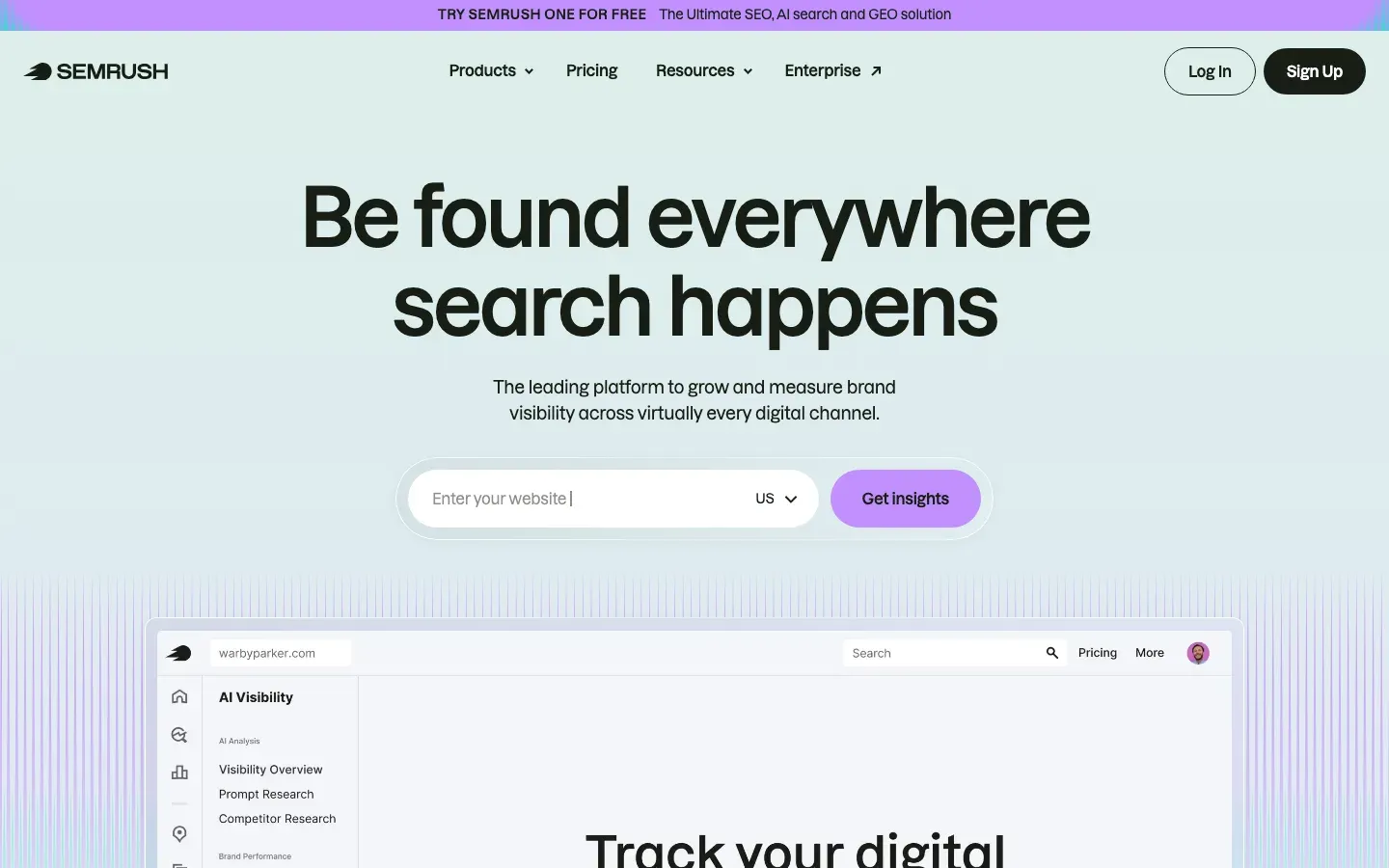
Starting price: $139.95/mo (Pro plan). Best for: in-house marketing teams and agencies running both SEO and paid search.
Semrush is the default we keep coming back to because the same seat covers organic keyword tracking, backlink discovery, paid-ad copy, and (since the 2022 acquisition) Kompyte battlecards. Position Tracking refreshes daily against named competitors, and the Advertising Research module shows the exact ad copy a rival has tested historically, which is useful for new-market entry.
Weakness: add-ons (App Center, Local, .Trends) stack quickly. A “real” enterprise stack lands at $400–$500/mo per seat once you turn on what you actually need.
2. Ahrefs — best for backlink and content gap analysis
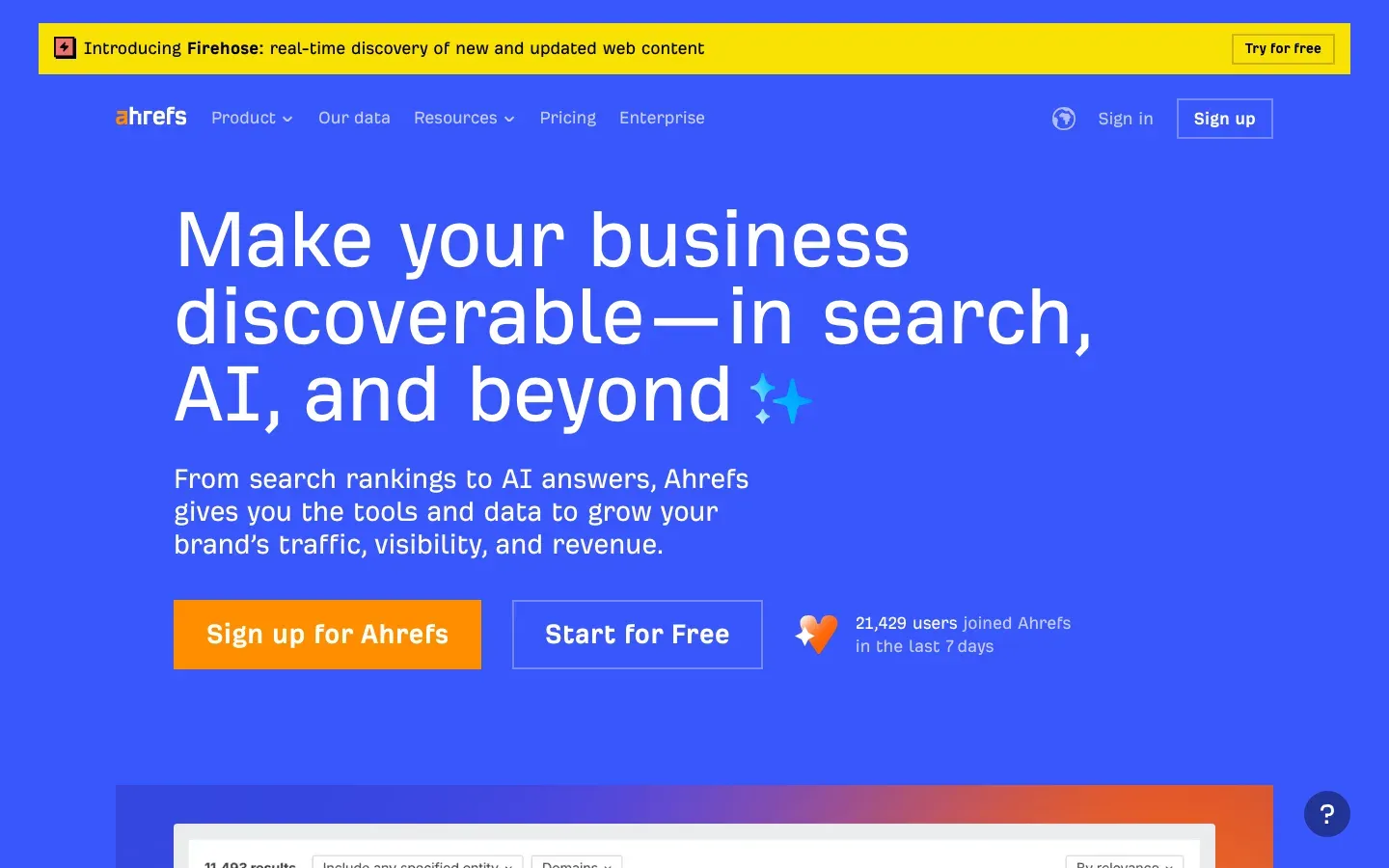
Starting price: $129/mo (Lite). Best for: SEO teams who treat link acquisition as a core channel.
Ahrefs’ backlink index is still the largest one we’ve benchmarked. When we tested overlap on a mid-sized SaaS domain, Ahrefs surfaced 18% more referring domains than Semrush and 31% more than Moz. Site Explorer’s “Content Gap” view is the fastest way to find keywords two competitors rank for that you don’t.
Weakness: Ahrefs charges per-credit on most reports now. Heavy users on the Lite plan will hit caps within the first week.
3. Similarweb — best for market sizing and traffic share
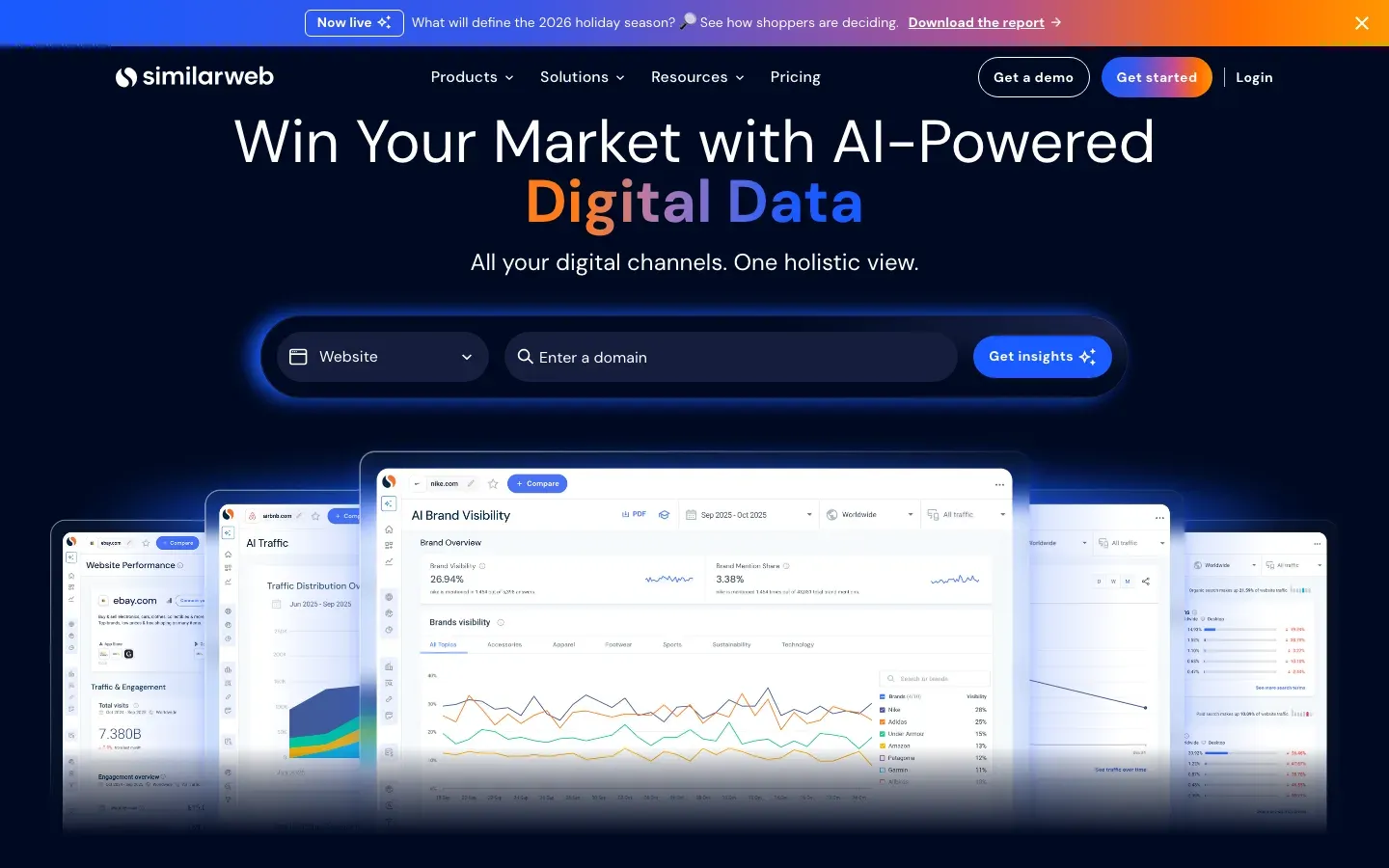
Starting price: quote-based (Team plan typically $1,500–$2,500/mo). Best for: strategy and market-intelligence teams sizing a category.
Where SEO tools answer “what keywords do they rank for,” Similarweb answers “how big is this market and who is winning it.” Its panel and ISP-level data gives modeled but directionally reliable splits across direct, organic, paid, social, and referral traffic, plus mobile-app usage.
Individual users do get public prices: AlphaSense lists Similarweb Starter at $125/month and Professional at $333/month, billed annually. Team pricing stays undisclosed.
Weakness: the metrics are modeled estimates. They’re fine for trend lines but you should not present them as ground truth in a board deck. Pricing is also opaque and steep for small teams.
4. Crayon — best for formal CI programs
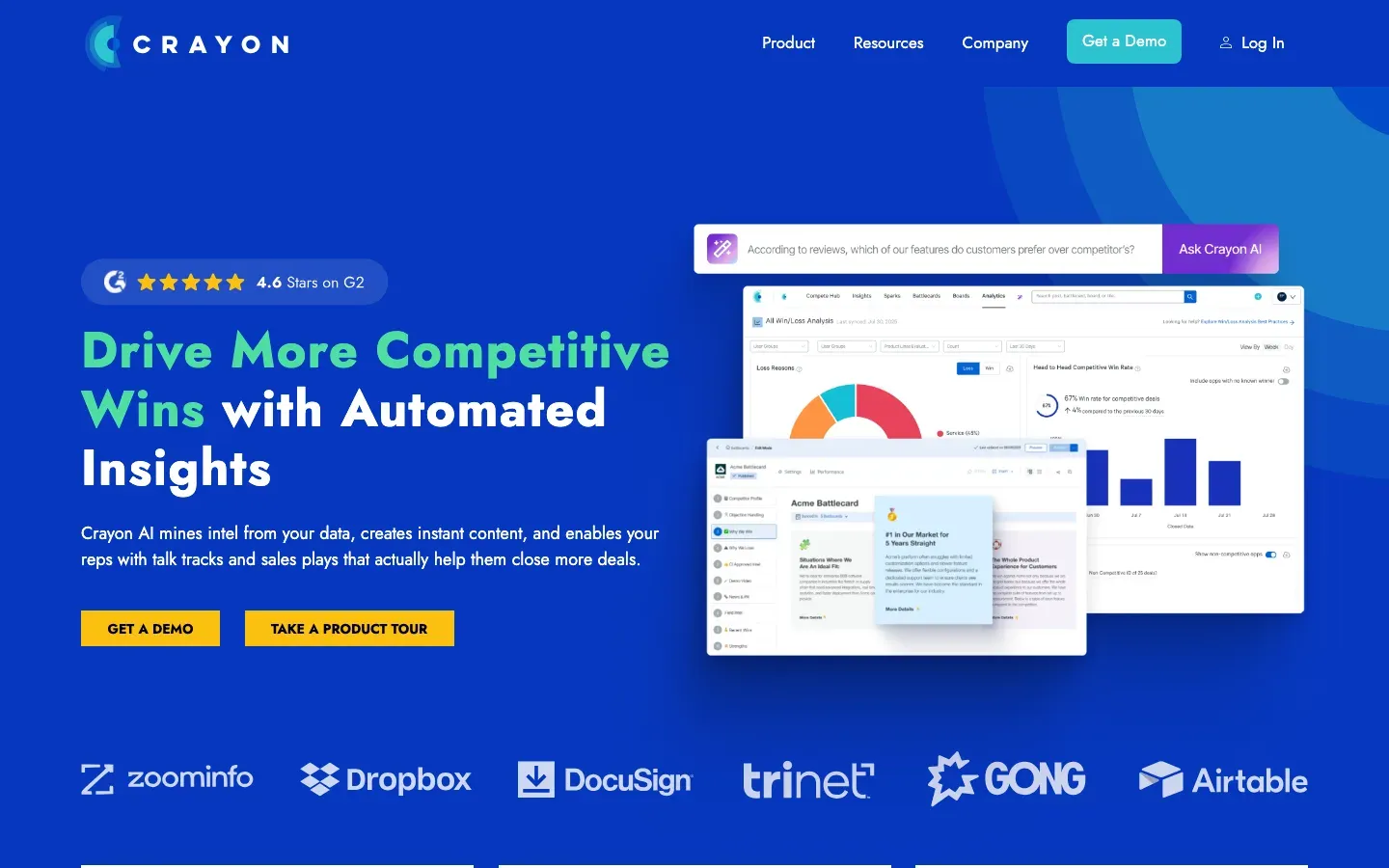
Starting price: quote-based (typically $25k+/yr). Best for: product-marketing or CI teams with a dedicated headcount.
Crayon monitors hundreds of data points per competitor (pricing pages, hiring, reviews, messaging changes) and pipes curated insights into battlecards that live inside Salesforce. The workflow is the value. Without a CI owner curating the feed, it becomes noise.
Unkover’s pricing review, built from public estimates and user reports, puts Crayon at about $15,000/year for small teams and $100,000+/year for enterprise deployments with add-ons.
Weakness: overkill for teams under ~50 people. You also need somebody whose job is “read Crayon every morning,” or the subscription wastes itself.
5. Klue — best for sales enablement
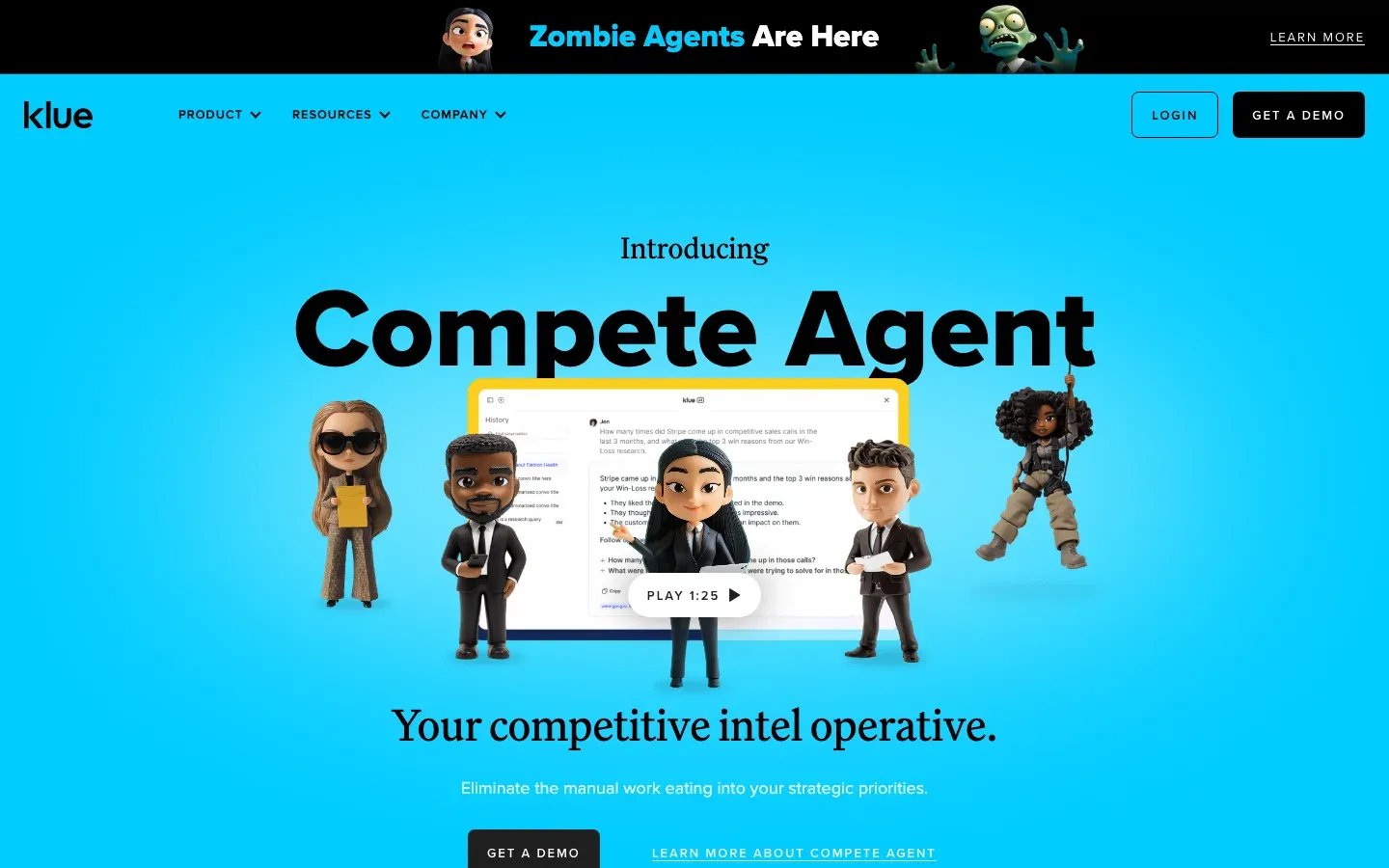
Starting price: quote-based (entry tier ~$20k/yr). Best for: GTM teams arming a sales force with battlecards.
Klue’s dynamic battlecards are the gold standard for putting CI directly into a rep’s workflow across Salesforce, Slack, Highspot, and Gong. Win-loss analysis ties the battlecard back to revenue, which is what makes the budget defensible to a CFO.
How much does Klue cost?
Klue does not publish prices. Unkover estimates $16,000 to $30,000 a year, depending on the number of users and competitors tracked, with no free tier. Budget time as well as money: the same review says onboarding can take 4 to 6 weeks before the platform delivers full value.
Weakness: weak on SEO and traffic data, so pair with Semrush or Ahrefs. Pricing assumes you have ten or more reps to enable.
6. Kompyte — best mid-market alternative to Crayon
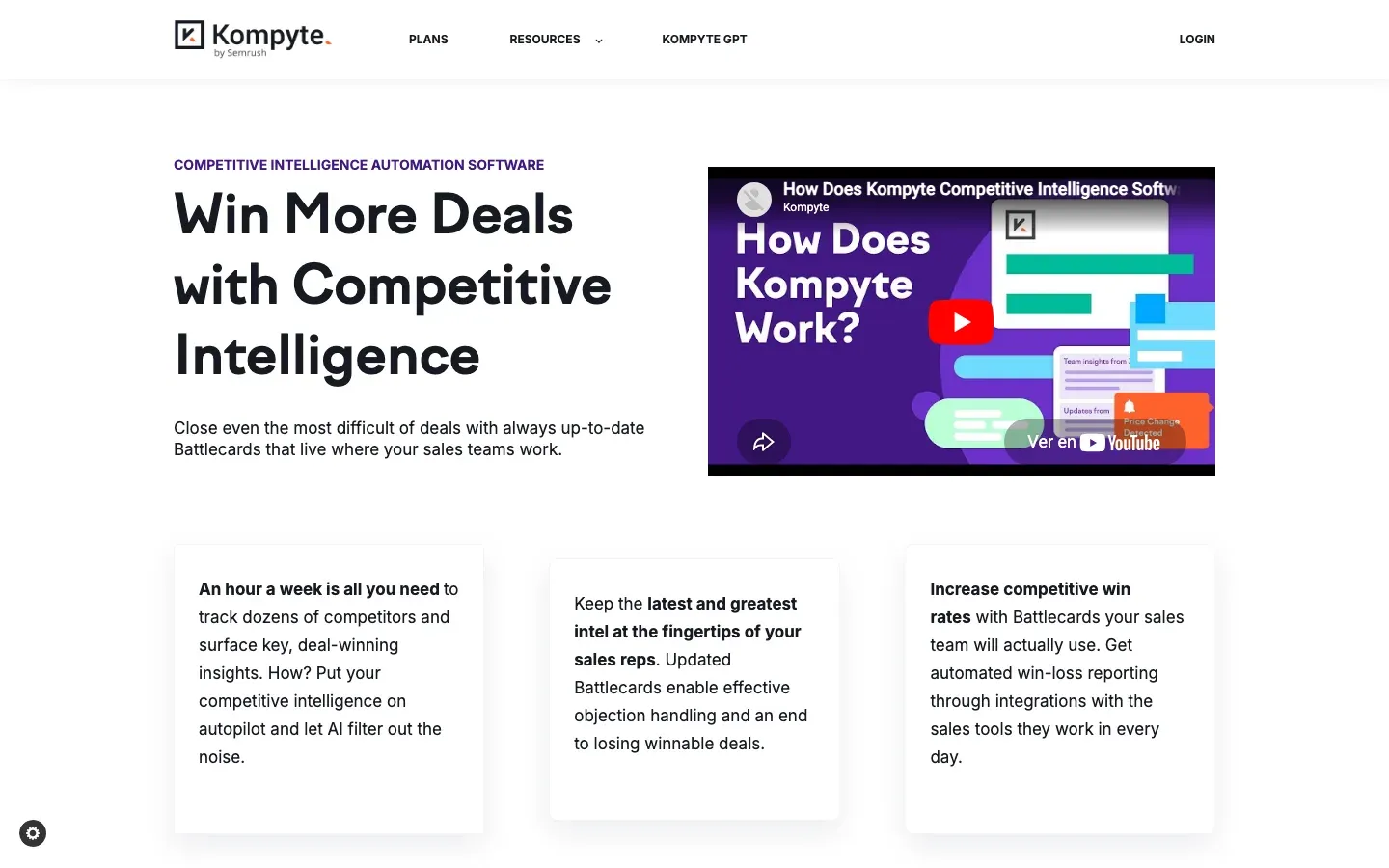
Starting price: quote-based (typically lower than Crayon/Klue). Best for: mid-market teams that want battlecards without enterprise pricing.
Now part of Semrush, Kompyte combines automated change detection with a battlecard layer and AI classification of which changes actually matter. If you already pay for Semrush, Kompyte often comes in as a discounted add-on.
Weakness: the AI classifier still surfaces a fair amount of noise. Expect to spend the first month tuning rules per competitor.
7. SpyFu — best budget option for PPC reconnaissance
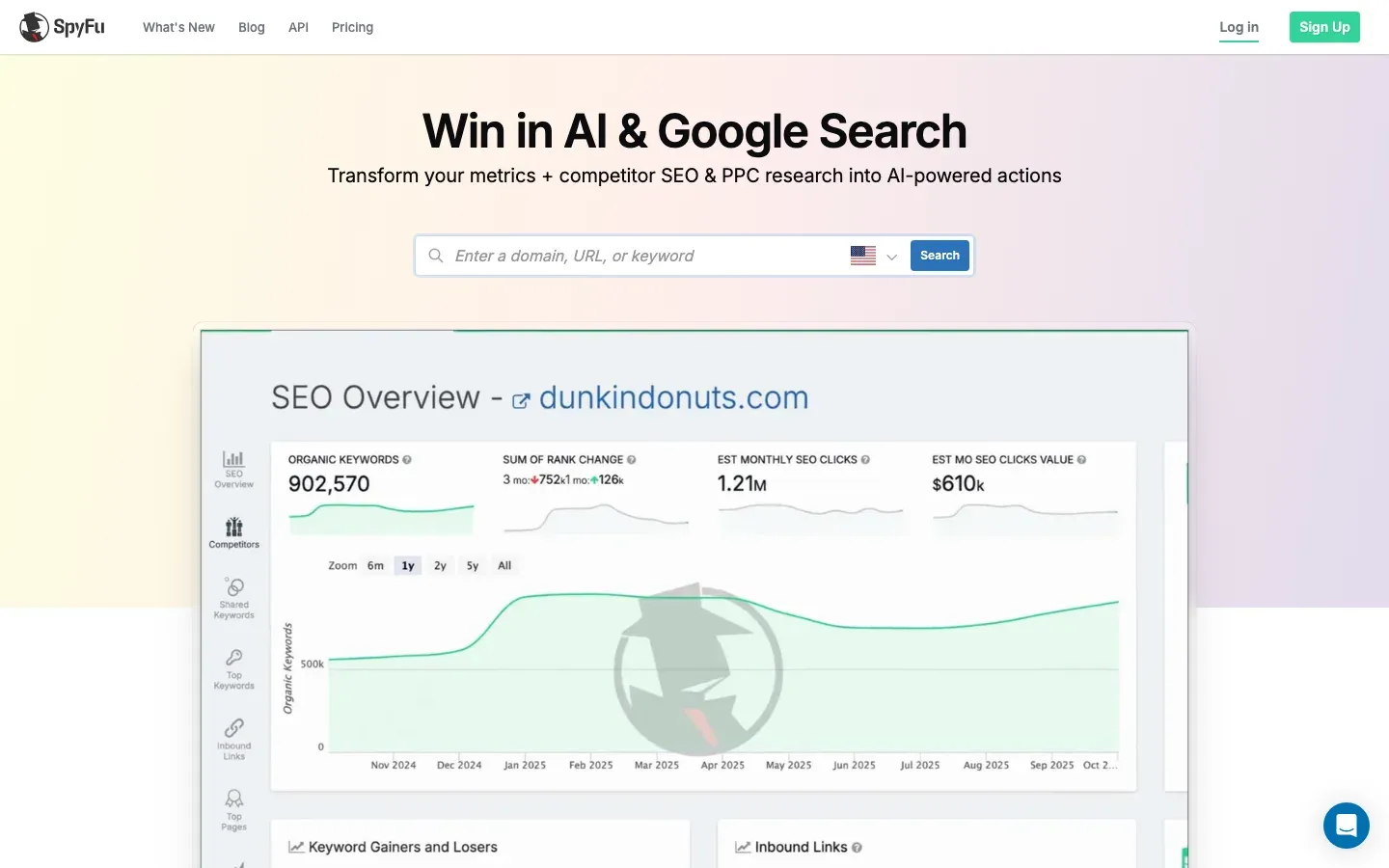
Starting price: $39/mo (Basic). Best for: freelancers and small agencies on a tight budget.
SpyFu’s archive of competitor Google Ads copy goes back over a decade, unmatched at the price point. The “Kombat” three-domain comparison is the fastest keyword-gap check we’ve used, and exports are generous even on the cheapest plan.
Weakness: US-Google-centric. Traffic and spend estimates are noticeably less accurate outside the top 10k domains.
8. Brandwatch — best for brand sentiment and crisis tracking
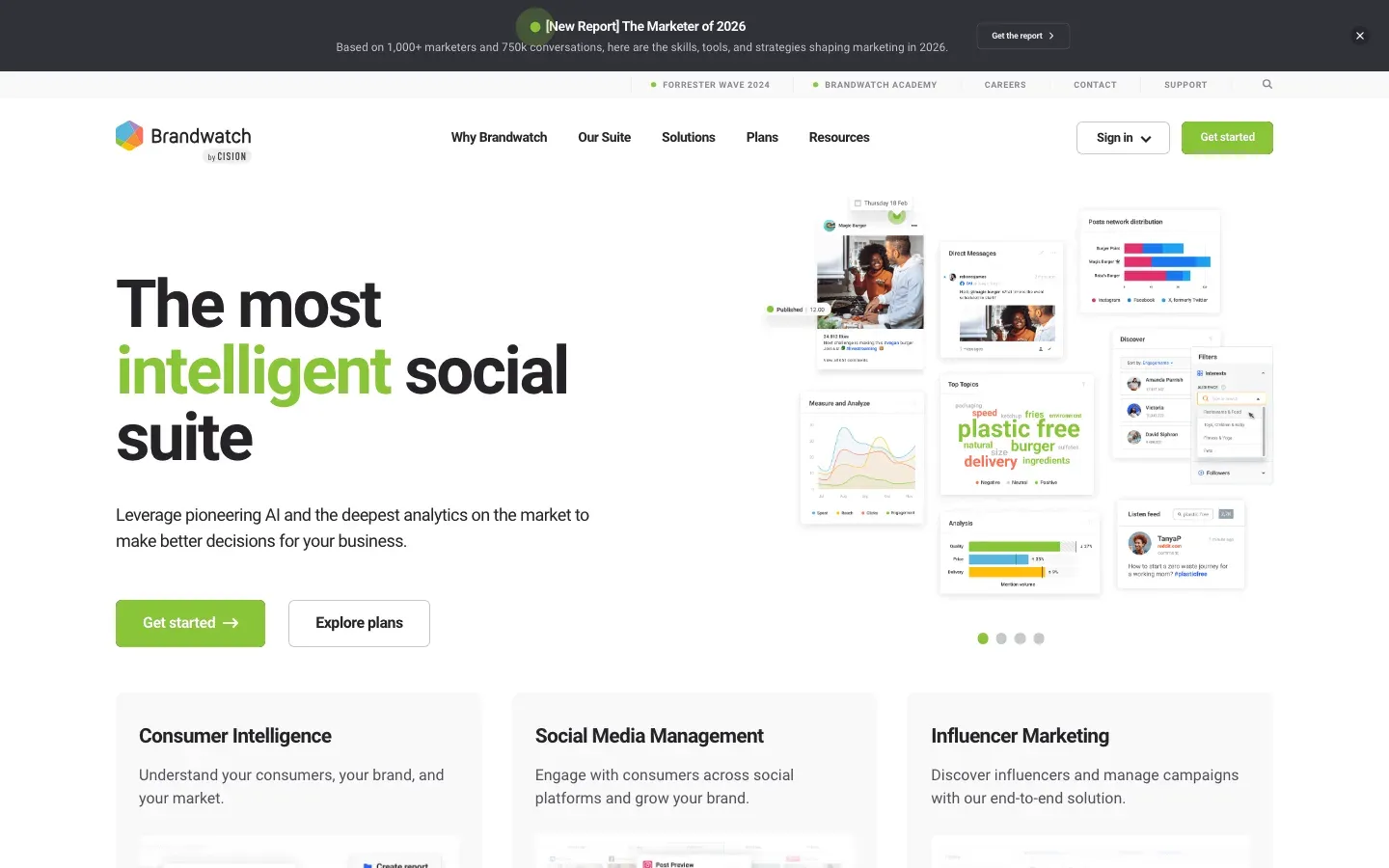
Starting price: quote-based (typically $1k+/mo). Best for: PR, comms, and brand teams at consumer-facing brands.
Brandwatch holds direct firehose deals with X, Reddit, and Tumblr, plus blogs, news, forums, and review sites, so you can track mentions across the places your customers actually talk instead of settling for whatever a generic listening tool happens to cover. Visual listening (logo recognition in images) is a real differentiator for CPG brands tracking unsolicited mentions.
Weakness: this is not an SEO tool, so don’t buy it expecting search insight. The volume of data also requires a query expert; bad Boolean = bad signal.
9. Rival IQ — best for social-media benchmarking
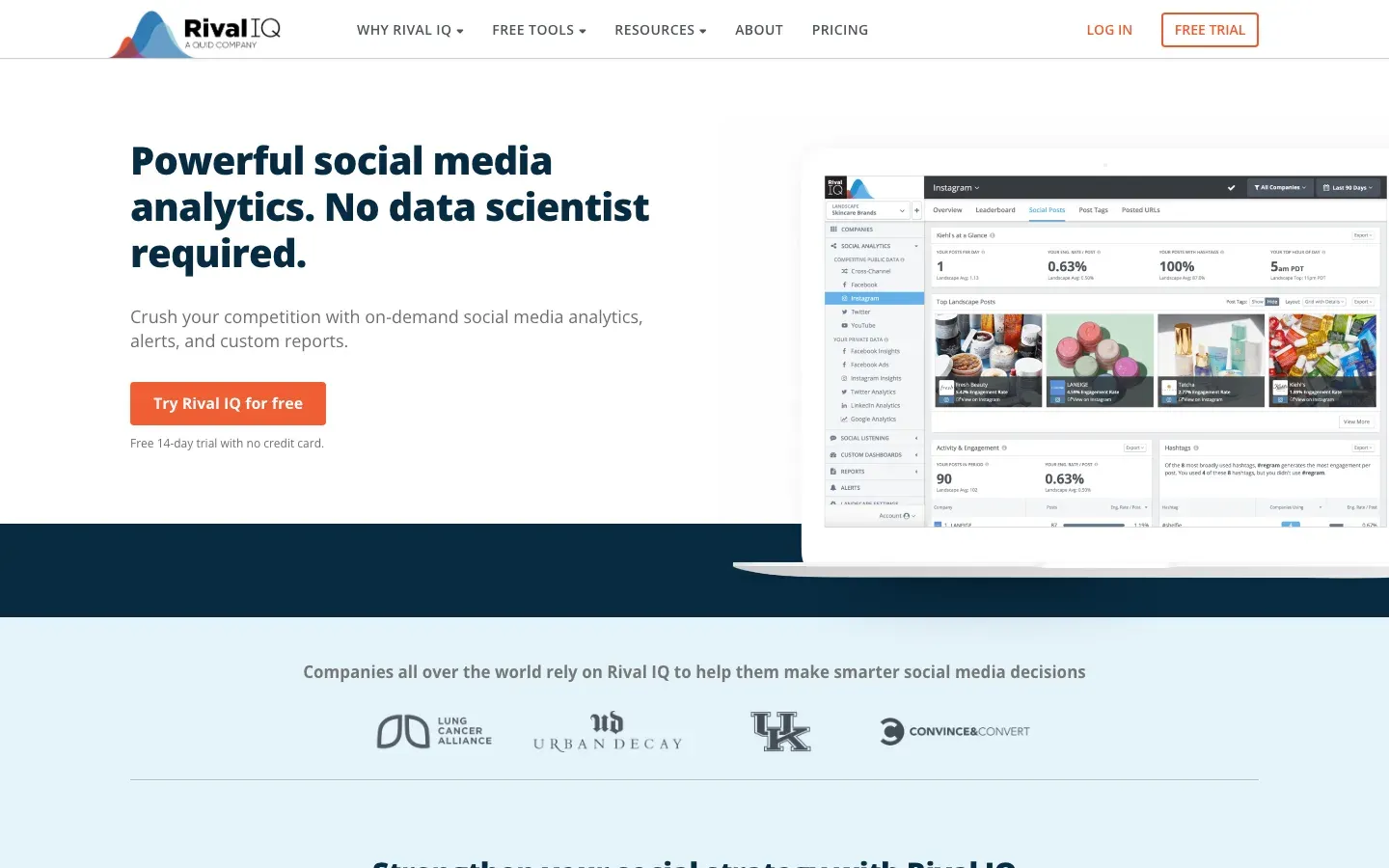
Starting price: $239/mo (Drive plan). Best for: social-media managers proving content ROI.
Rival IQ’s reports are the cleanest way we’ve found to benchmark engagement-rate-per-post against a defined competitive set across Instagram, LinkedIn, Facebook, X, and TikTok. The scheduled PowerPoint export saves hours per month for agencies.
Weakness: social-only. TikTok depth lags Instagram and LinkedIn coverage.
10. Sensor Tower / Pathmatics — best for app and ad intelligence
Starting price: quote-based (enterprise). Best for: app publishers and performance-marketing teams running heavy paid spend.
The Sensor Tower + Pathmatics combination links a competitor’s app downloads and revenue to the creatives and channels driving them, including Connected TV. For a mobile-first business this is the most complete view available.
Weakness: enterprise-only pricing and a learning curve to bridge the two datasets. Wrong choice if you don’t have a paid-acquisition team.
11. BuzzSumo — best for content and PR research
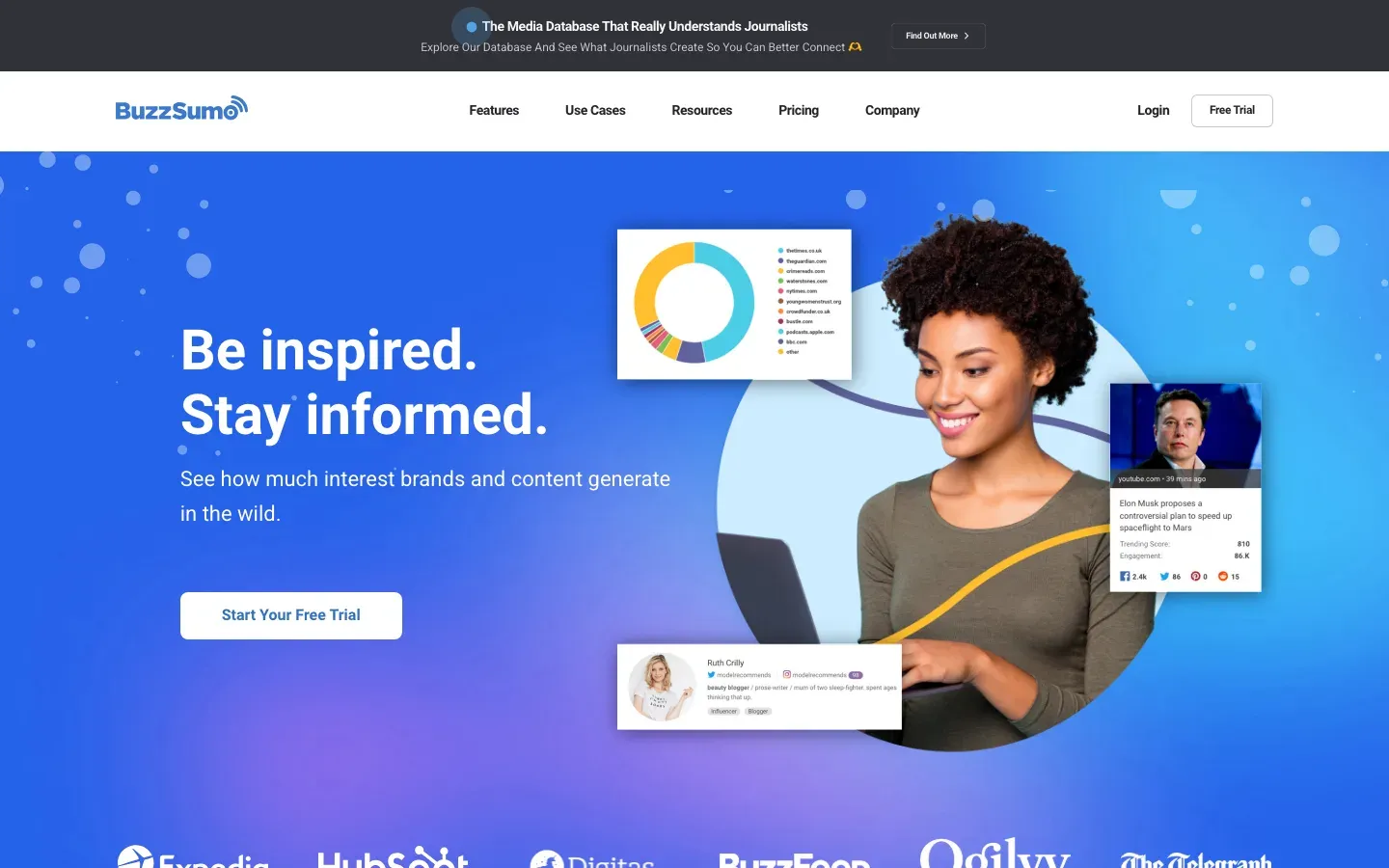
Starting price: $199/mo (Content Creation). Best for: content marketers and digital-PR teams.
BuzzSumo answers “what content has worked for this competitor, and who shared it” faster than any other tool. The journalist database and backlink alerts are the part most teams underuse.
Weakness: thin on technical SEO. Best used as a complement to Ahrefs, not a replacement.
12. cloro — best for piping AI-search data into your own systems
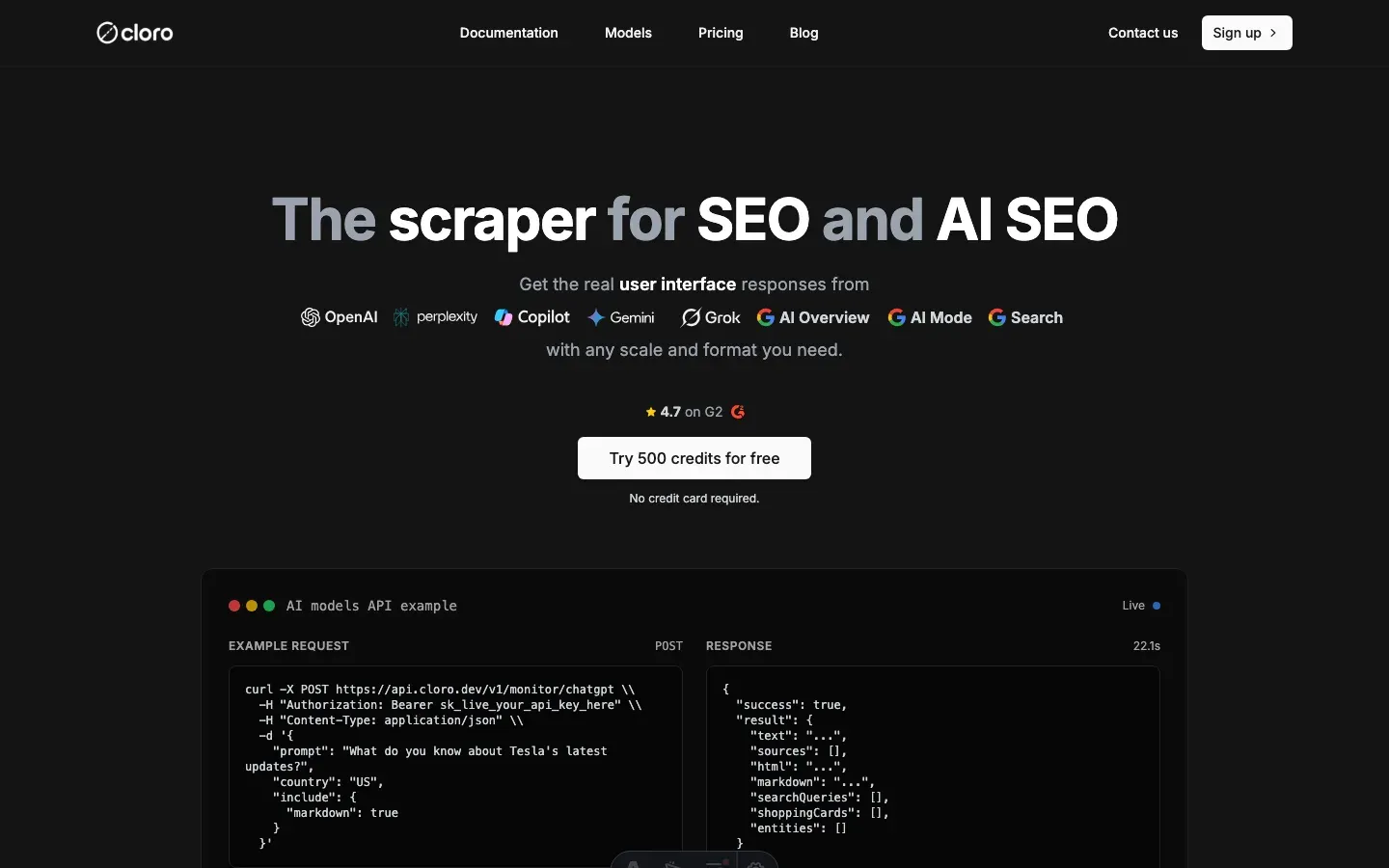
Starting price: $30/mo (Lite, 37,500 credits); Hobby is $100/mo for 250k credits. Best for: developers and data teams who want raw, structured AI-search and SERP data in their own warehouse.
cloro is not a dashboard. It’s a SERP API that returns UI-accurate JSON from Google (including AI Overviews), ChatGPT, Perplexity, Gemini, and Copilot, so you can pipe that data straight into your own warehouse instead of waiting on someone else’s dashboard.
We list it here because none of the dashboards above expose ChatGPT or Perplexity citation data. That gap is the reason customers build their own tracking on top of cloro. If you already have BI infrastructure, this is the cheapest way to track AI visibility, and credits work out 5–12x cheaper than calling provider LLM APIs directly.
Weakness: you have to build the dashboard. cloro ships data, not charts. If you don’t have an engineer, buy an AI SEO tool instead.
Comparison table
| Tool | Starting price | Best for | Standout feature |
|---|---|---|---|
| Semrush | $139.95/mo | All-round SEO + PPC | Daily position tracking + ad-copy archive |
| Ahrefs | $129/mo | Backlink and content gaps | Largest backlink index |
| Similarweb | Quote (~$1.5k+/mo) | Market sizing | Cross-channel traffic share |
| Crayon | Quote (~$25k+/yr) | Formal CI programs | Curated battlecard workflow |
| Klue | Quote (~$20k+/yr) | Sales enablement | Battlecards in Salesforce/Slack |
| Kompyte | Quote | Mid-market battlecards | AI-classified change feed |
| SpyFu | $39/mo | Budget PPC reconnaissance | 10+ years of ad-copy history |
| Brandwatch | Quote (~$1k+/mo) | Brand and crisis tracking | Visual (logo) listening |
| Rival IQ | $239/mo | Social benchmarking | Scheduled competitive reports |
| Sensor Tower / Pathmatics | Quote | App + ad intelligence | App revenue tied to ad creatives |
| BuzzSumo | $199/mo | Content and PR | Content engagement + journalist DB |
| cloro | Free, then $30/mo | AI-search data into your stack | Structured ChatGPT/Perplexity/AI Overview JSON |
The takeaway: price doesn’t track with fit. The cheapest tools here (SpyFu at $39/mo, cloro from $0 on its free tier and $30/mo on Lite) solve one narrow job each, while the priciest, quote-based platforms (Crayon, Klue, Sensor Tower / Pathmatics) buy a managed workflow, not just more data. Pick by the “Best for” column, not by budget alone.
How to choose the best competitive intelligence tools
The best competitive intelligence tools are the ones a team actually opens every week, so choose for the workflow you already run rather than the longest feature list. Three questions settle most decisions.
Match the tool to who owns the intelligence
Start with the person who will read the feed. If a product marketer curates insights for the whole company, a battlecard platform like Crayon or Klue earns its keep. If the daily user is an SEO or growth lead, an all-rounder such as Semrush or Ahrefs delivers more per dollar. Social and PR teams get more from Rival IQ or Brandwatch. A tool without a named owner becomes shelfware within a quarter, no matter how good the underlying data is.
Decide whether to buy a dashboard or pipe the data yourself
Most competitive intelligence software ships as a dashboard — someone else’s charts on someone else’s refresh schedule. That is the right call for teams without engineers. Teams that already run a warehouse and a BI stack often prefer raw data they can model themselves, which is where a SERP API like cloro fits. The trade is control and cost against convenience: you build the view, but you own the pipeline and pay a fraction of dashboard pricing.
Confirm it covers AI search, not just Google
This is the fastest-moving gap in the category. Buyers now ask ChatGPT, Perplexity, and Google’s AI Overviews about your category before they reach a classic SERP, yet most competitive intelligence tools still report only traditional rankings. Before you sign, confirm the tool tracks AI-search citations, or plan to pair it with one that does. That visibility channel is part of the job now, not a future concern.
Common mistakes when buying CI tools
Even with the right shortlist, teams waste budget in predictable ways. Across the buyers we have watched evaluate competitive intelligence tools, the same handful of mistakes keep coming up.
Buying for features, not for a workflow. A tool only earns its seat when somebody owns the feed. Crayon and Klue without a dedicated CI lead are the most common shelfware we see.
Stacking three tools that overlap 70%. Semrush + Ahrefs + Moz is a common pattern and almost always wasted budget. Pick one all-rounder and one specialist.
Ignoring AI search. Most dashboards still don’t track ChatGPT or Perplexity citations. If your buyers ask AI assistants questions about your category, tracking AI visibility is now part of CI, not a future problem.
Trusting modeled traffic estimates as ground truth. Similarweb is fine for trend lines, but a 5% month-over-month change in their numbers does not mean your competitor’s traffic moved 5%.
Paying for enterprise tiers before you have an enterprise problem. Most teams under 30 people get more value from Semrush + SpyFu + a competitive analysis template than from a $30k Crayon contract.
Skipping the trial and buying on the demo. A polished demo hides the export caps and refresh delays that only surface in week two. The best competitive intelligence tools survive a real trial with your own competitor loaded; the weak ones only look good on rails.
No single product wins every category, which is why most teams pair one all-rounder with one specialist. Semrush or Ahrefs covers search, a battlecard platform covers sales, and a data primitive covers AI search. The best competitive intelligence tools for your team are whichever two close the gaps your rivals are exploiting right now.
If you want to track AI search results (ChatGPT, Perplexity, Gemini, AI Overviews) alongside the dashboards above, cloro’s API returns structured JSON for all of them on a single endpoint. Start free with 500 credits.

About the author
Ricardo Batista
Founder, cloro
Ricardo is one of the founders and engineers behind its SERP and AI-search scraping infrastructure. Before cloro he scaled a financial comparison site to $7M ARR and ran the full-country operations of a unicorn to $65M ARR, then went back to building. He writes about search engine scraping, generative-engine optimization, and turning live search and AI-answer data into something teams can act on.
Frequently asked questions
What is the best free competitive intelligence tool?
Google itself, plus free tiers of Similarweb, Ahrefs Webmaster Tools, and SpyFu's free search. None will scale, but for a one-off competitor check they're enough.
How much does competitive intelligence software cost?
SMB tools like SpyFu and Semrush start under $150/mo. Specialist sales-enablement platforms like Klue and Crayon are quote-based and typically land at $20k–$50k/yr. Enterprise listening tools like Brandwatch usually clear $25k/yr.
How much does Klue cost?
Klue is quote-based and publishes no prices. Unkover's review, based on public estimates and user reports, puts it at $16,000 to $30,000 a year depending on users and competitors tracked, with no free tier and an onboarding period of 4 to 6 weeks.
Is Crayon better than Klue?
They overlap but optimize for different buyers. Crayon is stronger if your CI lead sits in product marketing and curates insights for the whole company. Klue is stronger if the primary user is sales and the goal is winning deals against named competitors. Most teams that demo both end up picking based on which workflow matches their org chart.
What's the difference between competitive intelligence and competitor analysis?
Competitor analysis is usually a point-in-time exercise — you research three rivals before launching a product. Competitive intelligence is the ongoing system that monitors them after launch. The tools above are CI tools; the competitive analysis template is for the one-time exercise.
Can ChatGPT or Perplexity replace these tools?
For surface-level research, yes — and we use them. But neither offers the historical data, alerting, or structured exports a CI program needs. They also can't tell you what your competitors look like *inside* AI search, which is now a real visibility channel — that's why teams use a SERP API to pull it themselves.
Do I need more than one CI tool?
Most teams end up with two: one all-rounder (Semrush or Ahrefs) and one specialist (Klue for sales, Brandwatch for brand, Rival IQ for social, or cloro for AI-search data). Three is usually overkill.
Which tool tracks AI Overviews and ChatGPT citations?
Of the dashboards in this list, none track ChatGPT or Perplexity citations directly. Semrush and Ahrefs added partial AI Overview tracking in 2025. For full coverage you currently need either a dedicated AI SEO tool or to pipe data in via a SERP API.