
The 11 Top AI SEO Tools For Dominating Search in 2026
In 2026, the gap between traditional SEO and AI-powered strategies is widening fast. Generative AI is a real shift in how search engines like Google create experiences like AI Overviews and how users find information. For SEO professionals, the old playbook of keywords and backlinks alone is incomplete. To stay competitive, you need tools that understand both search engine algorithms and the nuances of AI-generated content and workflow automation.
This article reviews the top AI SEO tools defining the current market. We move beyond generic feature lists to provide a practical review of what each tool does best, who it’s for, and where it falls short. Each profile includes direct links and screenshots.
Lists like this one on the 12 Best AI Powered SEO Tools cover the broader landscape. Our guide goes further with detailed comparisons, workflows, and analysis on augmenting these platforms with scraping and API solutions like cloro for consistent structured data at scale. Whether you’re a solo consultant, part of an in-house enterprise team, or scaling an agency, this ranked list will help you pick the right technology. We’ll cover Surfer, Clearscope, Semrush, Alli AI, and others.
1. cloro - the production-grade data engine for AI-SEO
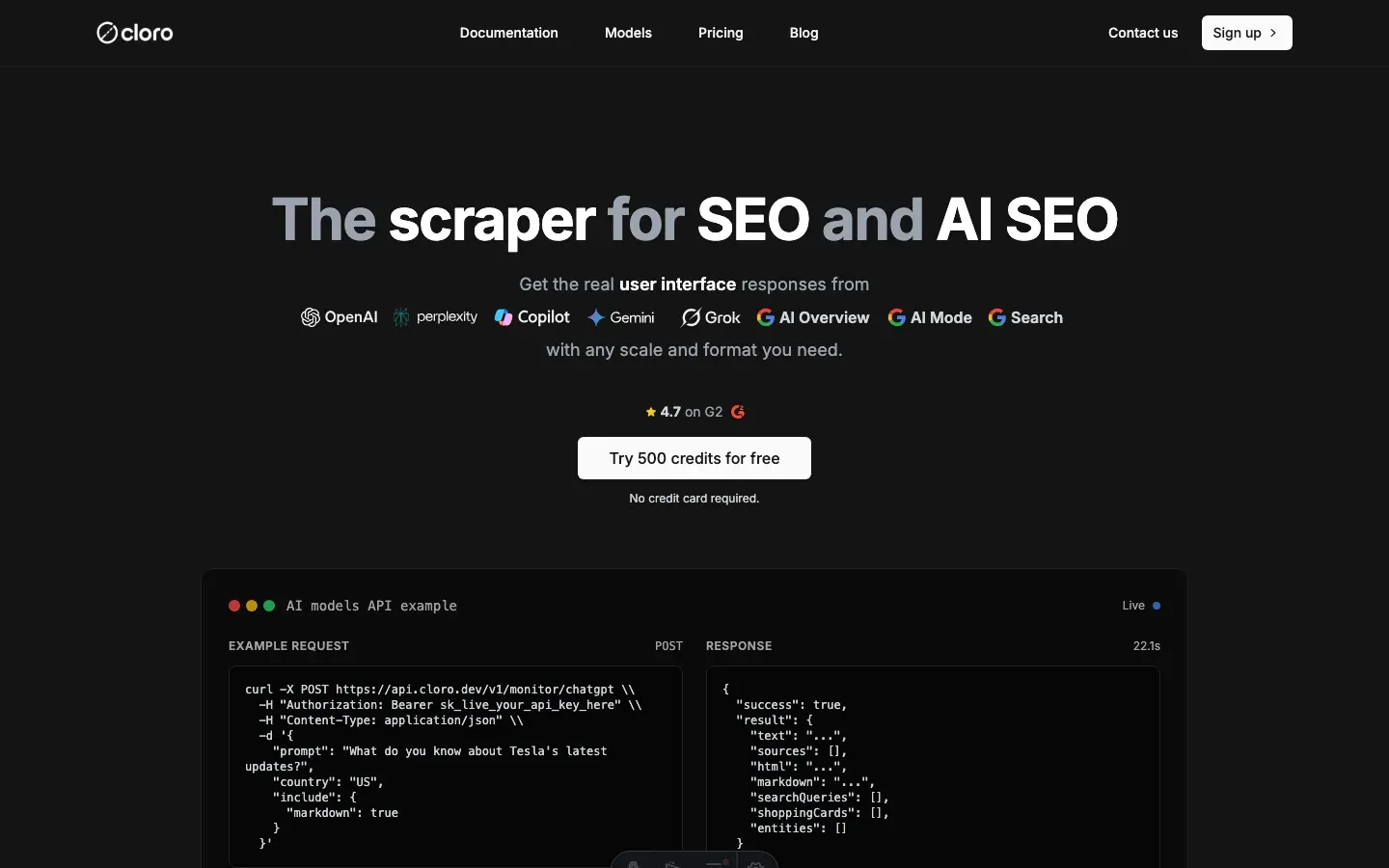
For teams working at the intersection of SEO and AI, access to clean, structured data from generative search experiences is now a foundational requirement. cloro is a key component in the modern AI SEO toolkit, focused on a specific and often-overlooked problem: reliably extracting and parsing UI-level data from leading AI assistants at production scale.

Unlike other tools that focus on content generation or on-page analysis, cloro is a developer-first API built for data acquisition. It queries platforms like ChatGPT, Perplexity, Gemini, and Google’s AI Overviews, and returns a consistently structured JSON object rather than raw text. The parsed output separates elements like sources, shopping cards, entities, and related queries, sparing engineering teams from building and maintaining individual scrapers for each platform.
That makes cloro a fit for agencies, enterprise SEO teams, and AI-SEO platforms that need to monitor brand mentions, audit competitor visibility in AI-generated results, or power their own automated workflows.
Key features and use cases
- Unified AI assistant API. Access outputs from ChatGPT, Perplexity, Copilot, Gemini, Grok, and Google AI Overviews through a single, normalized endpoint. No need to manage multiple, disparate integrations.
- Structured data output. cloro delivers parsed JSON instead of messy HTML or plain text. You can directly use source URLs for backlink analysis or shopping card details for e-commerce intelligence.
- Production-ready scale. Engineered for high-volume use, the platform claims 99.99% uptime and processes over 300 million API calls monthly. Support for high concurrency and asynchronous requests makes it suitable for enterprise automation.
- Cost efficiency. The credit-based pricing model offers significant savings (up to 12x by their numbers) compared to direct LLM API usage for similar retrieval tasks.
A common workflow: schedule automated daily queries for a client’s core keywords across Google’s AI Mode and Perplexity. With cloro, you can collect all cited sources and feed them into a database to track which domains are gaining authority in generative answers. That feeds directly into digital PR and link-building strategy. For more on the technical side, see large-scale web scraping.
Pricing
cloro uses a transparent, credit-based model with a free trial (500 credits, no credit card required).
- Hobby. $100/month for 250,000 credits
- Starter. $250/month for 694,444 credits
- Growth. $500/month for 1,562,500 credits
- Business. $1,000/month for 3,333,333 credits
- Enterprise. Volume discounts and dedicated support
Credit costs vary by provider (Perplexity is 3 credits per query, a Google SERP with AI Overview is 5 credits), so use the on-site calculator to estimate monthly spend.
Pros and cons
Pros:
- Parses UI outputs from multiple AI assistants into ready-to-use structured data.
- Single API simplifies integration and normalizes data across providers.
- Built for reliability and scale, supporting production workloads.
- Credit model with a free trial.
Cons:
- The credit-based system requires upfront planning to estimate usage and costs.
- Results depend on the provider’s UI; significant interface changes could temporarily affect output.
2. Surfer
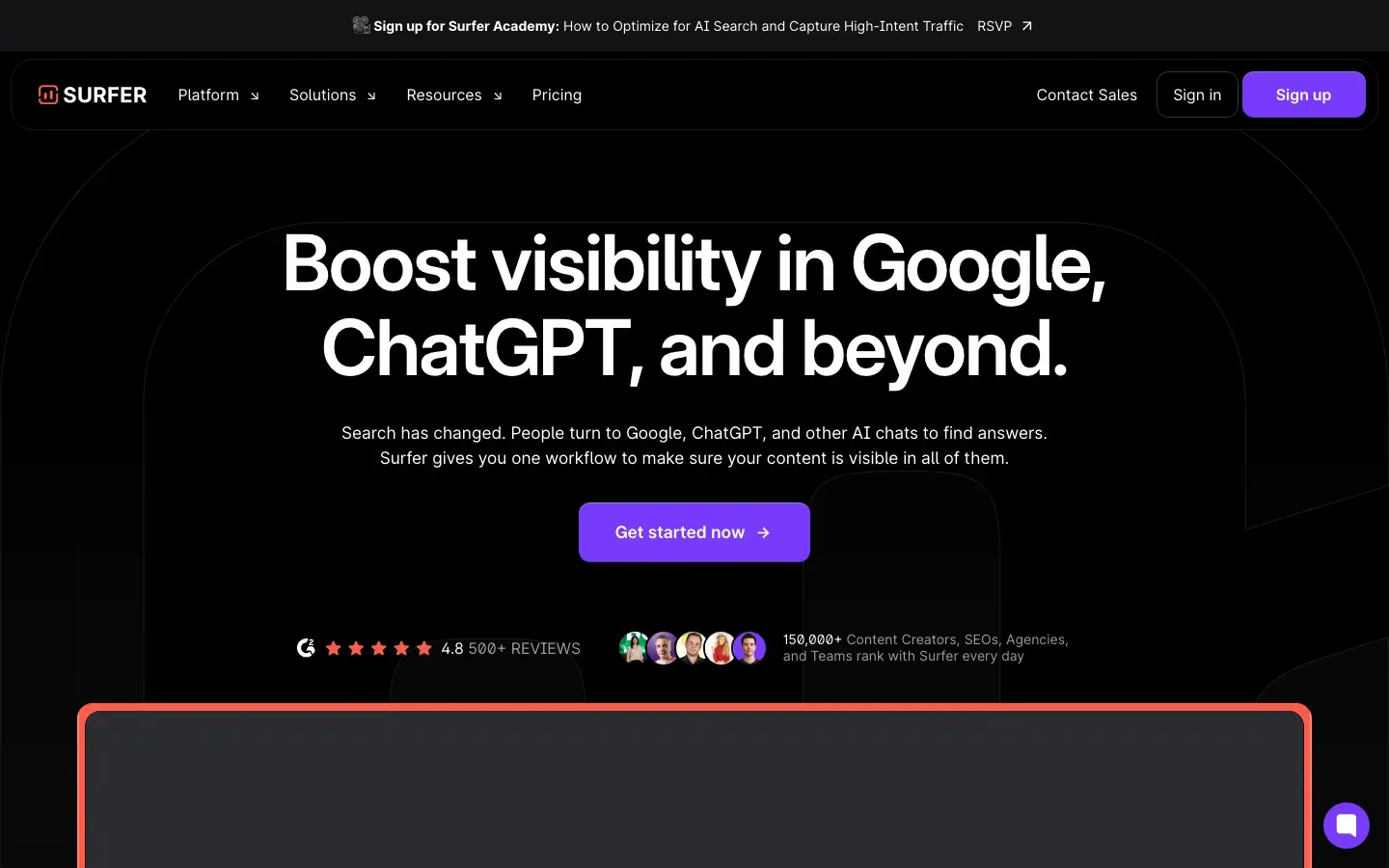
Surfer turns SERP analysis into content optimization tasks. It’s a strong AI SEO tool for teams focused on high-ranking articles, giving writers and editors a data-driven roadmap. The Content Editor analyzes top-ranking pages for a target keyword and provides real-time feedback on structure, NLP term usage, word count, and readability. That removes much of the guesswork from on-page SEO.
Surfer balances AI guidance with human control. It can generate full drafts, but its primary value is in augmenting a writer’s process. The internal linking tool automates suggestions for connecting new and existing content, and site audits identify technical and on-page issues across a domain. A newer feature, the AI Tracker, monitors content visibility inside generative AI experiences like ChatGPT, giving early insights into “share of voice” in answer engines.
Key details and pricing
- Ideal use case. Content teams and agencies needing to scale production of optimized articles and blog posts with clear, repeatable guidelines.
- Pricing. Plans start at $89/month for the “Essential” plan. Higher tiers offer more credits for audits, AI articles, and team collaboration. Surfer no longer offers a free trial but provides a 7-day money-back guarantee.
- Pros. Strong for data-backed content briefs; speeds up the editing and optimization workflow.
- Cons. Credit limits on lower tiers can be restrictive for agencies or high-volume teams; cost can be a factor for solo bloggers.
3. Clearscope
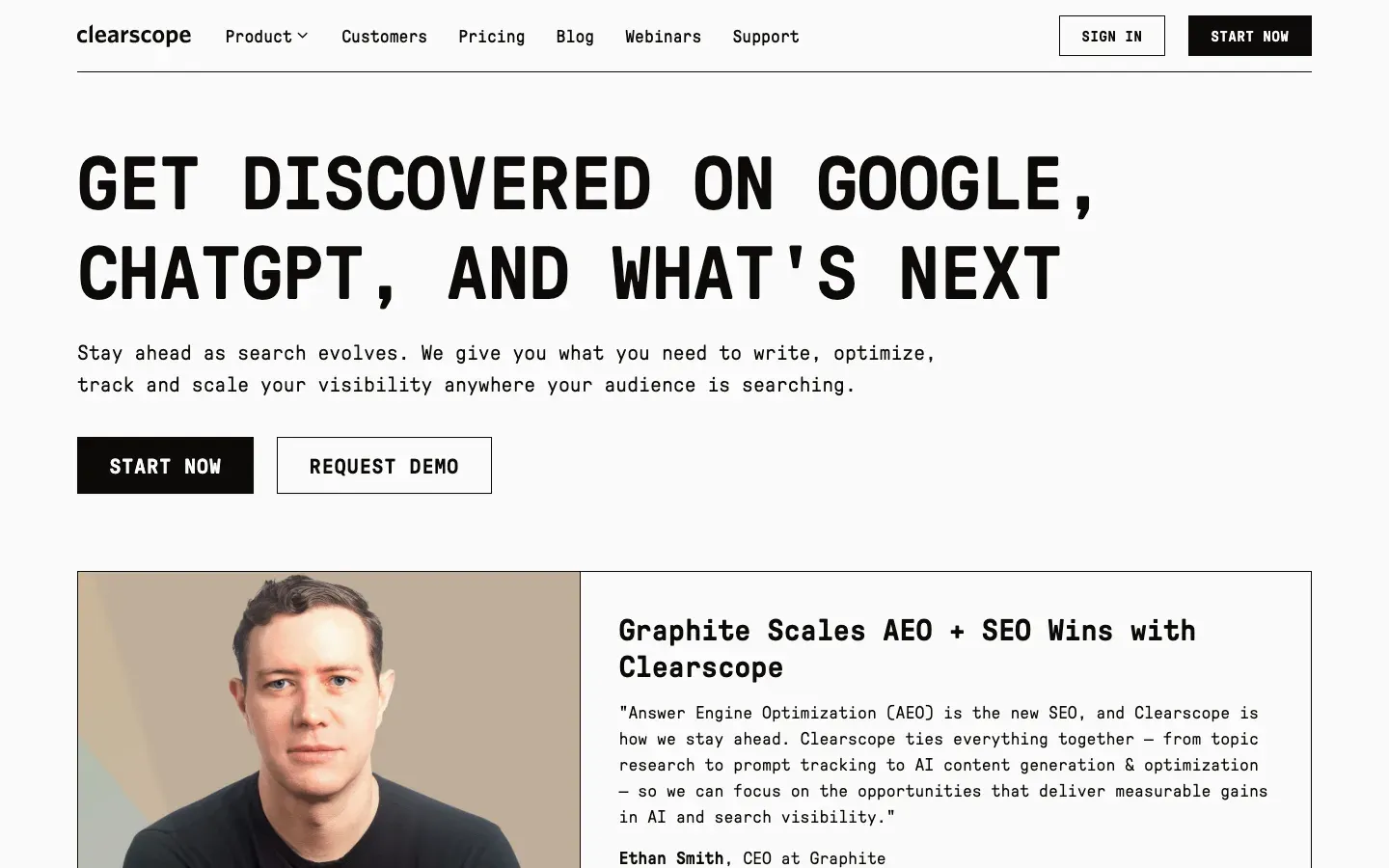
Clearscope is a premium content optimization platform focused on search intent and topical authority. Enterprise content teams favor it for its straightforward workflow, which bridges SEO strategy and content creation. The tool analyzes top-ranking content to provide specific term recommendations and a content grade, guiding writers to cover a topic with the depth search engines reward. The focus on semantic relevance suits teams that prioritize quality over volume.

Clearscope leans on user experience and team collaboration. The editor is clean and intuitive, and writers can adopt it with minimal training. All plans include unlimited users and projects, which scales well for growing organizations. The AI-tracked topics and content inventory features show a high-level view of a site’s topical coverage, helping strategists find gaps. The add-on model for extra reports and drafts lets teams manage costs while scaling.
Key details and pricing
- Ideal use case. Enterprise content teams, established websites, and agencies that need a collaborative tool for authoritative content.
- Pricing. Plans begin at $199/month for the “Essentials” plan. The structure is designed for team use, with an add-on model for additional reports and drafts.
- Pros. Straightforward workflows and easy team adoption; focus on semantically rich content.
- Cons. The price point suits larger teams better than solo creators or small blogs; high usage may require add-ons.
4. MarketMuse
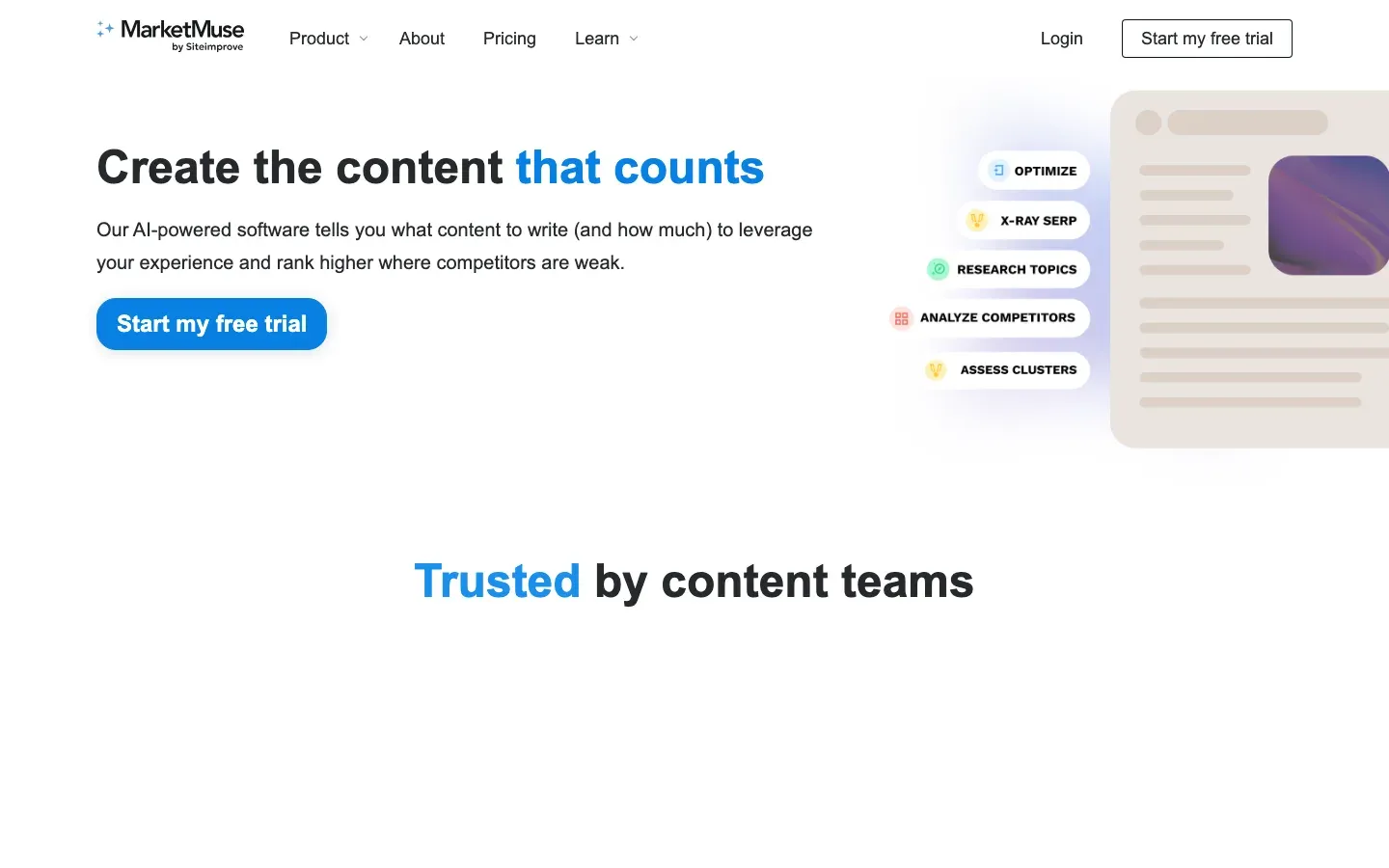
MarketMuse is an AI-powered content strategy and intelligence platform that takes teams from keyword research to full content execution. Its main strength is patented topic modeling, which analyzes your entire website to identify content gaps, update opportunities, and new topics. It suits organizations looking to build topical authority and manage large content libraries. The content briefs go beyond simple keyword lists, giving writers a blueprint of topics to cover, questions to answer, and linking opportunities.

MarketMuse focuses on enterprise content inventory and strategic planning. It doesn’t just analyze a single keyword; it assesses your whole domain’s authority on a subject. Strategists can then prioritize content creation and updates by likely impact. The suite covers content optimization, competitive analysis, and quality-score tracking. The data can be integrated into a custom analytics and SEO dashboard to monitor progress against goals. For teams managing hundreds or thousands of pages, the strategic overview matters.
Key details and pricing
- Ideal use case. Enterprise content teams and large agencies that plan, execute, and refresh content at scale based on topical authority.
- Pricing. MarketMuse offers a limited free plan. Paid tiers start with the “Standard” plan at $149/month, scaling up to custom enterprise pricing.
- Pros. Strong for long-term topical authority and large content refresh programs. The free plan is useful for exploring core concepts.
- Cons. The most powerful inventory and strategy features are gated behind expensive tiers. The free plan’s query limits are restrictive for regular use.
5. Frase
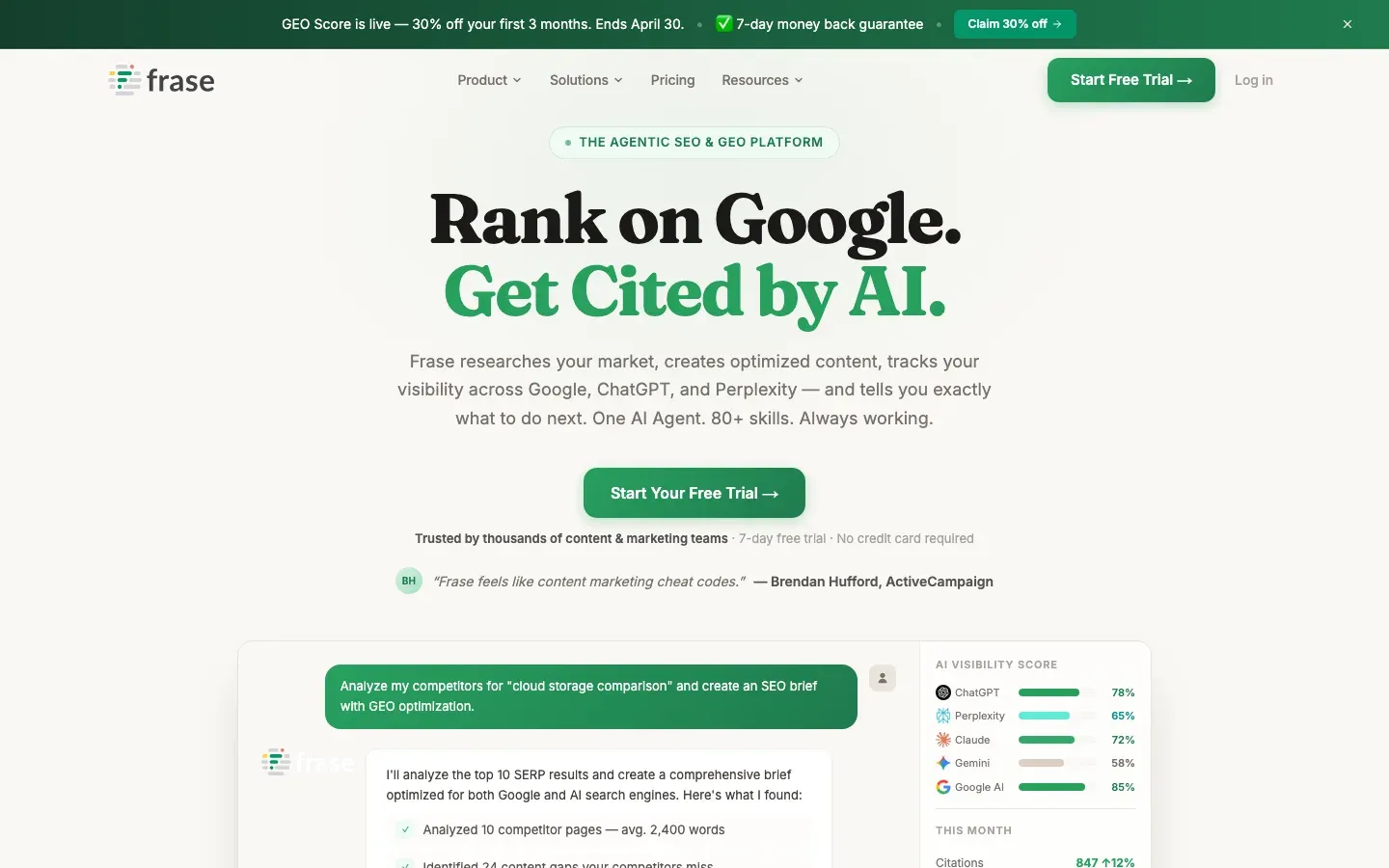
Frase is an end-to-end AI platform for content creation that merges research, writing, and optimization into a single workflow. It’s built for speed, appealing to teams that need to move from keyword to published article quickly. The core is an AI-driven process that automates content brief creation by analyzing top-ranking competitors. It then guides the writing or generates full drafts from that research, keeping content topically relevant from the start.
Frase emphasizes a cohesive all-in-one experience. You can research, draft, optimize, and track content performance without switching apps. The platform includes over 80 AI skills for tasks from outlining to rewriting. The API access is useful for teams building programmatic SEO workflows or integrating Frase’s research into their own systems.
Key details and pricing
- Ideal use case. Small to mid-sized content teams, freelancers, and agencies focused on rapid content production and reducing tool sprawl.
- Pricing. The “Solo” plan starts at $14.99/month (for 4 articles). The “Basic” plan at $44.99/month allows 30 articles. An “All-in-One SEO Add-On” is required for full SEO features.
- Pros. Strong all-in-one platform that speeds up the content lifecycle; API access is useful for programmatic workflows.
- Cons. The credit system and SEO add-on can increase costs as output scales; high-volume needs get expensive.
6. Scalenut
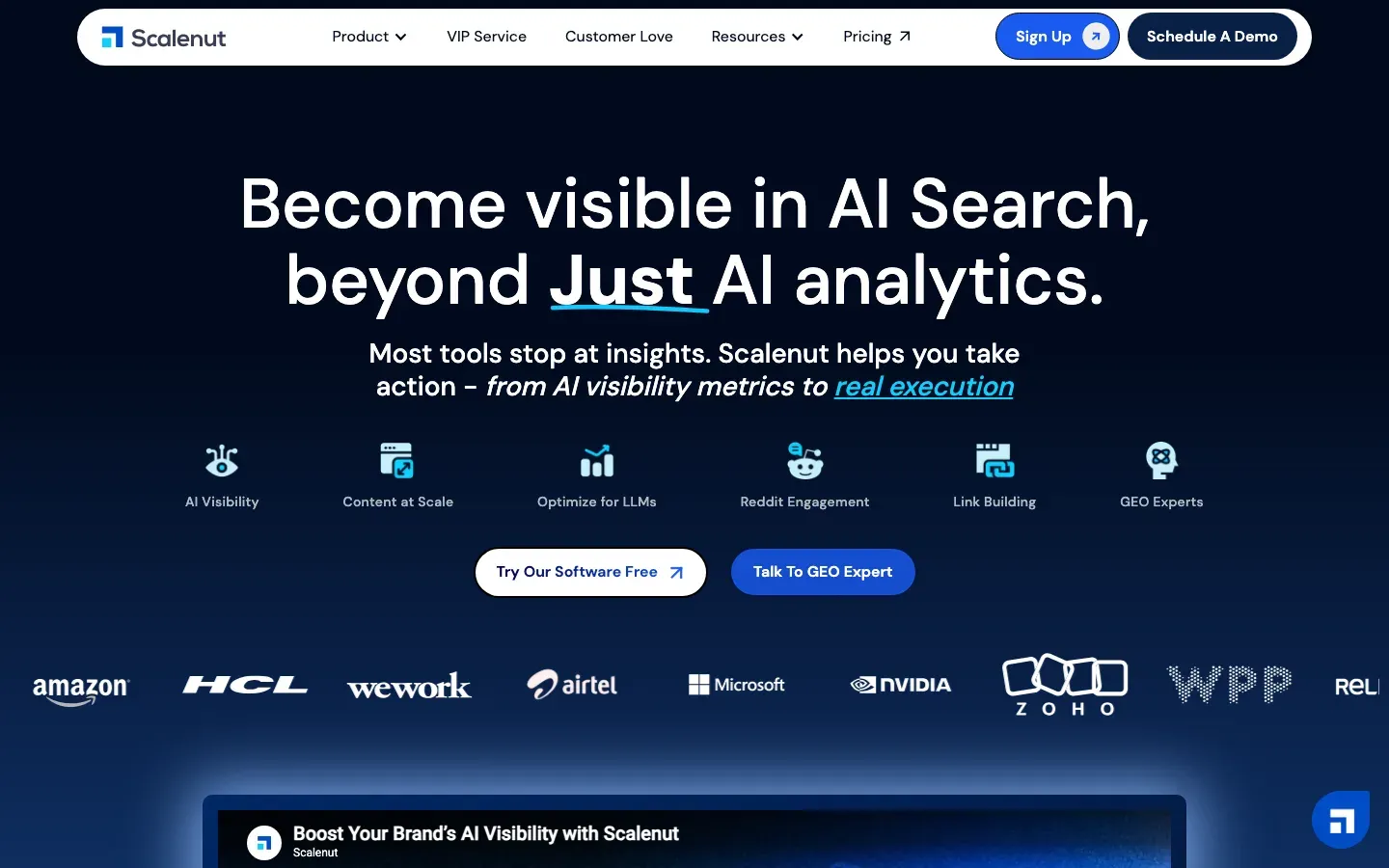
Scalenut is an all-in-one content marketing suite that blends AI-driven writing with SEO intelligence. Its main draw is “Cruise Mode,” a guided workflow that takes you from a single keyword to a full-length optimized draft in minutes. The platform automates topic research, pulls competitor insights, and builds a content outline that the AI then uses to generate a first draft. Useful for teams scaling content production without starting from a blank page.

Scalenut’s integrated keyword clustering and planning is its main differentiator. It groups related keywords into thematic clusters, which forms the basis of a pillar-and-cluster content strategy. The content optimizer is similar to other market leaders, providing real-time feedback on term usage and structure from SERP analysis. With AI search visibility tracking, Scalenut covers most of the content lifecycle from ideation to performance monitoring.
Key details and pricing
- Ideal use case. Content marketing teams and agencies needing a unified platform for keyword strategy, AI drafting, and on-page optimization.
- Pricing. Plans begin at $39/month. Higher tiers add more AI word credits, content briefs, and audit capabilities. Scalenut updates plans often.
- Pros. Broad feature set for the price; efficient idea-to-draft workflow; strong keyword clustering.
- Cons. The product iterates quickly, so features and limits change; confirm the details of your plan on signup.
7. Semrush
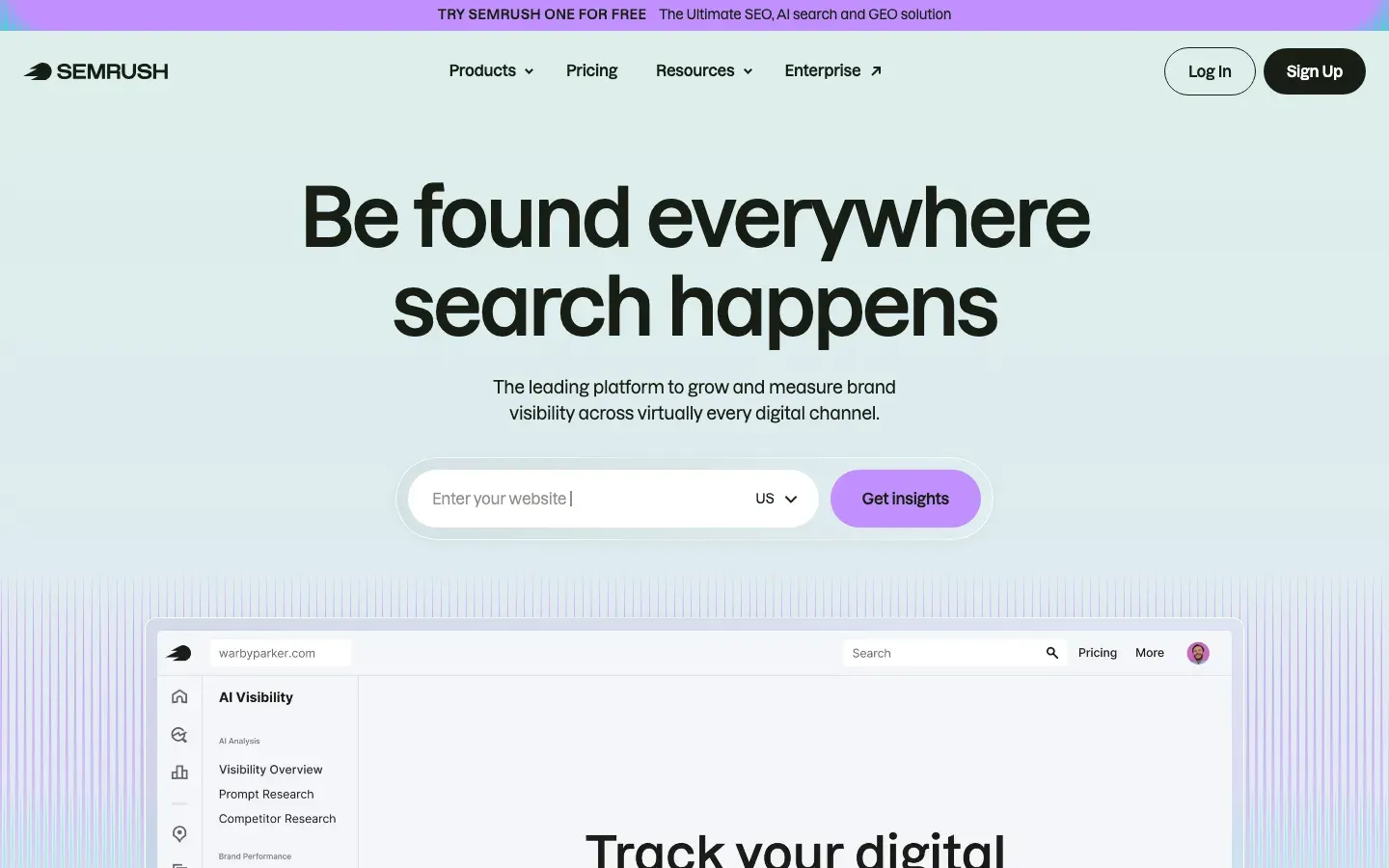
Semrush is a large all-in-one digital marketing suite that has been a staple for SEO professionals for years. Recent additions include AI-powered features that make it a strong option for teams needing a single platform for market research, technical SEO, and content creation. The AI components, such as the SEO Writing Assistant and ContentShake AI, bring generative and optimization capabilities into existing workflows. You can research keywords, analyze competitors, and craft optimized content in the same ecosystem.
Semrush stands out for the sheer breadth of its data. It’s a full-stack intelligence platform, not just a content tool. The AI features augment its core strengths in keyword research, backlink analysis, and technical site audits. For agencies and large teams, the ability to manage complex campaigns, generate reports, and use AI for content scaling matters. Semrush’s API gives extensive access to the underlying data, useful for custom dashboards or integrating SEO data with other BI tools (see SEO tool API).
Key details and pricing
- Ideal use case. Agencies and in-house marketing teams that need a data-rich platform covering all aspects of SEO, from technical audits to AI-assisted content.
- Pricing. Plans begin at $129.95/month for the “Pro” plan. Total cost can increase substantially with additional users, projects, and specialized toolkits.
- Pros. Deep and trusted dataset for competitive and keyword analysis; robust reporting and project management for teams.
- Cons. The pricing structure gets expensive and complex when adding users or specific add-on toolkits.
8. Ahrefs
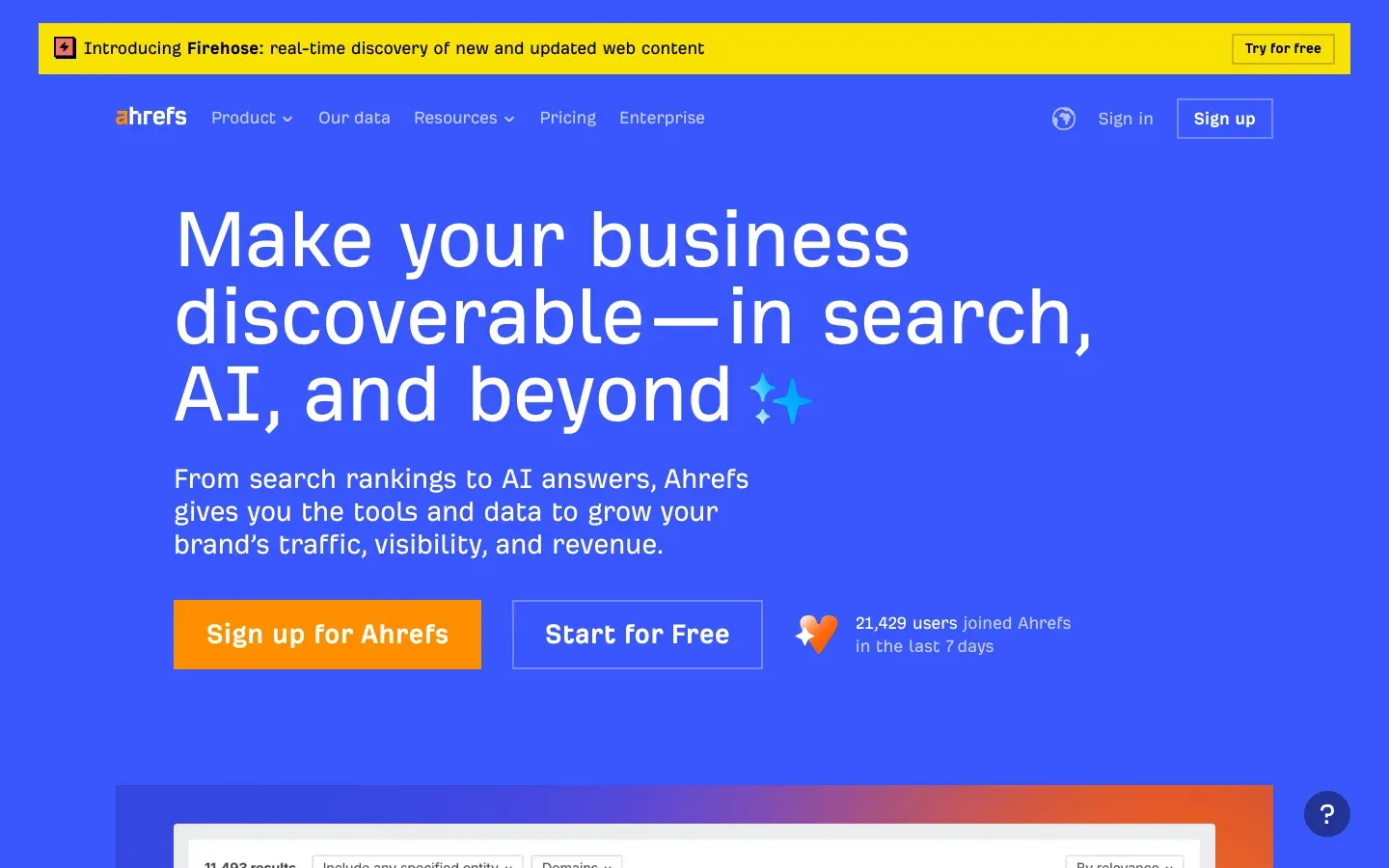
Ahrefs remains a major player in SEO, known for its link index and keyword data. Historically a traditional SEO data platform, it has integrated key AI features. It now offers visibility reporting on how content appears in AI-driven answer engines, and an AI Content Helper for on-page optimization. Teams can ground their AI-assisted strategies in one of the market’s most trusted data sets, which suits enterprises prioritizing data integrity.

Ahrefs takes a gradual, data-centric approach to AI. Rather than focusing on content generation alone, its AI tools augment its core strengths in research and analysis. The AI Content Helper suggests ways to improve coverage and fill content gaps from SERP analysis, and the new AI visibility reports show a brand’s “share of voice” across AI chat answers. The combination of AI-aware analytics and deep historical data is useful for both traditional and generative search.
Key details and pricing
- Ideal use case. In-house SEO teams and agencies that need high-trust data for research, competitor analysis, and AI-aware performance tracking.
- Pricing. Core plans start at $99/month for the “Lite” plan. AI features and increased data limits come with higher-tier plans or add-ons, which raise the total cost.
- Pros. High-trust data with deep historical depth; good documentation and support for integrating data with other systems.
- Cons. The AI visibility reporting add-on is expensive; core plans and add-ons may be cost-prohibitive for smaller teams or freelancers.
9. Jasper
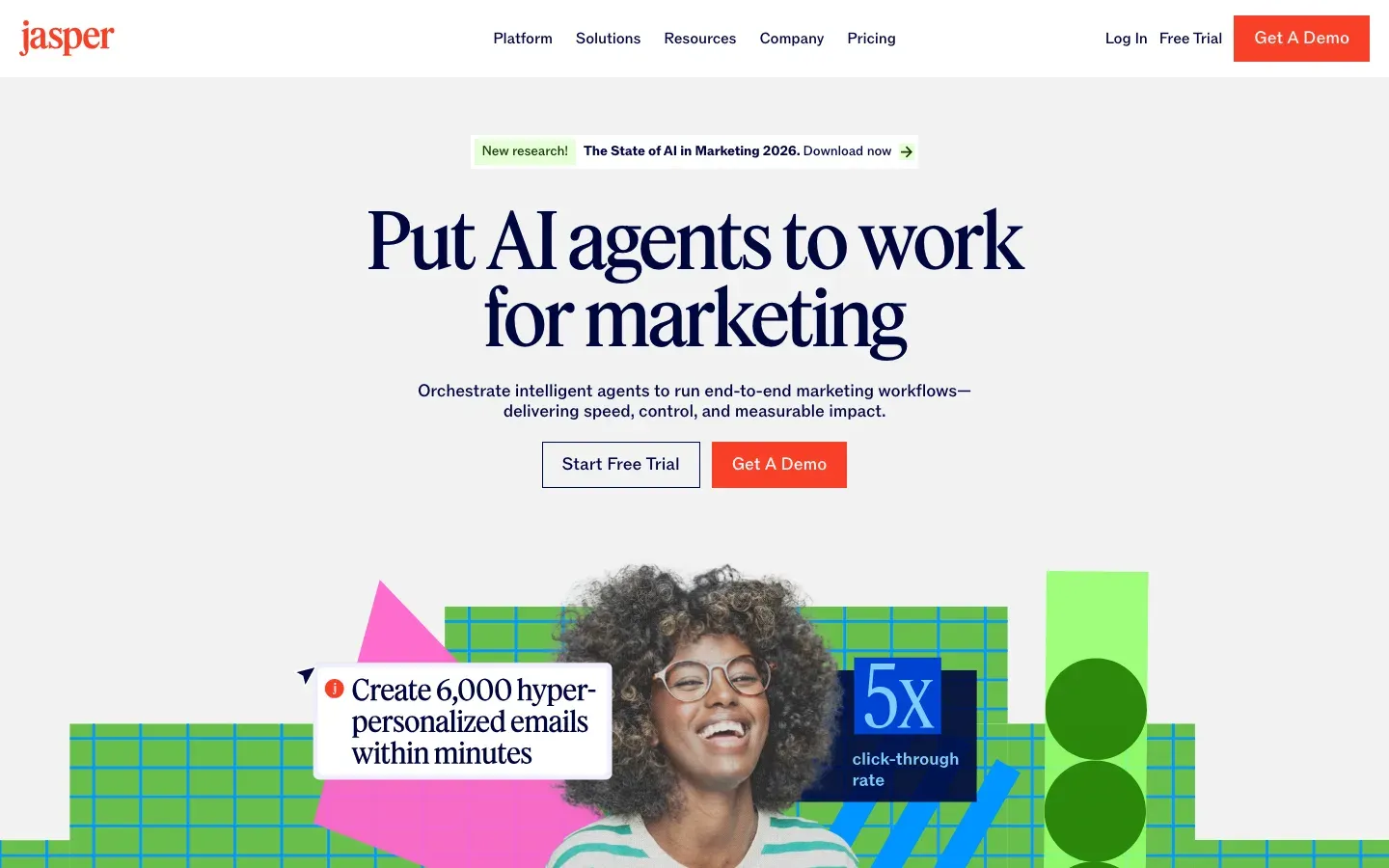
Jasper is an enterprise-focused AI writing and content operations platform built for large teams producing branded content at scale. It’s not a dedicated SEO tool, but it integrates with them. Teams can maintain a consistent brand voice across marketing channels, from social posts to long-form articles. Jasper’s strength is its governance features, campaign tools, and role as a central content creation hub that specialized tools plug into.

Jasper takes an ecosystem approach. Rather than trying to do everything, it focuses on being a good AI writer and pairs with platforms like Surfer for real-time SEO guidance. Content teams get Jasper’s brand voice controls and collaborative workflows alongside data-driven optimization. Features like the Campaign Grid help managers organize multi-asset content strategies, useful for marketing departments that need control and consistency.
Key details and pricing
- Ideal use case. Large marketing teams and enterprises needing a central AI content platform with brand governance and collaborative features.
- Pricing. Pricing is custom, based on team size and usage credits. Plans are tailored to business and enterprise needs rather than simple tiered subscriptions.
- Pros. Strong for brand voice consistency across large teams; good collaboration and workflow controls.
- Cons. SEO scoring and optimization require a separate integration (e.g., Surfer); variable credit costs can be hard to predict.
10. NeuronWriter
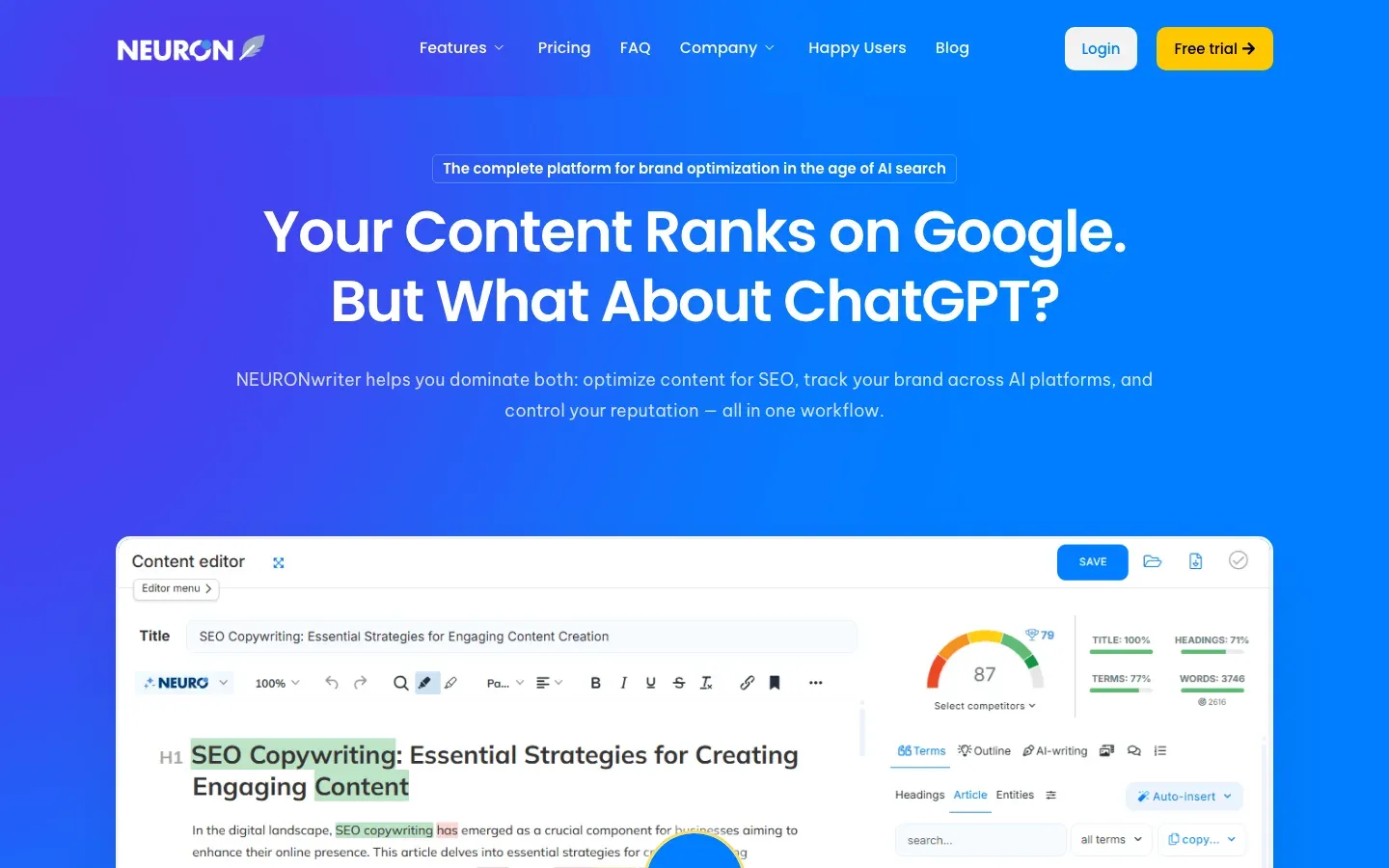
NeuronWriter is a budget-friendly semantic SEO editor that makes data-driven content optimization accessible to a wider audience. It provides a suite of tools that guide writers from keyword analysis to publication. The content editor analyzes top SERP results to provide semantic term suggestions, competitive benchmarks, and a real-time optimization score. Writers and editors can ensure content is topically relevant and comprehensive without a premium budget.

NeuronWriter’s main draw is its price-to-feature ratio, especially for teams. It includes a “Content Designer” for one-click AI article generation, built-in plagiarism checks, and direct integrations with Google Search Console, WordPress, and Shopify. Higher tiers add API access and bring-your-own-OpenAI-key support, useful for cost control at high volume. The interface is less polished than more expensive competitors, but the functional depth and affordability hold up.
Key details and pricing
- Ideal use case. Freelancers, small agencies, and content teams looking for a cost-effective way to scale semantically optimized content.
- Pricing. Free plan available. Paid plans start at around $19/month for the “Bronze” plan. Higher tiers unlock more content analyses, AI credits, and team collaboration.
- Pros. Strong price-to-feature ratio for budget-conscious teams; team sharing and multi-project support on mid-to-high tiers.
- Cons. Interface and editorial guidance are less polished than premium suites; some advanced features require higher-tier subscriptions.
11. Alli AI
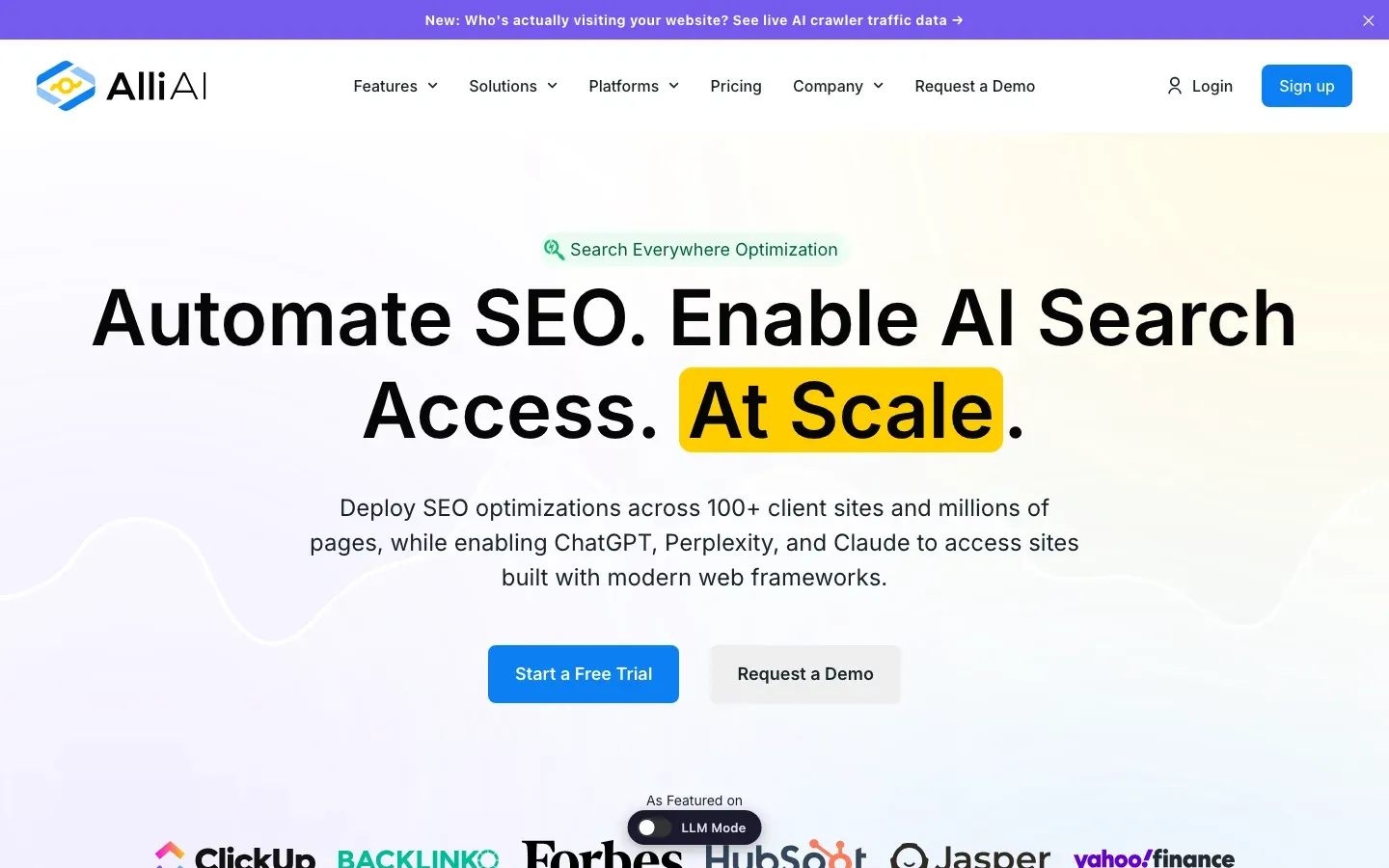
Alli AI takes a different approach to on-page SEO automation, focused on large-scale implementation with minimal technical overhead. Agencies and e-commerce sites can deploy bulk changes to meta tags, schema markup, and content across thousands of pages via a single line of JavaScript. That works well for websites on complex or restrictive content management systems where direct backend access is cumbersome. It creates an optimization layer over the existing site structure.

Alli AI’s strength is fast, code-free deployment at enterprise scale. Beyond meta and schema adjustments, the platform includes a live editor, an AI-powered link builder, and a search visibility engine that tracks keyword performance including local results. For agencies, API access and white-label reporting make it useful for managing multiple client accounts. The focus on execution sets it apart from tools centered on content creation or keyword research.
Key details and pricing
- Ideal use case. SEO agencies, e-commerce stores, and enterprises managing high page-count sites that need to execute on-page SEO changes at scale.
- Pricing. Plans are customized by number of sites, keywords, and pages managed. The pricing-page sliders estimate costs, which generally start in the hundreds of dollars per month for substantial use.
- Pros. Fast deployment of on-page optimizations across any CMS; scales for agencies managing multiple large clients; US-based support.
- Cons. Changes depend on the JavaScript snippet staying active, so persistence after unsubscribing is a consideration; costs increase quickly with more sites or keywords.
Top 11 AI SEO Tools- Feature Comparison
| Product | Core features ✨ | Quality & reliability ★ | Pricing / Value 💰 | Target audience 👥 | USP / Why choose 🏆 |
|---|---|---|---|---|---|
| cloro 🏆 | Parses UI outputs → text/HTML/MD, sources, shopping cards | ★★★★☆, 99.99% uptime, 300M+ monthly calls | 💰 Free 500 credits; Hobby $100/mo; credit‑based, up to 12x savings | 👥 SEO agencies, enterprise SEO, AI‑SEO platforms, devs | ✨ Single API for many assistants; structured, production‑scale data |
| Surfer | AI content editor, SERP/NLP recommendations, internal linking, AI Tracker | ★★★★, strong UX for content teams | 💰 Paid tiers, no 7‑day trial (money‑back window) | 👥 Content teams, agencies focused on briefs & optimization | ✨ Data‑driven briefs + AI visibility tracking |
| Clearscope | Topic/term recommendations, content grading, tracking & inventory | ★★★★, enterprise adoption, easy workflows | 💰 Premium pricing, add‑ons for pages/drafts | 👥 Enterprise content teams, editors | ✨ Intent‑aligned grading, straightforward team workflows |
| MarketMuse | Topic modeling, automated briefs, inventory & strategy tools | ★★★★, strong for large libraries | 💰 Multiple tiers, includes limited free tier | 👥 Editorial teams, content strategists, update programs | ✨ Depth modeling for planning and refreshes |
| Frase | AI research/writing agent (80+ skills), visibility tracking, API | ★★★, all‑in‑one onboarding | 💰 Mid‑range; volume limits may need add‑ons | 👥 Lean teams, automation workflows, developers | ✨ Developer API + broad agent automation |
| Scalenut | Long‑form AI writer, topic clustering, on‑page SEO tools | ★★★, rapid product iteration | 💰 Budget‑friendly plans for scaling users | 👥 Content marketers, scaling teams | ✨ Broad feature coverage for price |
| Semrush | Full SEO suite - keywords, backlinks, audits, AI tools | ★★★★, authoritative datasets & reporting | 💰 Can be costly with add‑ons and users | 👥 Agencies, full‑stack marketing teams | ✨ Deep data, integrations and reporting power |
| Ahrefs | Crawler, rank/link analysis, AI visibility reporting, content helper | ★★★★, high‑trust historical data | 💰 Premium pricing; AI add‑ons can add cost | 👥 Technical SEOs, research & reporting teams | ✨ Massive crawl data + strong link intelligence |
| Jasper | AI writing, brand voice controls, credits model, governance | ★★★, enterprise controls & templates | 💰 Credits‑based; variable monthly spend | 👥 Enterprises needing brand governance | ✨ Brand voice + campaign/admin controls |
| NeuronWriter | Semantic term suggestions, one‑click article gen, GSC/WordPress integrations | ★★★, budget‑focused editor | 💰 Very strong price‑to‑feature ratio | 👥 Budget teams, high‑volume content creators | ✨ Affordable semantic SEO + CMS integrations |
| Alli AI | One‑line snippet, bulk meta/schema/content updates, visibility tracking | ★★★, built for scale on many pages | 💰 Tiered by site/keyword volume; agency options | 👥 Agencies, e‑commerce, high page‑count sites | ✨ Rapid deploy snippet to automate on‑page SEO |
Building your AI-powered SEO stack
Working through this list of AI SEO tools takes time, but the right fit pays back. We’ve covered a spread of platforms, from all-in-one suites like Semrush and Ahrefs adding AI features, to specialized content optimization tools like Surfer, Clearscope, and MarketMuse. Each takes a different approach to core SEO problems, whether through automated content briefs, SERP analysis, or generative text.
The shared theme is the shift from manual, repetitive work to data-informed decision-making. Frase and Scalenut speed up research and outlining, freeing your team for higher-value work like brand voice, narrative, and unique insights. NeuronWriter offers a structured path to content that addresses search intent as machine learning models understand it.
How to choose your AI SEO tool
Picking the right tool isn’t about finding a single “best” option; it’s about matching capabilities to your operational needs. A few core questions:
- For content teams. Is your bottleneck content velocity and on-page optimization? Surfer, Clearscope, or Frase offer direct guidance inside your writing workflow. Their editor integrations and scoring systems make it easy for writers to meet technical SEO requirements without deep expertise.
- For SEO agencies. Do you manage a diverse portfolio of clients? An all-in-one suite like Semrush or Ahrefs gives you the breadth for keyword research, rank tracking, and site audits, with AI features adding efficiency. Pairing one with a specialized API like cloro lets you do scalable, custom data collection for client reporting and competitive analysis.
- For in-house enterprise teams. Focused on strategic market positioning and content intelligence at scale? MarketMuse helps you identify content gaps, build topical authority, and manage a large content inventory. For bespoke needs like monitoring brand mentions in AI Overviews, a direct API approach is essential.
- For technical SEOs and developers. Building custom automations and internal dashboards? Direct API access is non-negotiable. cloro is built for this, providing structured data from any search engine or web source without the overhead of managing proxies or parsers.
Final thoughts on implementation
Integrating any of these tools requires more than a subscription. It requires a change in mindset. Value emerges when you stop treating them as content generators and start treating them as analytical partners. Use them to test hypotheses, analyze competitor strategies, and automate the data gathering that informs your next move.
The most successful SEO programs won’t be the ones that replace human strategists with AI, but the ones that give their human experts the speed, data, and analytical power of AI. The tools above are building blocks. Pick the right ones, integrate them thoughtfully, and build a process that turns their data into a sustainable competitive advantage.
Ready to move beyond off-the-shelf dashboards and build a custom AI SEO data pipeline? The cloro API provides structured, real-time search data to monitor AI Overviews, track competitor rankings, and audit web content at scale. Visit cloro to fuel your tools with clean, consistent data.
Frequently asked questions
What are AI SEO tools?+
AI SEO tools are platforms that use machine learning to assist with SEO tasks — content optimization, keyword research, technical audits, and increasingly, tracking visibility inside AI-generated answers from ChatGPT, Perplexity, Gemini, and Google AI Overviews. Some focus on content (Surfer, Clearscope, MarketMuse), some on data infrastructure (cloro), and some on full-suite automation (Semrush, Ahrefs).
What's the difference between traditional SEO tools and AI SEO tools?+
Traditional SEO tools track organic rankings, backlinks, and site health. AI SEO tools add visibility tracking inside generative search (AI Overviews, ChatGPT answers, Perplexity citations) and use AI to automate content briefs, optimization scoring, and competitive analysis. The line is blurring fast — most established suites now ship AI features, and the truly modern stacks combine an all-in-one tool with a specialized API.
Which AI SEO tool is best for content optimization?+
Surfer and Clearscope are the standards for SERP-driven content briefs and on-page scoring. MarketMuse is stronger for topical-authority planning across large content libraries. NeuronWriter is the budget pick. For brand-voice consistency at enterprise scale, Jasper paired with Surfer is a common combo.
How do I track my brand's visibility in AI Overviews and ChatGPT?+
You need either a tool with native AI-visibility reporting (AccuRanker AccuLLM, SE Ranking AI Search Toolkit, Semrush, Ahrefs AI visibility) or a scraping API like cloro that returns structured JSON from each AI assistant — text, sources, citations, related queries. The API route is more flexible because you choose exactly which prompts and surfaces to monitor.
Are AI SEO tools worth the cost in 2026?+
For any team producing more than four pieces of content per month or tracking more than 100 keywords, yes. The time savings on content briefs and competitive research alone usually cover the subscription. The real ROI question is whether you can pair the tool with the workflow changes needed to act on its data — buying Surfer doesn't help if writers ignore the score.
Can AI SEO tools replace human SEOs?+
No — and the gap is widening. AI tools accelerate research, drafting, and reporting, but strategy, brand judgment, technical debugging, and stakeholder communication still require experienced humans. Teams that lean fully into AI generation without editorial oversight tend to publish content that ranks briefly then gets penalized in helpful-content updates.
Related reading

Your AI SEO Competitive Analysis Template for 2026
Build a modern competitive analysis template that tracks SEO, AI Overviews, and brand signals to outperform your competition in 2026.

10 Competitive Intelligence Examples - Master AI SEO in 2026
Explore 10 powerful competitive intelligence examples. Learn to track AI Overviews, competitor pricing, and SERP features to build a winning strategy.

Top 12 Rank Tracking Software for SEO & AI in 2026
Discover the top 12 best rank tracking software options for 2026. Compare features, pricing, and AI tracking to find the right tool for your SEO strategy.