
ChatGPT query fan-out: why one search is now ten
The “Long Tail” is dead. Long live the “Wide Fan.”
In traditional SEO, we optimized for the long-tail keyword: “Best project management software for small creative agencies under $50.”
We wrote massive, monolithic articles trying to rank for that exact phrase.
But when a user types that into ChatGPT or Perplexity today, the engine doesn’t search for that string. It does something smarter.
It performs Query Fanout (also called Query Decomposition).
It takes that one complex prompt and splits it into 5, 10, sometimes 20 simultaneous “atomic” searches. If your content answers one of those atomic questions well, you show up. If you only optimized for the long tail, you don’t.
Table of contents
- What is query fanout?
- The mechanics of decomposition
- Why this breaks traditional SEO
- Optimizing for atomic intent
- The “Frankenstein” answer
- Tracking your fanout performance
What is query fanout?
Query fanout is when an AI agent breaks a multi-part user request into discrete sub-tasks, runs them in parallel, and synthesizes the results.
The old way (Google classic): User: “Compare Slack vs Teams for developers” Engine: Looks for pages containing “Slack vs Teams for developers”
The new way (AI search): User: “Compare Slack vs Teams for developers” AI Agent: I need to know:
- What are the developer-specific features of Slack? (Search A)
- What are the developer-specific features of Teams? (Search B)
- What is the API rate limit for Slack? (Search C)
- How does Teams integrate with GitHub? (Search D)
- What is the pricing difference? (Search E)
The AI runs all five searches at once. It reads five pages (potentially from five different sites), extracts the facts, and writes a single answer.
The mechanics of decomposition
This is Chain of Thought (CoT) reasoning applied to search.
When models like OpenAI’s o1 or GPT-4o receive a prompt, they first run a planning phase to identify missing information.
The fanout workflow:
- Ingest. Receive the user prompt.
- Decompose. Identify independent variables.
- Execute. Fire off parallel AI crawlers to fetch data.
- Read. Parse the content (where llms.txt helps).
- Synthesize. Stitch the facts into a coherent narrative.
The user gets a comprehensive answer without clicking a link. The AI has done the tab-surfing for them.
Why this breaks traditional SEO
For 20 years, SEOs were taught to write “The Ultimate Guide” and stuff every sub-topic into one 5,000-word URL to maximize topical authority.
Query fanout penalizes that format. Ultimate guides tend to be:
- Hard to parse (too much fluff).
- Broad but shallow.
- Slow to load.
AI agents prefer atomic content: pages that answer one specific thing in depth.
If the AI wants “Slack API rate limits,” it picks a developer docs page that answers exactly that over a “Top 10 Chat Tools” post that mentions it in passing.
Optimizing for atomic intent
To win in a query fanout world, shift your content strategy from keywords to facts.
1. Fragment your content
Instead of one giant page, build a hub-and-spoke model where specific questions get specific pages.
- Bad: One page on “All about our Pricing.”
- Good: Separate URLs (or clearly defined H2 sections) for “Enterprise Pricing,” “Startup Discounts,” and “Non-Profit Tiers.”
2. Be the fact supplier
AI engines trust data. Run a survey or publish a benchmark report and you become the primary source for that data point. When the AI fans out to find “average churn rate in SaaS,” it cites your report.
3. Structured data matters
Use Schema.org markup to label your atomic facts. Wrap a pricing table in Product schema. Wrap a Q&A in FAQPage schema. This helps the bot extract the specific shard of information it needs during fanout.
The “Frankenstein” answer
The final answer the user sees is stitched together from different body parts.
- The introduction might come from Wikipedia.
- The pricing comparison might come from your pricing page.
- The pros and cons might come from a Reddit thread (or a competitor’s comparison page).
Your goal is to own as many of those body parts as possible.
You want to be the source for the pricing and the features and the security compliance. That requires a holistic GEO strategy.
Tracking your fanout performance
This is the tricky part. In Google Search Console you’ll see impressions for queries you never targeted, or a drop in clicks despite high visibility (the AI took the fact and ran).
How to measure success:
- Citation density. Check how often your brand is cited as a source in complex answers.
- Fact retrieval. Monitor whether the specific data points you publish (“our uptime is 99.99%”) show up in AI answers.
You can’t manually test every variation of a complex query. cloro simulates multi-step prompts to see how engines like ChatGPT and Perplexity decompose them, acting as a ChatGPT visibility tracker.
cloro shows you:
- Which sub-queries are being generated.
- Which of your pages are being fetched for those sub-queries.
- Whether the final synthesized answer is accurate.
The future of search isn’t about ranking for the question. It’s about ranking for the answer to a sub-question you didn’t know the AI was asking.
Frequently asked questions
What is query fanout?+
Query fanout is when an AI model breaks a complex user prompt into multiple sub-queries to gather comprehensive information from different sources.
How does fanout affect SEO?+
It means you can rank for sub-topics even if you don't rank for the main broad keyword, provided your content answers specific questions authoritatively.
Can I track fanout queries?+
Yes, advanced visibility trackers like cloro can simulate prompts and show you which sub-queries the AI generates and searches for.
What is a 'Frankenstein' answer?+
It refers to an AI-generated response that synthesizes information from multiple disparate sources, stitching together different 'body parts' of information into one cohesive answer.
How do I optimize for atomic content?+
Instead of one giant article, create specific, in-depth pages or clearly defined sections that answer single, precise questions. This makes it easier for AI to extract exact facts.
Related reading
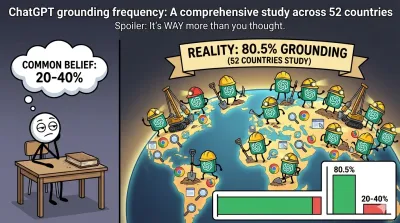
ChatGPT uses web search in 80%+ of the prompts
Independent testing reveals ChatGPT uses web search and grounding in 81% of responses—much more frequently than the commonly believed 20-40%. We tested 5,200 queries across 52 countries to measure organic behavior.
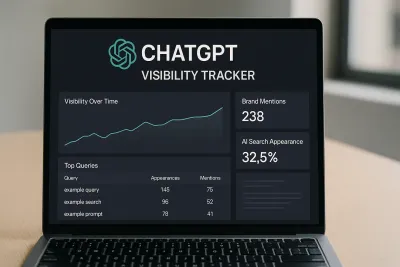
ChatGPT visibility tracker: track brand in AI search
Complete guide to using ChatGPT visibility trackers to monitor how your brand appears in AI search results and optimize your presence.

Best ChatGPT scraper tools for 2026: extract the unextractable
The official API doesn't show you what users see. Here are the best tools to scrape the ChatGPT web interface, parse citations, and track brand mentions.