
ScraperAPI Alternatives: 5 SERP APIs Tested (2026)
We tested 5 ScraperAPI alternatives in 2026 — parsed SERPs, AI Overview, real credit-vs-per-call pricing, and success rates. See which scraping API fits.
4.7 · 53 reviews
Why teams switch from ScraperAPI
Issues users run into with ScraperAPI
The parser is yours to maintain
ScraperAPI returns the rendered page and leaves the structure to you. Turning a ChatGPT or Perplexity answer into citations, sources, and positions is a parser you write, then rewrite whenever an engine changes its markup. cloro ships those fields already parsed, so engine changes are ours to absorb.
Credit-based pricing complexity
Different request types cost different credits (1-25 credits). Complex sites cost significantly more, making pricing unpredictable. cloro charges a fixed credit cost per model and result depth, so you know what a call costs before you send it instead of reconciling a credit ledger after the fact.
Not optimized for AI platforms
Built for traditional websites with proxy rotation. AI platforms require specialized infrastructure, and general proxy scrapers can't compete. cloro runs that infrastructure and returns parsed ChatGPT, Perplexity, and Copilot answers, so you can track AI-engine visibility and citations without building that infrastructure yourself.
Quick comparison
How cloro compares to ScraperAPI
cloro
ScraperAPI
ScraperAPI is a general-purpose proxy scraper: one API key, automatic proxy rotation and retries, and a credit model that charges more for harder targets. It handles anti-bot evasion across many site types, and its structured endpoints for Google and Bing return SERP data on top of that proxy layer. That breadth is the point — it is built to scrape almost anything, not to be a specialist SERP API.
Anyone searching for ScraperAPI alternatives in 2026 (or a ScraperAPI alternative, singular, the same question) is really choosing between another general proxy scraper and a parsed, SERP-specific API. Some teams want cheaper or larger proxy infrastructure. Others never wanted to run a proxy-and-parser stack at all, and would rather have structured Google SERP data (organic, ads, AI Overview, People Also Ask) come back as clean JSON.
The credit model is where the cost gets slippery for SERP work. A credit is a request multiplier rather than a request, and Google’s structured endpoints bill at 25 credits per call, roughly $12 per 1,000 on the Hobby plan. We tested five.
The 5 best ScraperAPI alternatives at a glance
| Tool | Model | Entry price | Google SERP rate (~1k) | AI Overview |
|---|---|---|---|---|
| cloro | Parsed AI-native SERP API | $30/mo (free tier: 500 credits/mo) | $1.25–$2.00 /1k (n=10 + AIO) | ✅ deep, default |
| ScraperAPI | Credit-based proxy scraper | $49/mo (1k free credits) | ❌ no AIO | |
| ScrapingBee | Headless-browser scraper | $49/mo (1k free credits) | credit-multiplier dependent | ❌ no AIO |
| Oxylabs | Proxy + SERP Scraper API | $49/mo | ~$2 /1k results | ⚠️ limited |
| Bright Data | Proxy + SERP layer | PAYG; Business ~$999/mo | ~$1–$1.50 /1k (high end) | ⚠️ DIY parse |
| Apify | Actor marketplace | ~$39/mo + compute | actor-dependent | ⚠️ community actor |
For a ScraperAPI replacement, two questions do most of the sorting. Do you get parsed SERP JSON or raw access you parse yourself, and is pricing a per-target credit multiplier or a flat per-call rate? ScraperAPI sits at the raw-access, credit-weighted end of both, and every alternative below moves toward one end or the other.
How we tested, and what these numbers rest on
Comparison pages are easy to write and hard to trust, so here is the basis for every claim above.
The cloro rows are measured. On 2026-08-19 we ran 15 AI-Overview-prone commercial and informational queries through cloro’s Google endpoint. 14 of the 15 returned a fully parsed AI Overview object, carrying the answer text, a markdown rendering, sources, citationPills, relatedLinks and videos, at a mean of 8.5 sources per overview. That run is the evidence behind cloro’s AI Overview column. One implementation detail if you benchmark us yourself: the field populates only when include.aioverview is sent, and without that flag it is absent whether or not Google rendered an overview, which produces a convincing-looking zero.
The ScraperAPI and other vendor rows come from each vendor’s own documentation and pricing pages, linked inline throughout. We did not run those APIs under our own keys for this comparison. So read a ❌ or ⚠️ as “not documented as a first-class parsed field” rather than as a test we ran and they failed. Where a vendor has shipped something since we last checked, their documentation is the authority and this page is not.
Pricing moves and none of these figures are quotes. List prices change without notice and promotional rates are common, so treat the per-1,000 rates as the shape of the market rather than a number to budget against, and open the linked pricing page before you commit.
We make one of the products in this table. cloro is listed first because this is our site, not because a neutral panel ranked it there. The measurements above are reproducible and the competitor links go to primary sources; use both to discount our framing.
What ScraperAPI is actually built for
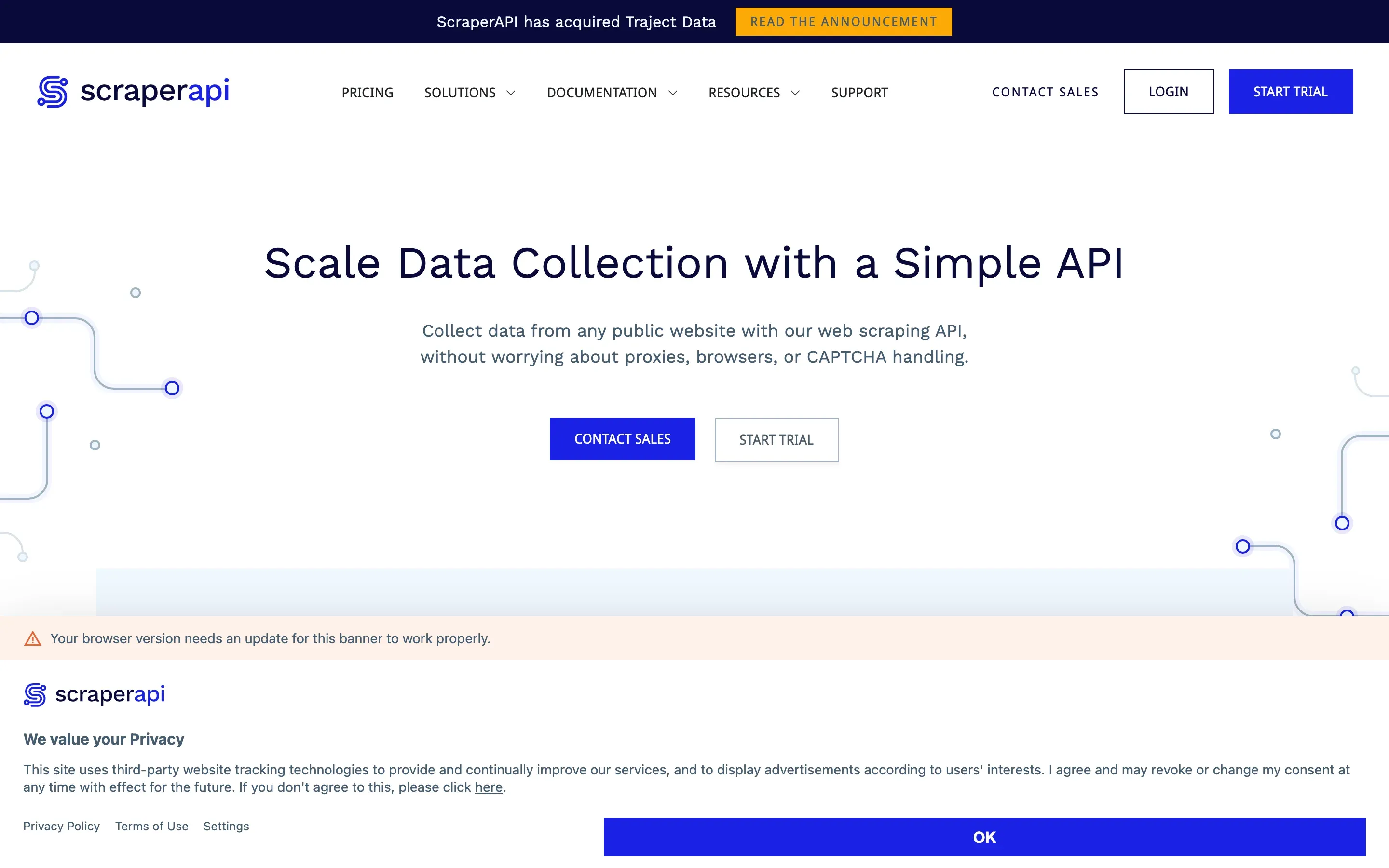
ScraperAPI is a proxy scraper first, with structured endpoints layered on top. You send it a URL (or a Google/Bing query), it rotates proxies, renders JavaScript when asked, retries on failure, and hands back the response. Pricing is denominated in credits, and a credit’s cash value depends entirely on what the request needed: a basic HTML fetch costs 1 credit, JavaScript rendering and premium residential proxies cost far more. On the Hobby plan (100,000 credits for $49/month) that’s fine for a mixed workload — but a Google structured-endpoint call bills at 25 credits, so the same plan yields about 4,000 Google SERP calls, an effective rate near $12 per 1,000 for Google specifically.
Where the credit model earns its keep
For general-purpose scraping where target diversity is the workload, the credit model is fair — you pay in proportion to difficulty:
- Aggregator pipelines that hit many site types (price comparison, listings normalization).
- E-commerce monitoring with a mix of easy and hard targets.
- Workloads that genuinely benefit from “you only pay more for the harder calls.”
- Cases where built-in proxy rotation across diverse IPs is part of the value.
For that shape of work the credit weighting reflects actual cost-of-service, and ScraperAPI is an easy pick for a developer, with a free 1,000-credit tier and a 7-day, 5,000-credit trial to evaluate it.
Where the credit weighting becomes overhead
For a SERP-only buyer the per-call complexity is essentially constant. Every Google SERP call hits the same target with the same anti-bot profile, so the credit weighting collapses to a fixed 25× multiplier and the credit math turns into bookkeeping rather than signal.
That shows up first in the rate. At 25 credits per call the effective Google SERP price sits near $12 per 1,000, several times what a flat per-call SERP API charges. Credit cost still varies with target difficulty as well (JS render and premium proxy cost more), so forecasting spend means forecasting your target mix.
It shows up again in the parser. ScraperAPI returns the response from the target, which for Google is rendered HTML or a stripped JSON wrapper. There is no structured AI Overview field, so parsing organic positions, sponsored ads, AI Overview citations, PAA and related searches into rows is code you write and then maintain as Google’s layout shifts.
The alternatives below close that gap, either by being a different flavor of proxy scraper or by taking the proxy-and-parser problem off your plate.
The 5 real ScraperAPI alternatives, tested
1. cloro — best for parsed, AI-native SERP data
cloro’s SERP API is the inverse of ScraperAPI: there is no proxy product to meter in credits and no parser to build. One endpoint family returns parsed JSON for Google Search and News, Google AI Overviews and AI Mode, plus ChatGPT, Perplexity, Copilot, Gemini, and Grok — with the actual cited source URLs each AI surface used. Where a proxy scraper hands you HTML, cloro returns organic results, ads, AI Overview (with citations), People Also Ask, and related searches in a single response.
Tracking classic rank without tracking AI citations now misses half the SERP, which is why the cross-surface coverage matters in 2026. cloro also fits existing pipelines through n8n, Zapier, LangChain, and MCP, so you can plug it into AI-visibility monitoring, SEO tooling, or an AI agent you’re already running rather than building a new integration. Synchronous calls cover single lookups; async/batch with webhook delivery handles large query sets without polling.
The 99% success rate above is checkable. Elmo, a brand-visibility product that runs cloro as one of its providers, queries each provider every six hours and publishes the measured success rate and latency in Elmo’s provider comparison. It does not cover ScraperAPI, so read it as evidence for cloro’s own reliability, not a head-to-head. It scores success rate and latency only, not the parsing differences below.
Pros: AI Overview parsed by default (block text plus cited source URLs). One API across Google and every major AI surface. Self-serve signup with a free 500-credit trial. Flat page-driven pricing — no per-target credit multiplier to reconcile. No proxy or parser to maintain.
Cons: Focused on search intelligence — it doesn’t sell a raw proxy pool or scrape arbitrary non-SERP sites the way ScraperAPI does. Newer than the longest-running scraper vendors.
Pricing: Credit-based from $30/month (Lite, 37,500 credits at $0.80 per 1,000 credits), with Hobby at $100/month for 250,000 credits at $0.40 per 1,000 and rates scaling down to $0.31 per 1,000 on the largest self-serve tier and $0.25 on a custom Enterprise contract. A Google call is 3 credits at n=10, +2 with AI Overview — about $1.25–$2.00 per 1,000 at n=10 with AIO. See the pricing page for full tiers.
2. ScrapingBee — headless-browser scraper for JS-heavy targets
ScrapingBee is the closest like-for-like to ScraperAPI: a developer-first, credit-based scraper whose specialty is headless-browser JavaScript rendering. It handles the same “give me a URL, I’ll handle proxies and rendering” job, and like ScraperAPI it uses credit multipliers — JavaScript rendering multiplies cost roughly ×5, premium proxies up to ×25, and stealth mode as high as ×75. That means the same per-target forecasting problem, and no structured AI Overview parsing.
Pros: Strong at JS-rendered pages and single-page apps. Self-serve, developer-friendly, with a free 1,000-credit tier. Clean API surface.
Cons: Credit multipliers make hard targets expensive, and Google SERP work carries the same weighting overhead as ScraperAPI. No AI Overview field — you parse SERP elements yourself.
Pricing: Discovery $49/month (150,000 credits), Pro $99/month (1M credits), Startup $249/month (3M credits), Enterprise $599/month (8M credits). Free 1,000 credits to start. (ScrapingBee pricing)
3. Oxylabs — closest like-for-like proxy + SERP infrastructure
If what you actually want is a larger proxy pool with a parsed SERP layer, Oxylabs is the nearest match: a 100M+ IP residential and datacenter network with a dedicated SERP Scraper API on top. The SERP Scraper API is self-serve from around $49/month (roughly $2 per 1,000 results at the entry tier), and unlike ScraperAPI’s raw response it parses the SERP for you rather than handing back HTML.
Pros: Proxy scale well beyond ScraperAPI. Parses SERP results rather than returning raw HTML. Self-serve entry tier.
Cons: Still fundamentally proxy-first; AI Overview parsing is limited versus purpose-built SERP APIs. Higher tiers move back toward enterprise pricing and contact-sales.
Pricing: SERP Scraper API from $49/month; per-result rates roughly in the $2 per 1,000 range depending on plan and volume. (Oxylabs pricing)
4. Bright Data — proxy scale for high-volume, mixed scraping
Bright Data is the enterprise end of the proxy world: 72M+ residential IPs across 195+ countries with a SERP API layered on top. On raw Google SERP rate it’s competitive (~$1–$1.50 per 1,000 at the high-volume end), but that comes with an enterprise sales motion — KYC review, an MSA, and committed plans (Business lands near $999/month) are where the effective rate drops. AI Overview isn’t a clean parsed field; you bring the parser or use Web Unlocker.
Pros: Massive, diverse proxy network (residential, datacenter, mobile, ISP). Competitive raw Google rate at scale. Rigorous compliance posture for regulated buyers.
Cons: Sales-led onboarding (KYC, MSA) can take days. Multi-axis billing. No clean AI Overview parsing — DIY.
Pricing: Pay-as-you-go available; committed Business ~$999/month where rates improve. SERP API roughly $1–$1.50 per 1,000 at high volume. (Bright Data pricing)
5. Apify — actor marketplace for custom scrapers
Apify is a different shape again: a marketplace of pre-built “actors” (scrapers) plus the compute to run them. Community actors cover Google SERP and even AI Overview, so you can assemble a pipeline without writing everything from scratch — but you’re picking, configuring, and maintaining third-party actors rather than calling one managed endpoint with an SLA.
Pros: Huge library covers far more than SERPs (any site with an actor). Flexible, and economical for mixed, occasional scraping.
Cons: You inherit third-party actor maintenance — actors break when sites change. Cost is composed from platform subscription, compute, proxy, and per-actor fees. AI Overview depends on whichever community actor you choose.
Pricing: Platform subscription (Starter around $39/month) plus compute and per-actor fees; effective Google SERP cost is actor-dependent. (Apify pricing)
ScraperAPI alternatives: price and parsing compared
Headline scraper pricing misleads. What you pay is the per-1,000 rate plus the engineering that turns raw access into parsed SERP rows. A credit-weighted scraper that needs a parser you build and maintain is not cheaper than a flat per-call API that returns structured JSON if that parser costs you weeks.
| Vendor | Model | Google SERP rate (~1k) | You parse? | AI Overview |
|---|---|---|---|---|
| cloro | Parsed SERP API | $1.25–$2.00 (n=10 + AIO) | No | ✅ default |
| ScraperAPI | Credit proxy scraper | ~$12 /1k Google (25 cr/call) | Yes | ❌ |
| ScrapingBee | Headless-browser scraper | multiplier-dependent | Yes | ❌ |
| Oxylabs | Proxy + SERP Scraper API | ~$2.00 /1k results | No | ⚠️ limited |
| Bright Data | Proxy + SERP layer | ~$1–$1.50 (high end) | Mostly | ⚠️ DIY / Web Unlocker |
| Apify | Actor marketplace | actor-dependent | Depends | ⚠️ community actor |
ScraperAPI is the most expensive of these for Google specifically: the 25-credit weighting pushes the effective rate near $12/1k, which is exactly the spend a SERP-only team is overpaying. ScrapingBee is the closest like-for-like, with the same credit-multiplier model, the same JS-rendering strength and the same missing AI Overview field. If you want the infrastructure swap instead, that’s Oxylabs (self-serve, parsed SERP) or Bright Data (enterprise proxy scale). On total delivered cost for parsed Google plus AI Overview, cloro comes out ahead, because the AI Overview parser, citation extraction and PAA hydration are already written.
For the price-only view see Cheapest SERP API 2026; for the full managed-API roundup see Best SERP APIs in 2026.
Migration playbook: ScraperAPI → cloro
If you’re moving off ScraperAPI specifically to stop paying the 25-credit Google weighting and maintaining a SERP parser, the switch is small:
- Credit multipliers → flat per-call rate. Stop reconciling a credit ledger against a constant call count. cloro’s Google call is a fixed 3 credits (+2 for AI Overview) at n=10 — the cost is the cost on day one.
- Raw HTML → one parsed envelope. Delete the organic/ads/PAA/related-search parsing and the AI Overview handling you built on ScraperAPI’s response. cloro returns those as structured fields.
- No structured AI Overview → AI Overview by default. The same call that returns organic results returns the AI Overview block with cited sources — no separate scraper, no DIY extraction.
- Add AI-surface coverage for free. The same integration that reads Google also reads AI Mode, ChatGPT, Perplexity, Copilot, and Gemini, so AI-citation tracking is one API, not a second vendor. Start against the free 500-credit trial to baseline your own keywords first.
The field-level version of this is in the migration guide, the closest mapping of the six: organic_results[] becomes result.organicResults[] and the keys inside it already match.
What you can’t migrate to cloro: arbitrary non-SERP scraping and a raw proxy pool are out of scope. If you use ScraperAPI to scrape many site types beyond search, keep it for that — or move that workload to ScrapingBee, Oxylabs, or Apify. cloro is a SERP API, not a general scraper.
Decision tree: which ScraperAPI alternative to pick
- Never wanted to run a scraper or parser — you just need parsed Google SERPs with AI Overview, plus ChatGPT/Perplexity/Gemini citations through one API? cloro.
- Want the same developer-first, credit-based scraper but stronger on JS rendering? ScrapingBee.
- Need a bigger proxy pool with a parsed SERP layer, self-serve? Oxylabs.
- Scraping at very high volume and fine with an enterprise sales motion? Bright Data.
- Need to scrape many site types, not just SERPs, and don’t mind maintaining actors? Apify.
The bottom line
ScraperAPI is a general-purpose proxy scraper with credit-weighted billing tuned to mixed-target workloads, and the best ScraperAPI alternative depends on which half of that you actually need. If you scrape many site types, ScrapingBee is the like-for-like swap and Apify covers the long tail; if you need proxy scale, Oxylabs and Bright Data are the infrastructure picks.
If you’re leaving because you’re paying the 25-credit Google weighting and maintaining a SERP parser for a workload that is really SERP-only, another scraper won’t fix that. A parsed SERP API will. cloro returns organic results, ads, AI Overview with citations, and People Also Ask in one flat-priced call, across Google and every major AI surface, with a free 500-credit trial you can run against your own keywords first.
Feature comparison
How the two stack up, feature by feature
| Feature | cloro | ScraperAPI |
|---|---|---|
| Platform Support | ChatGPT, Perplexity, Copilot, Google, Gemini, Grok | Traditional websites with proxy rotation |
| Pricing Model | Credit-based by AI model | Credit-based (1-25 credits per request) |
| AI Overview Scraping | Native support with parsed citations | Not supported |
| Proxy Rotation | Built-in, optimized for AI engines | Excellent rotation strategies |
| Response Format | Clean parsed objects | Raw HTML/JSON |
| Geolocation Support | Comprehensive coverage for all major markets | Global proxy network |
| AI Platform Monitoring | Built-in ChatGPT, Perplexity, Copilot tracking | Not available |
| Cost Predictability | Credit-based, model-specific pricing | Varies by site complexity |
The verdict
ScraperAPI has solid proxy rotation and credit-based pricing from $49/month. But different request types consume different credits (1-25), so the monthly cost is hard to predict. For AI scraping, cloro holds a 99% success rate across ChatGPT, Perplexity and Copilot and returns clean parsed data at a per-model credit rate.
Frequently asked questions
How does ScraperAPI's credit pricing work?
A credit is a request multiplier, not a request. ScraperAPI charges 1 credit for a basic HTML fetch, 5 for common e-commerce sites, 10 for JavaScript rendering, and 25 for premium residential proxy plus JS rendering on protected sites. So the same monthly quota delivers very different request counts depending on your target mix.
Why is the credit model overhead for SERP scraping?
Every Google SERP call hits the same target with the same anti-bot profile, so the credit weighting collapses to a fixed multiplier — the variable pricing that helps mixed-target workloads becomes a ledger you reconcile against a constant call count. cloro uses a flat page-driven rate instead: 3 credits for the first page, +2 per additional page, +2 for AI Overview.
Does ScraperAPI return parsed SERP data?
No. ScraperAPI returns the response from the target — for Google that's rendered HTML or a stripped JSON wrapper. Parsing organic positions, sponsored ads, AI Overview citations, PAA, and related searches into structured rows is your code. cloro's SERP API returns that full envelope already parsed.
Can ScraperAPI scrape AI engines like ChatGPT?
Point a general scraper at those sites and you get a rendered page, not an answer: citations, sources, and positions are yours to parse, and to keep parsing as each engine changes. cloro runs specialised infrastructure for those platforms with a 99% success rate, returns those fields structured, and adds built-in visibility monitoring.
Should I use ScraperAPI or cloro?
Use ScraperAPI when you scrape many target types and the credit weighting reflects your real workload, or you need anti-bot evasion on protected non-Google sites. Use cloro when your workload is SERP-specific, the per-call cost is constant, and you want the parsed SERP envelope for monitoring or rank-tracking pipelines.
Related comparisons
Each page maps cloro's SERP API against one alternative on pricing, AI Overview coverage, and developer experience. Compare ScraperAPI with the rest of the field:
Apify Alternative: 5 Scraping & SERP APIs Tested (2026)
We tested 5 Apify alternatives in 2026 — managed SERP APIs vs actor marketplaces, AI Overview, and real pricing. See which fits without maintaining actors.
Best Bright Data Alternatives: 5 Proxy and SERP APIs (2026)
We tested 5 Bright Data alternatives in 2026 on parsed Google SERPs, AI Overview, real per-1,000 pricing, and setup time. See which proxy or SERP API fits.
Best DataForSEO Alternatives: 5 SERP APIs Tested (2026)
We tested 5 DataForSEO alternatives in 2026 on AI Overview support, real per-call pricing, and developer experience. See which SEO data API fits.
Oxylabs Alternatives: 5 Proxy & SERP APIs Tested (2026)
We tested 5 Oxylabs alternatives in 2026 — proxy scale, parsed SERPs with AI Overview, real per-1,000 pricing, and setup time. See which fits your workload.
ScrapeDO Alternatives: 5 SERP & Scraping APIs Tested (2026)
We tested 5 Scrape.do alternatives in 2026 — parsed SERPs with AI Overview vs cheap raw HTML, reliability, and real per-1,000 pricing. See which fits.
ScrapingBee Alternatives: 5 SERP APIs Tested (2026)
We tested 5 ScrapingBee alternatives in 2026 — JS rendering vs parsed SERPs, AI Overview, and real credit-vs-per-call pricing. See which scraper fits.
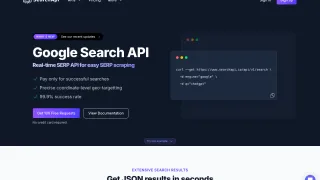
SearchApi Alternatives: 5 SERP APIs Tested (2026)
We tested 5 SearchApi alternatives in 2026 on Google feature depth, AI Overview parsing, engine breadth, and real per-call pricing. See which fits.
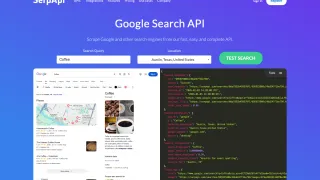
SerpApi Pricing vs 5 SerpApi Alternatives Tested (2026)
SerpApi pricing in 2026: published tiers, the real per-1,000 cost at n=10 and n=100, and 5 SerpApi alternatives tested on price and AI Overview support.
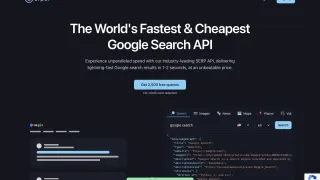
Serper Alternative: 5 SERP APIs Tested (2026)
We tested 5 Serper alternatives in 2026 on AI Overview parsing, structured SERP depth, and real per-call pricing. See which SERP API actually fits.